



Defining an experimental protocol
Building on SNCF Innovation & Recherche's objectives and the scientific literature, we define an experimental protocol that allows for a real-world study of traveller journeys.
The study covers the means travellers use to find their way inside and between stations. One point concerns the use of “cognitive” landmarks (particularly salient elements of the environment) to help orient: could a mobile mapping application offer more relevant guidance than simple street names?
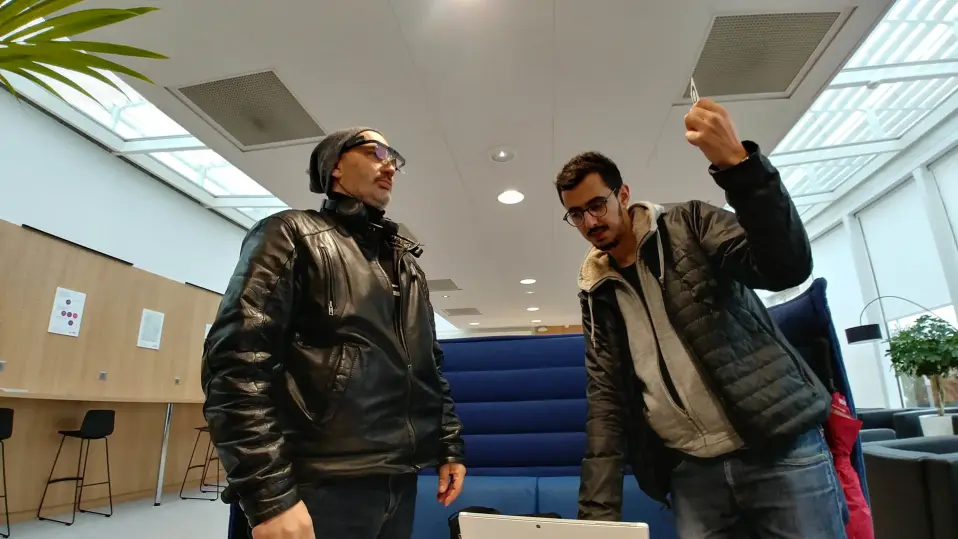
The protocol therefore plans for various ways of presenting routes, performed by verbalising the difficulties encountered and with a debrief time afterwards to analyse the elements that help and those that have no impact.
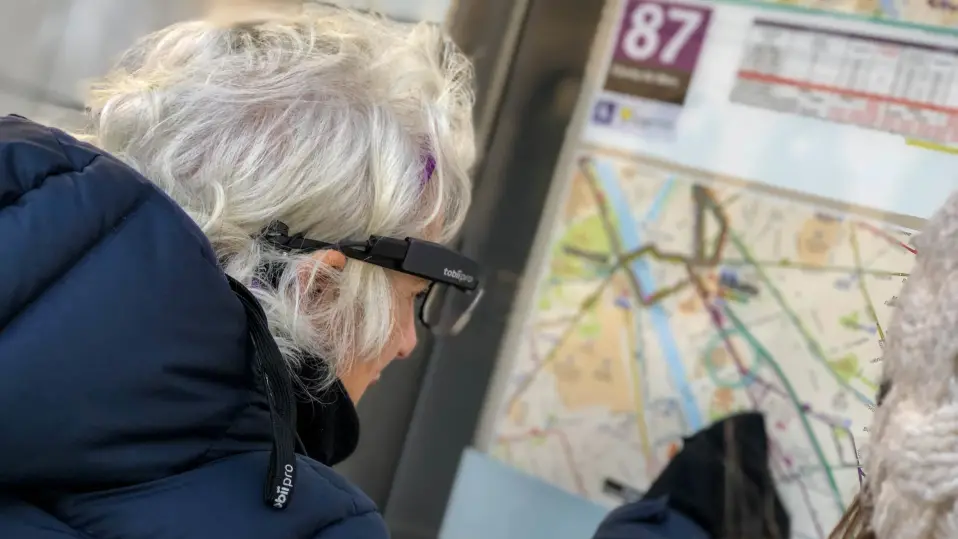
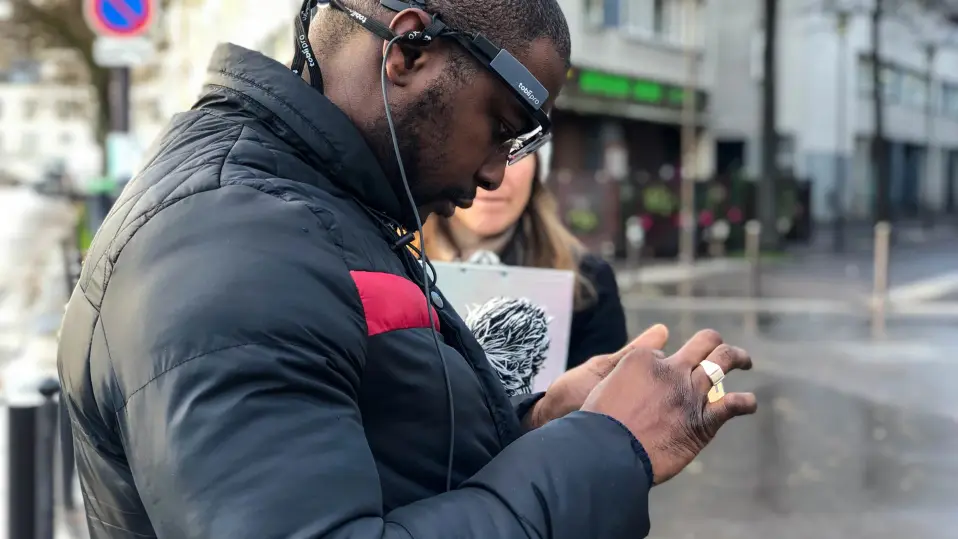
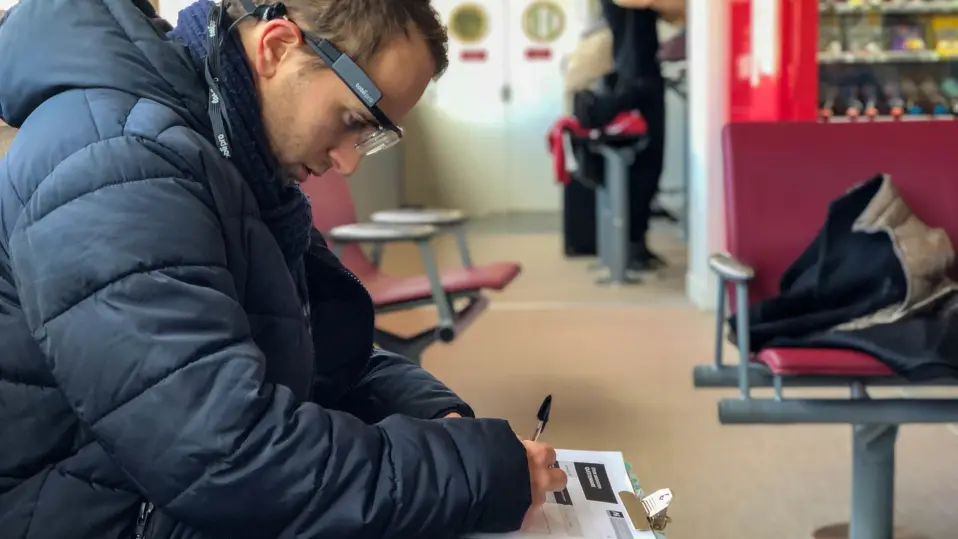
Their gaze is recorded with the eye tracker to identify the elements of the landscape they look at and those they ignore, and compare them to those they remember and those they forget.
A GPS is also used to measure the distance covered and reconstruct the routes after the fact.


Eye-tracking field study
Following recruitment, 18 participants run scenarios in real conditions in the Gare de Lyon area in Paris. Each of them is equipped with an eye tracker.
Starting from Gare de Lyon and using one of the guidance methods provided to them (paper itinerary, mobile app, etc.), the route leads them to Gare de Bercy and then Cour Saint-Emilion.
A camera also follows their route to contextualise behaviours, hesitations and difficulties. Travel time is in fact an indicator of good orientation performance, but since the scenarios are run “in real life”, many unexpected events can slow them down. This must therefore be taken into account in the analysis.
Data analysis and recommendations
The video, observation, eye-tracking and GPS data are aggregated to make recommendations on the type of wayfinding aid that is optimal for the traveller, based on their need.
The results reveal the very positive impact of presenting cognitive landmarks in wayfinding aids. They also highlight the need for less salient “intermediate” landmarks, useful for reassurance, the “I’m in the right direction” kind. These conclusions confirm the value of running these studies directly in the field, in contact with real users. The quality of the results obtained also made it possible to publish an article at a scientific conference!

Highly available throughout the engagement, which allowed for an open and constructive exchange of views (scientific and technical), not easy to set up with a service provider in such a tight timeframe. I also really appreciated the exchanges we were able to have and this bridging of scientific rigour and stricter industrial constraints, but above all very open and horizontal.
Rain or wind, Akiani manages to successfully combine scientific rigour and clear communication. The teams' ability to adapt to our challenge and their availability made the work easier to carry out and ensured the quality of the work and deliverables.