


daily life
a human-centered project
We could say that we apply "user-centered" thinking to our daily life. But if we're being completely honest, flexible hours, remote work and involving the team in commercial proposals are simply ways to make life together easier. And most of the time, it works pretty well!
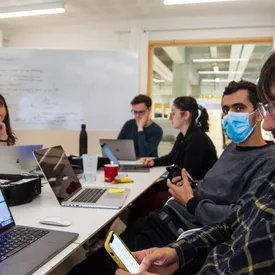
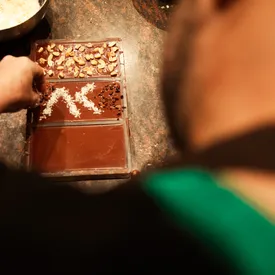
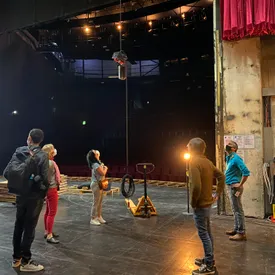
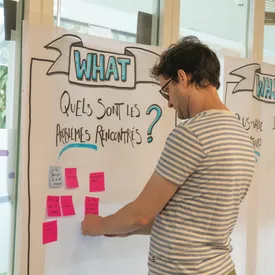
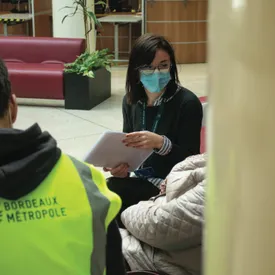
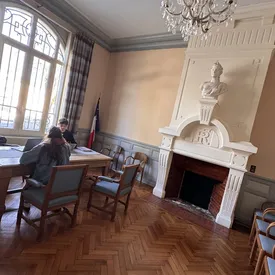
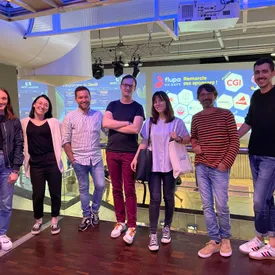
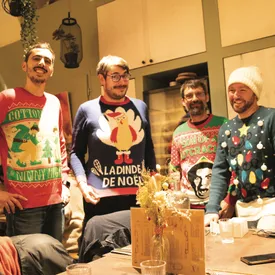
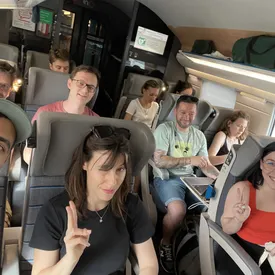
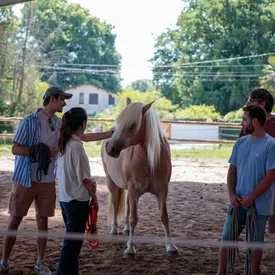
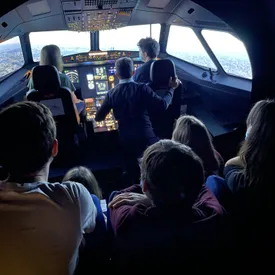

How we run things
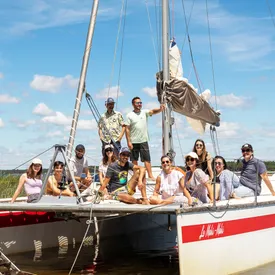
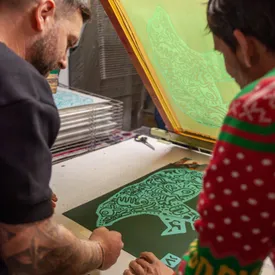
Akiani was created with the idea that if we were going to spend dozens of hours together every week, we might as well find a formula that combines stimulation and comfort: varied, motivating projects, the opportunity to keep learning, the possibility of taking part in every facet of company life, and the comfort of remote work, flexible hours, and as many reasonable employee benefits as possible (meal vouchers, health insurance covered in full, mobility allowance, etc.).
An intrapreneurial approach
What came naturally to a small team of three became a deliberate choice as we grew: maintaining a fair and transparent framework where everyone can build and take part. The way we operate relies on a distributed organization that encourages initiative, where everyone's voice counts on essential matters.
Decisions are generally made collectively, even if the partners keep a tie-breaking role when really needed.
Favoring co-construction
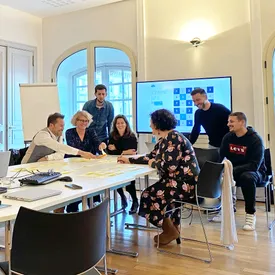
Our organization favors co-construction: the best decision is one you can explain and defend to the team. This is especially true when sizing commercial proposals, which allows us to make full use of operational feedback and ensures that everyone feels completely comfortable with what is being sold to our clients.
Learn more about Akiani's identity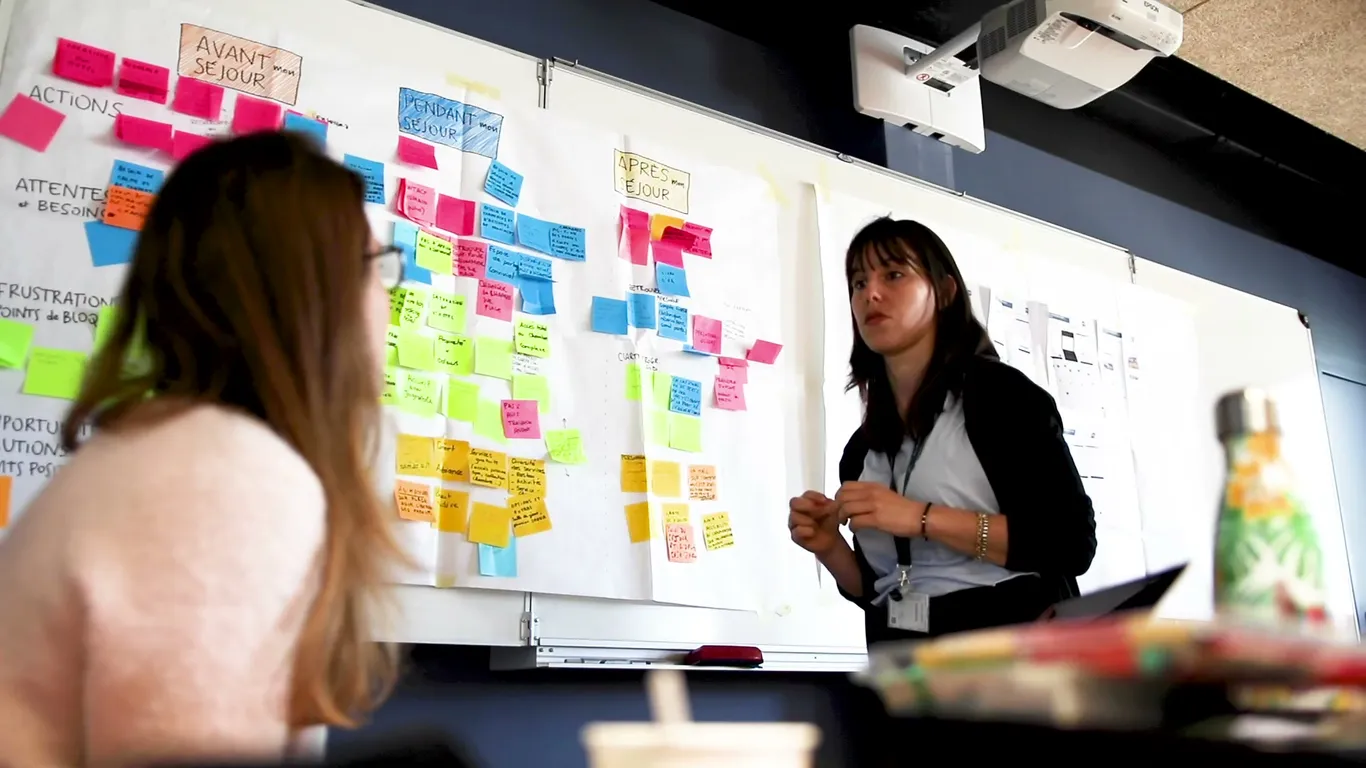
Social dimension
Financial and organizational transparency guides how we operate. We always share our financial statements with the team, structural decisions are made collectively, and an employee handbook and welcome booklet formalize our commitments. Each technical proposal is scoped in close collaboration with the operational team.
When it comes to organizing time, flexibility is a given: up to 80% remote work per week, and core hours that define when everyone is present together. We welcome and support people with official disabled-worker status, and a responsible staffing process prevents work overload.
Every employee has a development plan with at least two training courses a year, Opquast certification and access to professional conferences. We have also introduced inclusion initiatives: France Travail observation placements, welcoming people changing careers, and skills-based volunteering for nonprofits.
Accessibility has also become central to the team. Beyond the standards, it is a long-term support process that we carry out with all our clients, to put our skills in this area to work and help them map out the path toward more inclusive products.
AI in our organization?
In 2026, it is impossible not to say a word about our position on AI. It has dominated every conversation in our field for months, and we are no exception.
On the social side, we make sure to protect the team's mental health as it faces a tsunami of weekly announcements: new models, new capabilities, new tools. To do that, we maintain a watch that filters things down while keeping everyone informed, from the public services' ethical AI charter to the latest version of the Claude API or the new Figma MCP.
For our own production, we now delegate to AI what it does better than us: generating code for our small in-house tools, sometimes producing visuals that would have taken us days in Photoshop, and copying, pasting, sorting and filtering thousands of lines at once. We do not delegate the rest, the intelligence and the brushwork. The art direction of our site is intended to illustrate that.
Environmental dimension
We received support throughout 2024 to prepare for B Corp certification, which we ultimately declined to apply for on ethical grounds. Our actions: promoting low-carbon transport, reducing printing, digitizing our support formats, and integrating eco-design into product design.
Carbon footprint
Business travel: 794 kg CO2e.
Commuting: 2,046 kg CO2e.
Digital infrastructure: 120.2 kg CO2e.
IT equipment: 3,031 kg CO2e.
Total: 5,991 kg CO2e.
We chose to count only the emissions for which we have reliable data. Being transparent about these blind spots is part of our commitment: we measure what can be measured, openly acknowledge what we cannot yet quantify, and make methodical progress.
AI and our conscience?
Within the agency, we have set up a working group dedicated to the subject, to cover the main issues we anticipate with the emerging revolution. We are also highly advanced users: we use AI to optimize our back office, connect systems together, and build custom tools. This groundwork allows us to assess both its possibilities and its limits, and compare them with our values.
We remain very vigilant about the environmental impact, but we also want to know what a car can do before knowingly continuing to travel by horse. We closely follow the impact assessments conducted by the field's main players, and we are testing local and sovereign alternatives more and more often. In the medium term, we aim to use models selectively according to need: powerful, energy-intensive tools for highly advanced tasks, and lightweight or even local models for the essential everyday work.
Overheard at the office
Anecdotes

"I tried with the kitten, but I think I prefer the dinosaur."
Our rituals
We're careful not to fall into meeting overload, but we do keep a few regular touchpoints.
The weekly check-in
We run through the agency's activity (projects, prospects…). The goal is to centralize and share information.
Sharing our industry watch
Sharing what we find interesting here and there during a dedicated time, and centralizing all those finds
The twice-monthly projects review
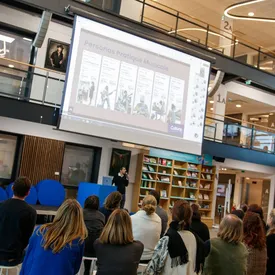
Everyone presents their projects. It's a chance to talk and better understand what others are working on.
Design review and research review
The team shares its outputs (UX design, UX research, UI design) to gather constructive feedback that helps unblock or improve the work.
One-to-ones
A conversation with a partner to discuss personal topics or anything that doesn't fit into the other meetings.
AK events
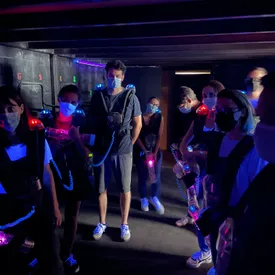
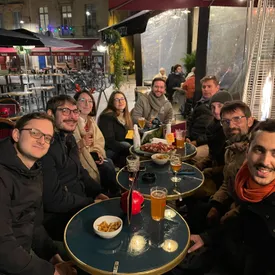
We also try to get everyone together for specific occasions: AK Day for time to talk as a team, the UX Days, Christmas, etc.
The circles
Akiani's activity is also steered by what we call circles. Circles are groups of team members interested in a particular topic, working together to move things forward. There are currently 5 circles that frame our thinking, with certain topics (like strategic questions) handled cross-functionally.

Design (UX and UI)
Sharing best practices, growing an internal UX kit, testing new tools

Ergonomics and UX research
Moving our thinking on UX research practices forward, testing new tools, sharing reading and articles on the topic

Organization and agency life
Keeping the agency running smoothly: from cleaning the coffee machine to questions around CSR

Communication and events
Communicating about projects and the events we attend, and evolving our visual identity

Artificial intelligence
Exploring the uses of AI in our craft, experimenting with new tools and sharing what we learn
Want to learn more about us?
Our size means our support can adapt to the realities of your project rather than to an initial schedule. Drop us a line to discuss a topic, even one that's still rough around the edges. We take the time to understand before pricing anything, and we only count the work we actually do.
Contact us