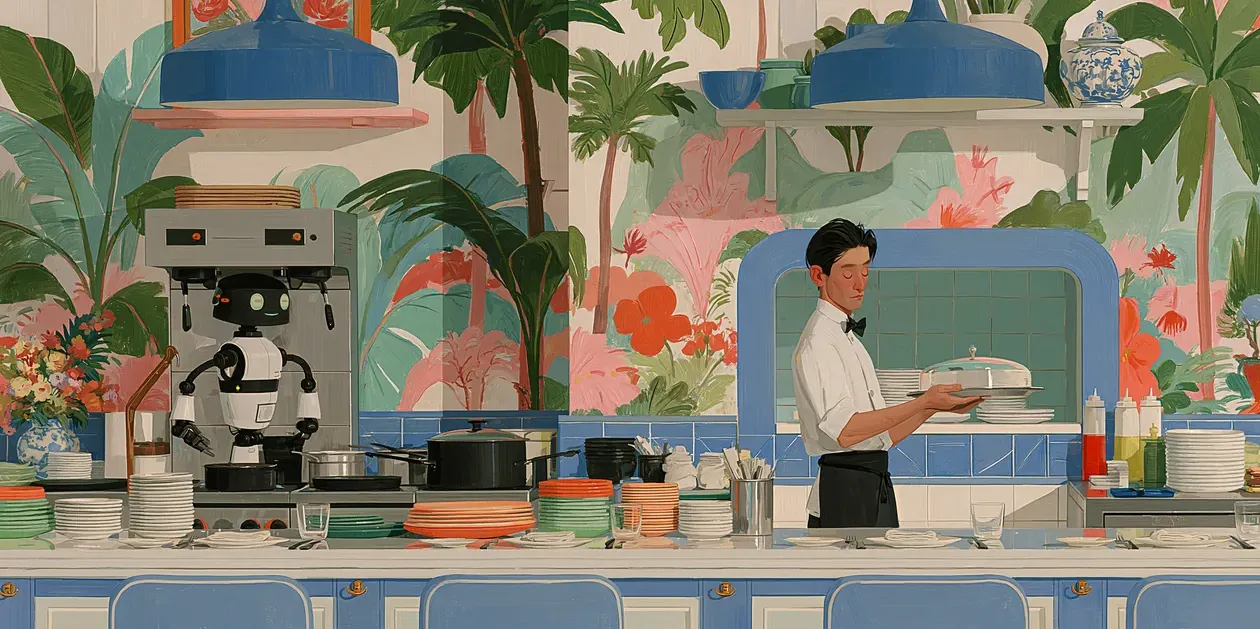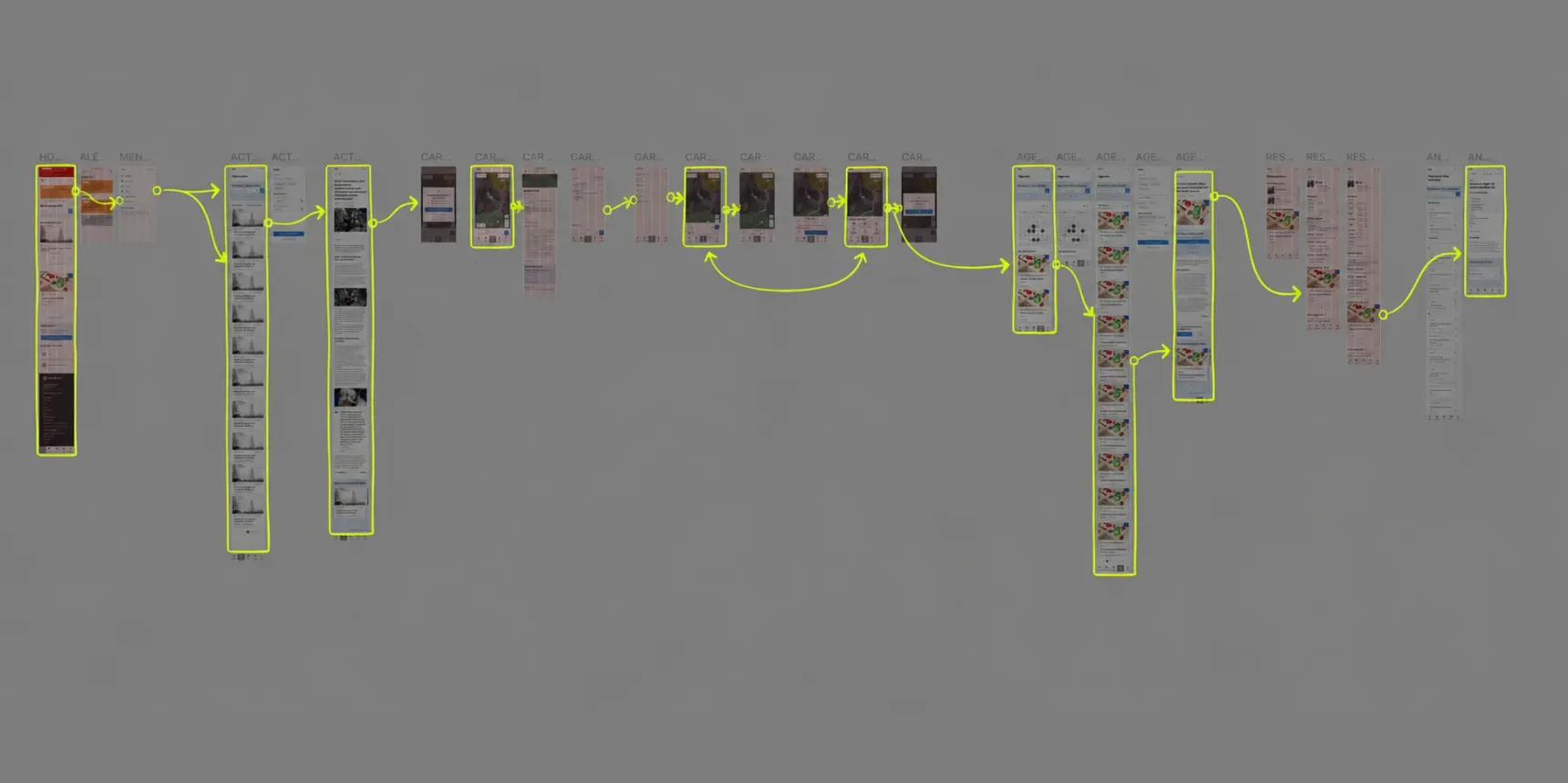
The growth of AI in our working processes, whether in research or in design, leads us to point out a contradiction in the position we had held for years. For years, LinkedIn has been the ground for a strange trench war. In one camp, designers described as supporters of a methodologist vision of design, meaning the implementation of processes, methods, standard deliverables. And those approaches, very often, got associated with the odious UX design. So we say “described”, but often it was “blamed”, when it wasn’t “accused”.
The other camp was just as much made up of designers, but ones for whom, to caricature things, user-centred methods amounted to a somewhat clinical hygiene of design, a way of reassuring yourself, a limited capacity to be truly creative. It very often came with the idea that no designer ever designs without putting themselves in the user’s shoes. But by dint of putting the user at the centre of the design loop, you end up with a sanitised approach to design, where friction no longer has a place, where you no longer create an experience, where you no longer surprise them, where the designer no longer has the capacity to fully express their itching-powder creativity, because frankly, how “itching powder” those darned designers are. We’ll say it again, the stance is a bit of a caricature, but that was the general idea.
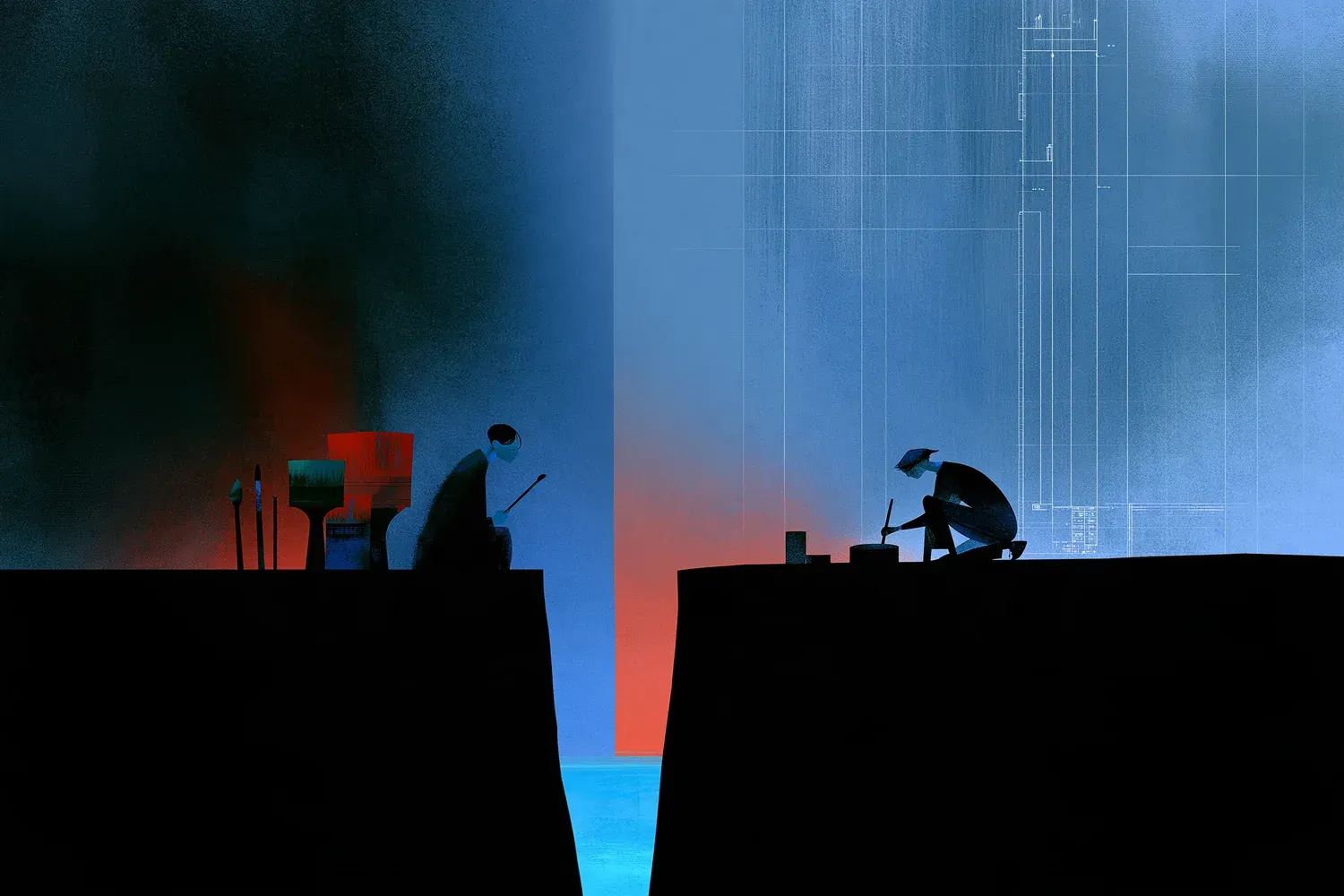
Our camp: the engineering of design
We, reading between the lines, saw that there was an approach to design that was creative, almost artistic, with a lofty vision of its role, its mission as we sometimes read, which was no longer a means but an end in itself.
And by extension, when you start talking about design in the artistic sense of the term, what we saw in it, whether rightly or not by the way, was that, well, art means artist, means that when you produce, you put a bit, or even a lot, of yourself into it, a bit of affect, a bit of ego. And so, affect and ego mean problems.
And then, what we set against that was a methodological approach, which is still design, but maybe not design in the artistic sense. It’s a form of creativity, in the same way that developers show creativity, or that bricklayers show creativity, or that engineers show creativity. An expression of creativity, but in the service of strictly solving the problems of the stakeholders involved in the projects: our clients, their organisations and our clients’ clients.
In a way, it was an engineering approach to design. And that suited us fine. First because part of the team are engineers, the founders in particular. Being an engineer isn’t a dirty word. And then, crossing engineering and design has always been our job. It was consistent.
Figma is (not) dead
But it turns out that in 2026, design engineering is being talked about again, and the term is taking on a whole other meaning. Because for about a year now, what has been taking shape on that same LinkedIn is a movement of designers saying, in substance: “Figma is dead. I uninstalled Figma.” Or else: “I didn’t uninstall Figma, but I don’t open Figma anymore. Everything goes through the MCP (opens in new window). Claude does the designing for me.” What follows is a process that, most of the time, is entirely consistent, and that says: I have documented unit building blocks, a design system, AI-compatible. “All I have to do is plug my AI into it, so that it knows or understands its rules, its operating principles, and so that it’s able to produce mockups, in a way just as well as I do, and in any case much faster. And on top of that, it lets me go further. No longer stopping at the mockup, but going to code, and so to the prototype, and so to the MVP, and so to the decision-maker.”
That traces a chain where, all of a sudden, the value chain is a bit different. You’re no longer content with simply producing a mockup. You produce a tangible value proposition. Because clearly, the prototypes we’d been producing for years in Figma made things tangible, but they weren’t incredibly exciting, we can agree on that, honestly, there’s no problem with that.
The height of methodologist thinking
This consistency is perhaps precisely the height of the methodologist thinking we liked to call the engineering of design. Because if some people consider that AI is capable of creativity, then it means that, in a way, from the start, creativity was indeed not on their side. It was in the application of methods. And at that point, we’re going to end up agreeing with what we’d been criticising from the start, by saying: the method, from the start, was a way of doing design without the creativity. Canada Dry, so to speak (a reference for the young, obviously).
And that has never been our approach. On the contrary, we’ve always considered that the method provided a framework and a set of constraints. And that creativity expresses itself perfectly well within a set of constraints, sometimes even better than without. That listening to users rather than guessing at them with our sweet genius-designer instinct didn’t stop us from trying to be creative when it came to responding to what they had expressed as a need.
But that some people now delegate that part of the job to AI changes the game, we have to admit it.
Because conceding that AI is creative, that, for once, at the time we’re writing this article, we won’t be able to do. AI is wonderful, AI is unbelievably powerful, AI makes lots of things possible, but AI today doesn’t quite make creativity possible, we don’t reach that conclusion. It makes possible the application of rules, and of meta-rules, whose combination can surprise, and from there to giving the illusion of creativity. But it can’t be creativity today, in the sense in which it has been embodied by humans for tens of thousands of years, in which it has shown itself, from a hand painted at least 67,800 years ago (opens in new window) on a cave wall in Sulawesi to the Lascaux caves and to David Guetta in concert in Las Vegas (opens in new window), whatever you think of David Guetta. And as it happens, we don’t think well of him, musically. That’s something we won’t manage to agree on. David Guetta, David Guetta as he is, will always be infinitely more creative than the most powerful AI. Today.

”Good artists copy, great artists steal”. And those who reproduce?
The pieces of music composed by AI are perfectly listenable, some are beautiful, we can all agree on that, now that we’ve all heard AI-generated music. But when it surprises, it’s through its capacity to reproduce things that humans create. It’s not when something perfectly new and never heard before emerges.
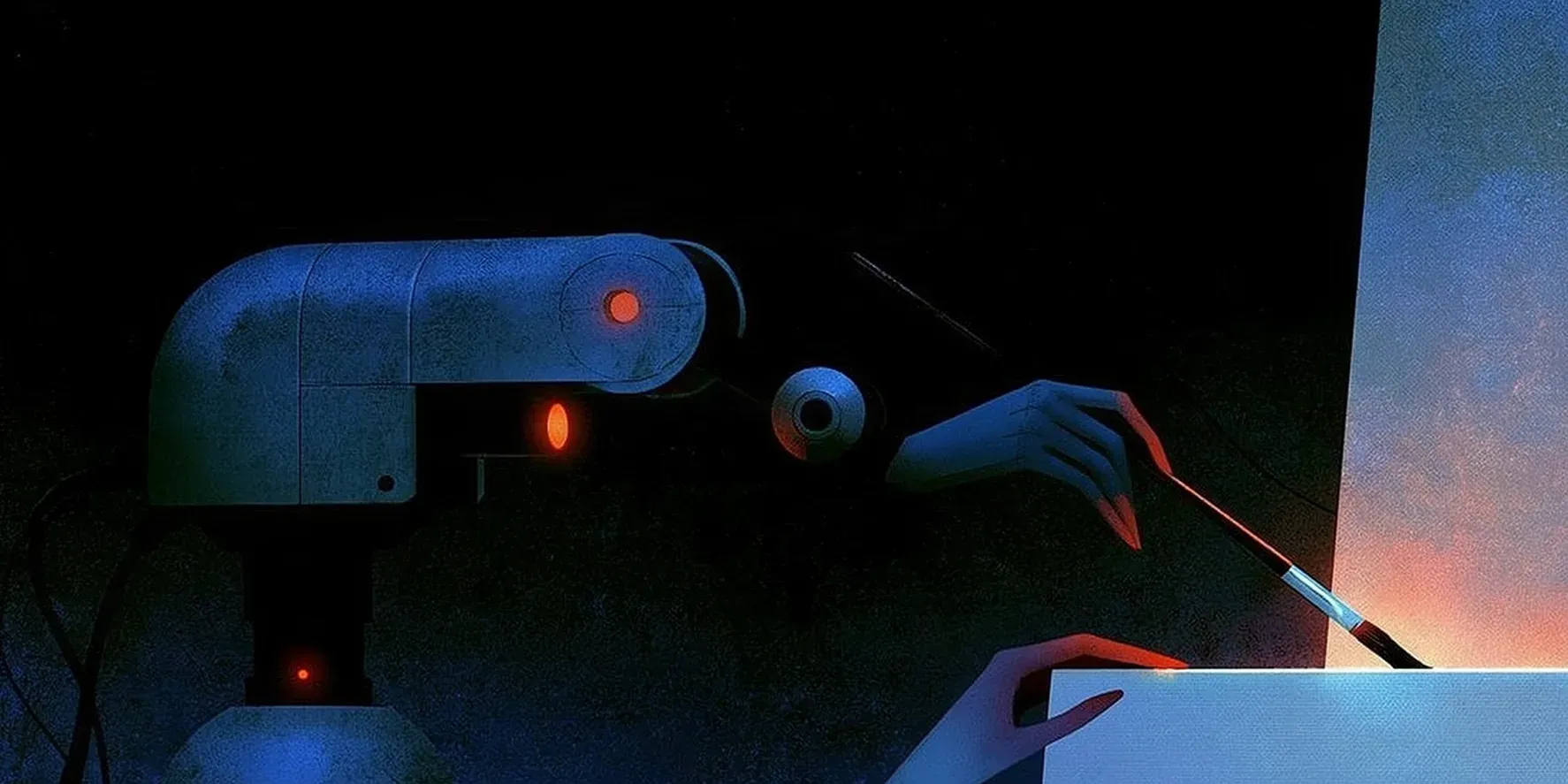
Claude Fable 5.2 has just come out (opens in new window), and one of the tests that surprised the community (opens in new window) is that Fable can now paint. How does Claude paint? It paints in visible strokes, something that looks a bit like impressionism. Now, it does it in code, in a browser. Those brushstrokes are lines of code. And it produces things that are interesting. But it’s the reproduction of human creativity. Maybe that’s because it’s what we ask of it. That’s likely. But it isn’t a graphic representation never seen before.
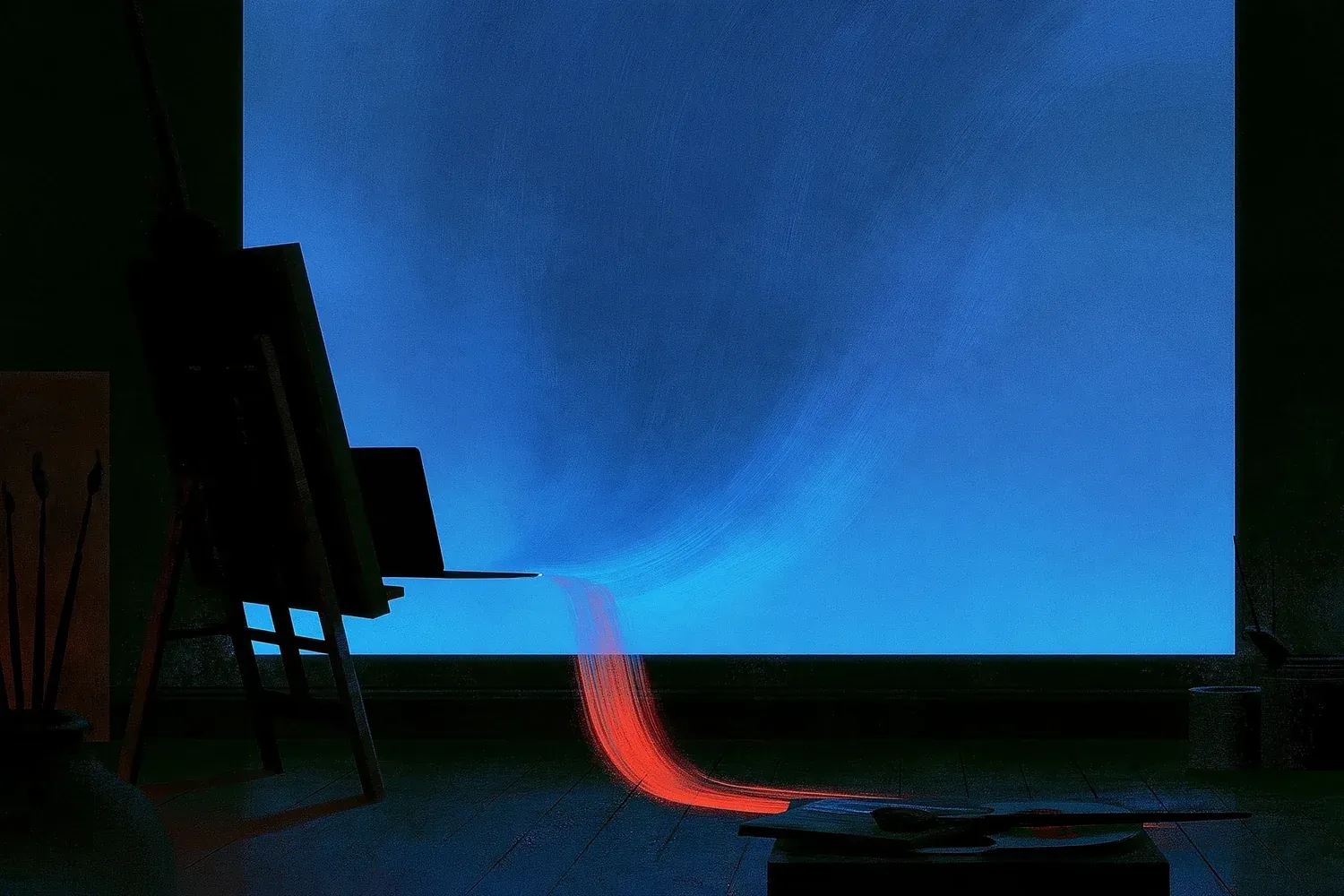
When we ask it to show its creativity at its highest, for now, we don’t see much of it. Since Fable 5.2 came out, on 9 November, people have been testing very open prompts, in a single attempt. Given the prompt “create the most beautiful and striking HTML file you can imagine”, Fable produced northern lights (opens in new window), in 32 KB of code and without any touch-ups. Felix Rieseberg, a developer at Anthropic, got a shooting game (opens in new window) out of it in a single attempt, after about eight hours of computation, then added about two hours of touch-ups himself. These examples don’t tell the whole story, but it doesn’t go very far.
A few years ago, we talked about the thunderclap that AlphaGo and Deep Blue’s victory over Kasparov had been. In the first case, DeepMind spoke of creativity. For us, it wasn’t really creativity but above all a capacity to explore a landscape of possibilities infinitely wider than traditional players could. And the Deep Blue move that had so unsettled Kasparov, we now know it was a bug (opens in new window).
Rules we don’t know
If we come to the conclusion that creativity, today, can’t be delegated to AI, that AI only applies rules and operating principles, meta-rules, what does that mean? The expression of any form of creativity in AI is only the application of rules and meta-rules that can take only two forms. Either they come from the user, formally, in a perfectly framed way, or they come from the AI’s knowledge base, from which it will therefore derive rules, and its application of those rules and meta-rules will take the form of something along the lines of a form of creativity. But it isn’t creativity. It’s the application of rules and meta-rules we have no knowledge of. What that means, put another way, is that AI makes decisions on the basis of rules and meta-rules we don’t know.
Delegating the decision is managing
And in a design setting, or one of the engineering of design, and in fact in engineering even more so, that isn’t really acceptable, because the slightest decision has to be explainable. The slightest decision has to be justifiable, because we’re accountable for those decisions. Designing is deciding. The engineering profession is deciding. Delegating the decision to AI is no longer designing. It’s managing. And you can manage executing agents very effectively. But we’ll have shown it, we hope, with this article: they are executing agents, not creating agents.
We may end up telling ourselves that, in the end, it isn’t even the engineering of design anymore. It’s perhaps just plain technique that’s lucky enough to be able to take on a flattering graphic form. And so, might we be falling back into the situation of the 1980s, when we had a purely technical approach to the experience and the interfaces we were building for our users?
AI executes, we create
Our position: we use AI, we use AI a lot, we use AI enormously, we talk about it more than enough. But we use it as an extension of our arm. We don’t use it as our brain. The decision is ours, at every moment. In our team, AI never makes any decision. Never. AI applies rules, AI applies meta-rules. Those rules, those meta-rules, they come from us. Always. They have been validated by us. Always. They have been validated by cases that were provided and validated by us. Always. AI doesn’t create. AI executes. We create.
”Design by proxy” or “exo-designer”: delegate or augment?
This probably calls for agreeing on a vocabulary to match. The engineering of design, we remain convinced, was what we were already doing before: problem-solving with design as the tool, within a constrained framework. Engineering. What’s called design engineering today doesn’t seem to us to be an engineering approach, but an approach of steered delegation.1
It isn’t engineering. What comes closest is that concept of “full-stack”. Much loved by CVs with lots of full progress bars and other LinkedIn profiles with “8000 followers since 2014”. A concept that will have the same flaws as before, of course, but made up differently, that’s yet another subject. Full-stack design, then. By proxy. Or “full stack design by proxy”? A bit too long to remember, we can settle for “design by proxy”. And us in all this, how would we describe our practice as it has evolved, like plenty of others have on their side? An AI that assists our skills and our expertise, that multiplies them over and over. As an exoskeleton on a human body does. Could that be an “exo-designer”?
1. The Commission des titres d’ingénieur (CTI), which accredits schools to award the title of engineer, defined the profession this way in its 2012 to 2016 reference frameworks: “The engineer’s profession consists in posing, studying and solving, in an effective and innovative way, often complex problems of creation, design, production, implementation and control […]” (opens in new window). ↩