When you’re looking for a blender, you type “best blender 2026” into Google or any other search engine. When you’re looking for a family car, you type “best car for 4 in 2026”. UX/UI agencies are no exception: people type “best UX agency”, “best UX/UI agency in Paris”, “best UX/UI agency in Bordeaux”, and so on. And they land on top lists. After all, why not: there are top lists for everything and nothing, so there are some for agencies too. We went and looked at them. We didn’t read them all because there are far too many, but we noticed that in most of them, the agency that wrote the list appears in it. A coincidence, presumably.
Admittedly, it’s an SEO strategy that seems to work rather well. It answers the query of someone who is about to choose a supplier and is obviously looking for the best one. Being at the top of the search results beats the opposite. But on our side, we’re not very comfortable with it. We’ve been uncomfortable with top lists for a long time, and even longer with the idea of saying we’re the best: if we are, it’s not for us to declare it, it’s for our clients to say so.
Obviously, a comparison written by an agency isn’t there to send prospects to its competitors. Not that we don’t like them (maybe they’re even reading us, hi to them in passing), but we’re not fast-food chains comparing a clown with a king, or supermarkets comparing the prices in their trolleys. And even then, supermarkets at least compare comparable things, things that can be measured.
But since everyone does it, we decided to make a top 10 too. Except this one will be the top 10 reasons why top 10s make no sense.
1. Whoever writes the ranking wins the ranking
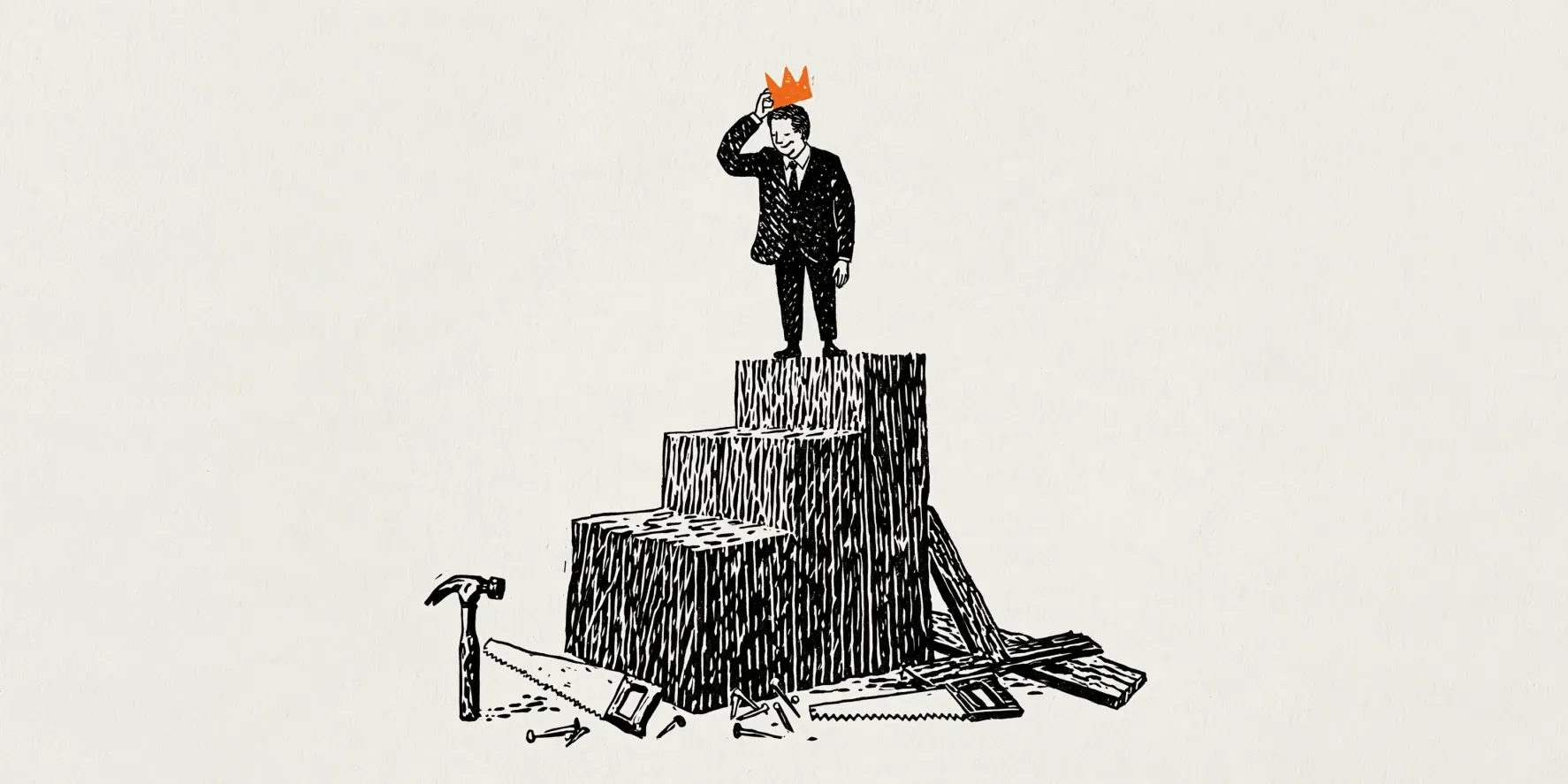
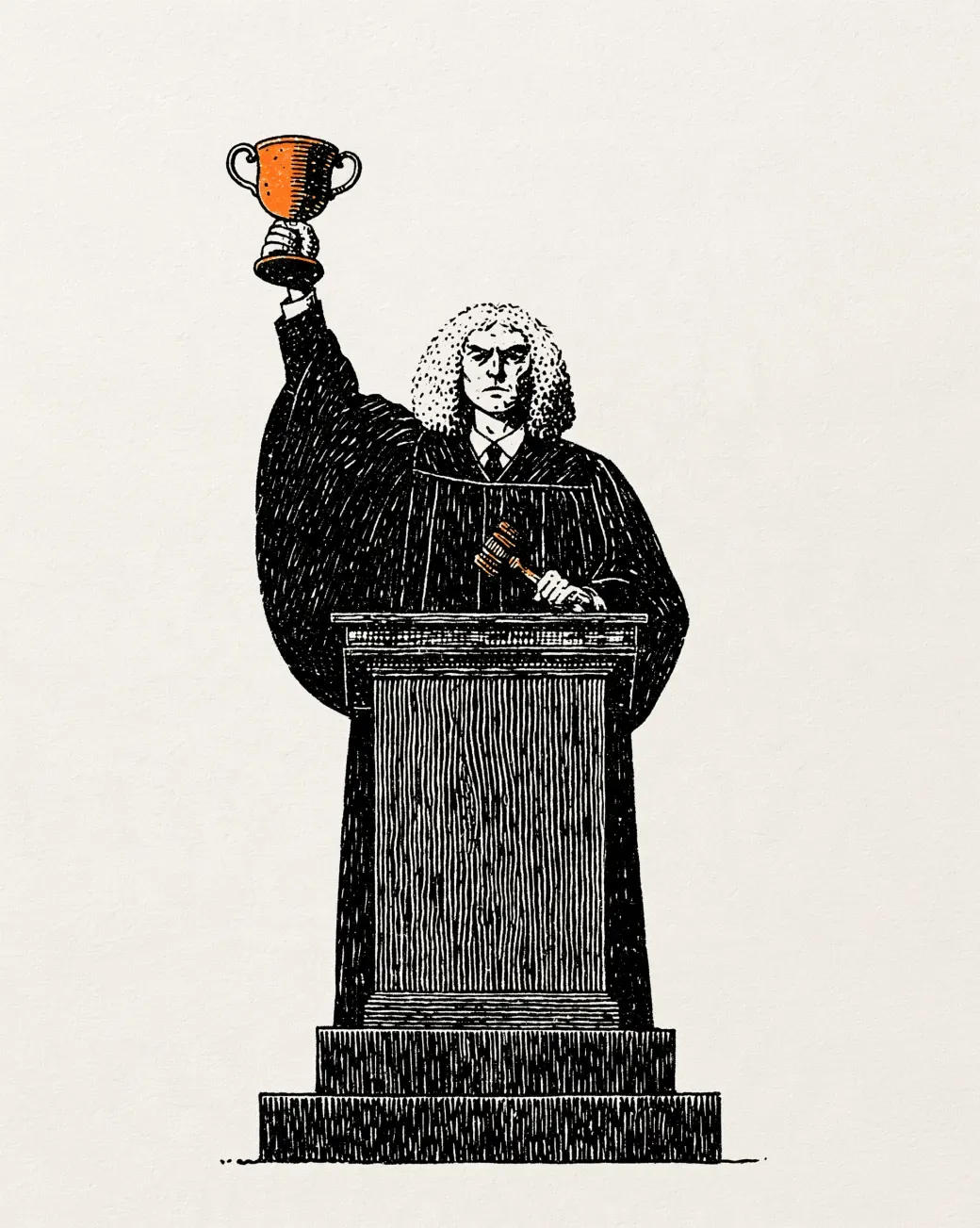
Or, at the very least, appears in it. That’s the case for most of the pages we read. The author usually comes out on top, with the most detailed profile, the nicest visuals, a pretty contact button at the bottom of the page, sometimes even a “recommended” badge. We’re not going to say it’s forbidden, we understand the temptation. But when you’re a judge in your own case, it’s no longer really a ranking, more like a presentation page with competitors around it for decoration.
One of these pages even explains why it mentions other agencies: it “demonstrates confidence and security in the quality of its own work” and it “helps build an altruistic brand image”. It has the virtue of frankness, it’s quite rare for a text to spell out its own instructions so clearly. But as a result, we clearly understood that the competitors are there as window dressing.
2. The criteria come after the results (when they come at all)
When you rank cars, blenders or TVs, a serious ranking starts by presenting its method. Most agency top lists describe neither their method nor their criteria, they give an order without explaining it. You find general advice on how to “choose the right agency”, which is fine, but nothing that justifies why one agency is fourth rather than fifth, why this one ends up at the bottom of the list or why that one (often the author) is at the top.
3. Nobody has seen the work from the inside
And this is specific to the business of service provision and consulting: we don’t know how things go on the inside at our competitors. And what’s on the inside is precisely what changes everything. It’s even the whole point of the work we do during pre-sales, explaining what results we get, but above all how we get them. One of our competitors, who published their own comparison, puts it very well: they don’t score the agencies they present because they have “no access to their projects from the inside, and a score without access is decoration”.
It’s like bouillabaisse. Two restaurants can serve exactly the same bouillabaisse on the menu, but the way they prepare it will be radically different. That’s what makes it taste different, and better in one than in the other.
A large part of our work in UX and UI isn’t shown. The interviews, the tests, the trade-offs with the client, the screens we threw away because nobody could make sense of them: all of that is covered by confidentiality. That’s normal, our clients entrust us with things that are their business alone. Take a look at our case studies page: many of our case studies don’t reveal all the figures, because the figures remain confidential. This is information that’s hard to get hold of, and the detail of how the work is done even more so.
A ranking made from the outside judges the storefront: the window, the photos of the dish, rarely the taste, because not every product is accessible to the general public. It judges what can be seen and only what can be seen: the portfolio, the client logos, the visuals, the favourable testimonials.

4. You always find the same names
When you cross-check the lists, you come across a small circle. One agency is third on one list, sixth on another. Another is first on the site that wrote the ranking, second at a competitor’s, twelfth at a third one’s. The rankings cite one another. An agency ends up looking recognised because you come across it in a certain number of lists. We’re not saying these agencies are bad. Appearing in a ranking doesn’t say whether they’re good or bad, it mostly measures the ability to appear in lists, which is a skill in itself.
5. Best, but for whom?
You say you’re the best, but the best for whom and for what? An agency of 200 people that designs and develops a banking app doesn’t do the same job as a small team of ergonomists who spend three weeks in the field observing front-desk staff. Putting them on the same scale, in the same ranking, is like asking which is better, a semi-trailer truck or a cargo bike. No ranking can answer the starting question for you: what are you trying to solve? And who can best meet your need? We’ll come back to that further down. And there, for once, we’ll give names.
6. The figures quoted aren’t always checked
One of the rankings justifies the value of UX with a figure: fixing a defect after going live would cost up to 100 times more than at the design stage. The source cited is always the same, an IBM study. We’re not experts on the subject, but Laurent Bossavit, a former developer and author of The Leprechauns of Software Engineering, traced it back (opens in new window) a long time ago. The “IBM Systems Sciences Institute” that supposedly published this figure was in fact an internal IBM training programme. The figure comes from course notes picked up in a software engineering textbook, without the original data, if it ever existed. The Register (opens in new window) told the story in 2021, with a cautious headline: the study everyone cites “might not even exist”.
We don’t hold it against anyone, it’s a comfortable figure for everyone. Everyone has at some point quoted a figure that puts stars in people’s eyes. But when a page asks you to trust it to choose a supplier, checking where its figures come from can be a good test.
7. The ranking changes every six months
“September 2025”, “H2 2026”, “2027 Ranking”, sometimes even next year’s top list already: the titles are dated and regularly updated. Does the best UX agency in France (or in the world) change every six months? More likely, search engines like pages with fresh content. A date in the title with updated content, that pleases them.
8. These pages are written for the engines
They’re written for Mr Google or Mr ChatGPT, so they’re long, structured, packed with the right keywords, with an FAQ at the bottom of the page or a “questions people ask most” block. They’re SEO pages that please an algorithm, not necessarily a real reader. The reader, for their part, leaves with a list of names without really knowing which one suits them. Today, these pages are probably also used for GEO, the idea of optimising for generative answer engines. But it’s still a fresh topic, we don’t even know if it really works.
9. A portfolio says nothing about what changed for the user
What makes good work in UX, in ergonomics, in design or in UI is what changed for the people who use the product: a journey that no longer gets stuck, where users no longer drop out, a form people manage to fill in all the way through, an account people finally manage to create, a service the staff manage to use. In short, it’s real life, and those results don’t show up on a simple screenshot.
Our core business in ergonomics is reducing the gap between the prescribed and the real, between what was planned and what actually happens in the field. We told that story, for example, in our article on festival-goers. A ranking of agencies stays exclusively on the side of the prescribed, because it only looks at what agencies say about themselves. It isn’t the day-to-day, it isn’t problem-solving, it isn’t the moments when the agency trips over its own feet. And how it reacts in those moments is what should make the difference when choosing an agency.
10. And yes, this article is a top 10 too
We’re not going to pretend. This article is also aimed at the query “best UX/UI agency in France”, it has a title with a number and numbered subheadings. And we very much hope it will help us climb in the search engine results. The difference with the other top lists is that we told you from the start that it wouldn’t be used to say whether we’re better than the others. It may say that we’re transparent.
A few agencies we know and what they do
If you’re here, it’s because you’re expecting a ranking of UX agencies in France. So as not to hurt anyone and for the sake of integrity, we’re going to rank them in… alphabetical order. So in this ranking, in first place, we find… Akiani!
For the rest, we’re short on time and the article is starting to get long. Unfortunately, we have to stop there.
All right, fine. Here are a few other names anyway, sorted by speciality, because we like their work, because we’ve been following them for a while and because, competitors though we are, we sometimes admire what they do.
Research and the human sciences. There’s Ergocentre, in Orléans, which presents itself as an ergonomics and behavioural science consultancy, specialising in human and organisational factors. We like them, they’ve done some nice work and, like us, have worked for SNCF Innovation & Recherche. There’s Ludotic, which champions user-centred design and user research. We like what they do over in Nice. Usabilis, a long-standing player, now presents itself as combining behavioural science and design. And Welcome Max describes itself as specialising in user research and service design.
Service design and innovation. Aktan, also based in Orléans, with whom we talked quite a lot at one point and whose work we like, does innovation and the design of products, services and systems. Stash describes itself as a UX design and service design studio. And we really like Vraiment Vraiment’s work on public-interest design and public policy design, with those who stand up for the commons.
Product design and UI. Jujotte does fine work in product strategy and design, mainly for SaaS and business tools. La Grande Ourse, like us, has a cognitive scientist on its team and knows how to embed a designer directly in other teams, on a staff-augmentation basis. Meaningful presents itself as a digital experience design studio.
From design through to development. Lunaweb, whose work we really like a lot and with whom we have a very good relationship, puts the emphasis on accessibility and eco-design. We have a fairly similar level of standards on this subject. LePressing is a digital agency that does UX/UI and SEO. Wexperience, now Agence Wex, has specialised heavily in development in recent years, notably in no-code.
Tech, AI and large-scale projects. Kaliop is a tech agency that also does AI and product design. Onepoint, one IT services firm among the many we could mention, describes itself as an “architect of major transformations”. And Thiga has positioned itself on product vision and AI.
Training. Le Laptop trains people for design careers. Several of the agencies mentioned above also offer training, Ludotic and Usabilis first among them.
And where does Akiani fit in?
Our job is UX research, UX design, art direction and UI. We also train professionals in all these subjects. We’re not experts in your business, you are. We’re experts in ours.
And to tell you the truth, our first place in the ranking above isn’t entirely down to chance. When we were looking for the agency’s name, we did benchmarks, naming workshops, a card sort. The name that came out on top wasn’t Akiani. But Akiani started with an A, so we told ourselves that one day, in a top list, it might come in handy. Today is that day. We told the story on our about page.
If you want to judge our work, we invite you to visit our case studies. And if you’re looking for an agency, whichever one it is, here are a few questions to ask at the first meeting:
- “Show me a research deliverable, not just mock-ups.”
- “Who will actually work on the project?”
- “What would you do with half the budget?”
- “How did you solve the problems you ran into on your projects?”
- “How do you integrate AI today?”
- “Who makes the decisions: you, us, together? And where does our business expertise come into this thinking?”
And if it’s us you want to ask, we’ll be happy to talk about it in person or via our contact form.
We’ll finish with the sources, because citing your sources matters.
Sources
- Laurent Bossavit, “This is just how embarrassed I am for my entire profession” (published 2016-05-16, republished in 2021), read on 2026-11-06: https://gist.github.com/Morendil/bb549da798246d7e70c322a057fb46fc (opens in new window)
- Laurent Bossavit, investigation into the IBM Systems Sciences Institute, read on 2026-11-06: https://gist.github.com/Morendil/ebfa32d10528af04e2ccb8995e3cb4a7 (opens in new window)
- Laurent Bossavit, quotation from Pressman (“60 to 100” range after going live), read on 2026-11-06: https://gist.github.com/Morendil/258a523726f187334168f11fc8331569 (opens in new window)
- Laurent Bossavit, The Leprechauns of Software Engineering (Leanpub), read on 2026-11-06: https://leanpub.com/leprechauns (opens in new window)
- Tim Anderson, The Register, “Everyone cites that ‘bugs are 100x more expensive to fix in production’ research, but the study might not even exist”, 22/07/2021, read on 2026-11-06: https://www.theregister.com/2021/07/22/bugs_expense_bs/ (opens in new window)
The illustrations in this article were generated by AI (see our AI use statement).