




The last mile and tourist mobility
While the train offers an ecological solution to connect cities, the final leg of the trip to reach a tourist site or accommodation is still under-developed. A recent study shows that the lack of practical ways to get around once you’ve arrived at the station is a barrier to choosing the train as the main mode of transport for leisure travel (1). The last mile is the weak link in the train mobility journey. In Nouvelle-Aquitaine, the regional network counts 325 stations spread across the territory, offering excellent coverage between destinations. The roughly seven hundred daily services represent a sizeable potential flow for the territory’s tourist destinations. This project presents several challenges that call for a methodical approach, starting by clearly defining the problem before exploring the solutions.
(1) “French people and the use of the train”, April 2023, Harris Interactive for Réseau Action Climat France
Bringing the right stakeholders on board
Bringing pilot territories on board
From the very start of the project, the ambition is to generate concepts mature enough to feed an experimentation phase. The priority is given to one or several TER lines in the region. The aim is to identify destinations interested in taking part. The collaborative approach involves sharing their challenges and strategies with other destinations. With the project team, we target four tourist destinations that present interesting and complementary characteristics. We present the approach to them, which quickly echoes local projects whose goal is to improve their appeal. Val de Garonne Agglomération (Marmande), Landes Atlantique Sud (Saint-Vincent de Tyrosse), the Communauté de communes de La Vallée de l’Homme (Lascaux) and the Communauté de communes du Grand Saint-Emilionnais (Saint-Emilion) all join the collective! Before organising a meeting, we ask the territories’ representatives to fill in a summary sheet presenting their tourist offers: places, target audiences, available mobility solutions and challenges in that area. Highlighting the singularity of each and the common points helps create the connections that will be essential for the rest of the project.
Mobilising mobility-sector stakeholders
Putting mobility solutions and services in place that are tailored to a territory calls for specific technical expertise. A fine-grained knowledge of the regulatory requirements, the implementation conditions, the budget constraints and the related factors to take into account is essential. The project’s ambition requires bringing those questions in very early in the thinking. With the support of the Tourisme Lab, we present the approach to mobility solution and service providers and to institutional tourism stakeholders. The goal is to bring those professionals together with the territories’ representatives for a day to cross perspectives. To set up a balanced exchange, we design a catalogue describing their products and services. This support gives them visibility with the territories engaged in the approach.


Building a shared reference with tourist profiles
Now that the pilot territories have got to know each other, we need a thread to guide the thinking about the levers and constraints of the different local settings. The common denominator across the territories is that they all welcome tourists. So it’s logical that we work with the group to define personas. The exercise consists in determining the main user profiles by describing the associated behaviours and needs when it comes to leisure mobility. Each territory shares the characteristics of its audiences. The group then carries out a categorisation exercise to bring out the most telling behavioural variables. Profiles are built from those characteristics.

Beyond the strictly mobility-related aspects, they identify the idea of group composition (as a family, with friends, as a couple) or the motivations among relaxation, discovery and activities. The notion of situational disability is added: travelling with a pushchair, having a phone battery die, and so on. The budget variable isn’t identified as a priority: other variables come first, such as the relationship to time (those who optimise their time or who want to wander) or how the ecological impact is taken into account in their choice of transport mode. This thinking ends with the definition of 6 traveller archetypes that cover a broad palette of needs tied to the target audiences who visit these territories.
Building tourist journeys that showcase the territories
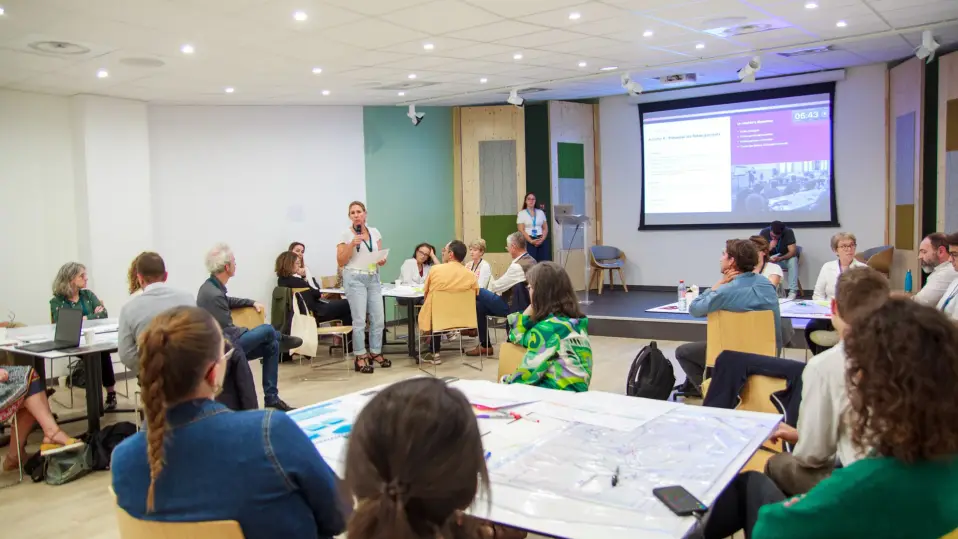
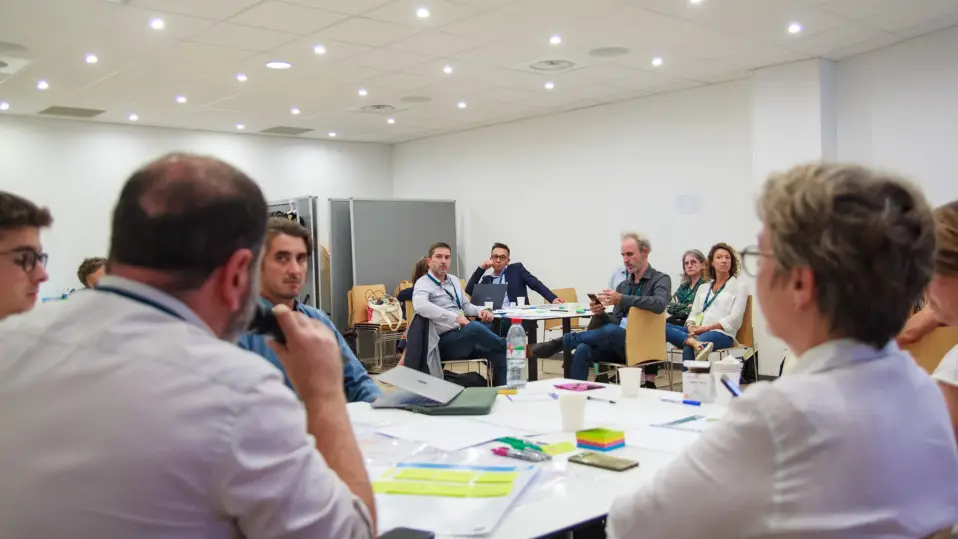
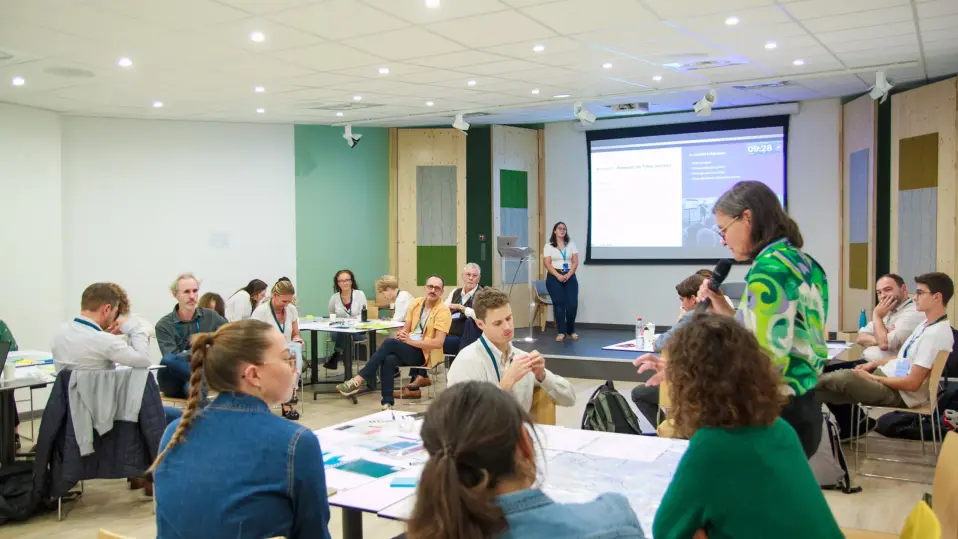
The appeal of a territory rests on its ability to put its strengths in the spotlight while meeting visitors’ expectations. The challenge is to showcase the remarkable sites while taking into account the tourist profiles and their expectations, and integrating local specificities. Before the collective day, each territory selects the priority traveller profiles, which will serve as the starting point for the collective thinking. On the day, participants are split into groups built around each territory.

Connecting the territory’s tourist points of interest
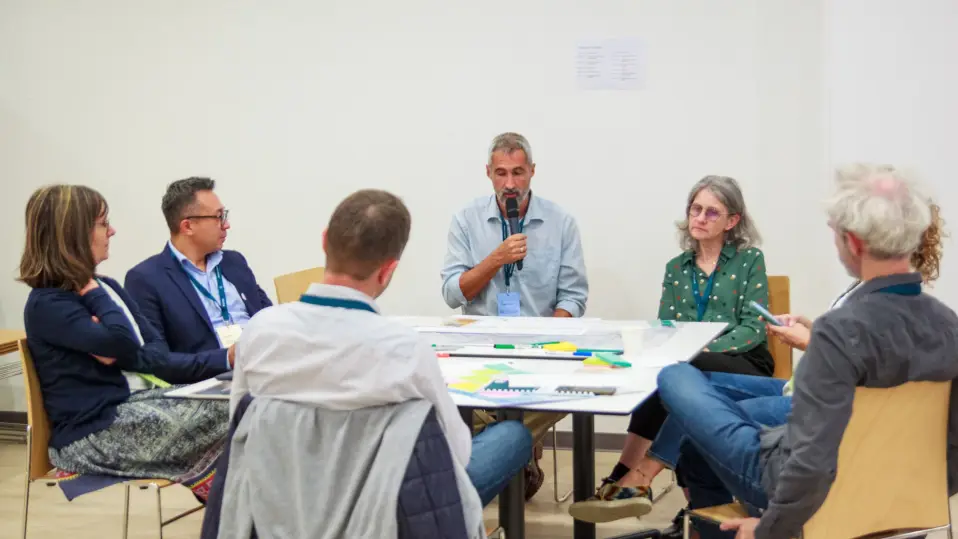
To start, the participants list the territory’s remarkable tourist sites. Building on the expectations of the priority audiences, tourist itineraries connecting these points of interest are drawn on a map. This exercise reveals the necessary interconnection points between the train and the local destinations, while highlighting the current gaps in the mobility solutions.


Presenting the identified journeys
The groups then present the fruit of their thinking. It’s a chance to fuel the debate and to bring out connections between the specifications that are starting to emerge.
Testing the journeys against what exists and the available mobility solutions
Once the journeys are defined in broad strokes (with a starting point and key steps), they need to be tested against the mobility infrastructure and services already in place or available on the market. The aim is to draw up a precise inventory to identify the strengths to showcase, the points to optimise and the gaps to fill, in order to guarantee coherent and accessible trips. Building on the identified journeys, the groups lay out the strengths, the areas for improvement, and everything that is missing today in the territory to make viable solutions imaginable. By overlaying the experience to offer tourists onto this inventory, several solution alternatives are then examined. Each is described in terms of advantages and disadvantages, associated costs, implementation timelines, and so on.


Prototyping a service-mobility offer for the last mile
Detailing the services from the user’s perspective
Once the journeys are defined at a high level, the next step is to detail one of them with precision. The aim is to identify the exact steps, the services to make available and the modes of transport suited to ensuring the connections between them. Thanks to all the material gathered, we identify a journey to look at in detail for each destination. This work calls for a change of scale: it’s no longer just about thinking in terms of broad connections, but about analysing the journey from the user’s perspective, street by street. Each section, each existing or missing piece of infrastructure has to be taken into account to put forward a combined solution that is credible and viable. The participants first validate the stop points that will host the services to offer travellers on site. The proposed services are placed on the map, giving a fine-grained view of the tourist journey: smart lockers, luggage-transfer service, bike parking and repair stations, signage and waymarked maps, information points, and so on. The modes of travel proposed to make the link between these stop points are then defined.

Describing the offer to put forward
Once the experience is detailed this way, the participants refine the characteristics of the associated offer (description, commercialisation, operations, seasonality, indicators). The last collective step finally leads the participants to think about the different stakeholders who will need to be consulted to set up the prototype. A systematic listing of the roles and responsibilities to bring in during the rollout phases is generated. This is to ensure that the specificities of each system defined by the working groups are taken into account: the envisaged project, the zones affected by works, the necessary authorisations, and so on.

Documenting the whole approach for each pilot territory
A booklet to bring together all the thinking
Our support doesn’t stop at the gradual emergence and shaping of ideas. The aim is to produce a clear, structured document that brings together the analyses and describes the solutions imagined. We pick up all the deliverables produced and pull together the entire analysis on the decarbonised mobility prototype in connection with the train, the proposed services and the imagined offer. This way, each territory has all the documentation needed to start the next step in the process: presenting their analysis, describing the concept, sharing it with other stakeholders, putting together a funding application, and so on.

Outcomes of the engagement. This project illustrates the ability of SNCF and the partner territories to co-build sustainable, integrated mobility solutions tailored to travellers' needs. The experimentation laid solid foundations to transform the travel experience and reduce the carbon footprint of tourist transport.