A few tips for recruiting users in guerilla tests
We know how frustrating it is to get turned down all day long during a guerilla test. That’s why we wanted to share a few tips to increase the chances of interviewing a person in a public space. The advice given here is empirical and reflects our own view. At no point do we claim it is absolutely effective or exemplary.
So here are a few ideas to hack UX guerilla tests that you can try out during your next sessions.
Don’t hesitate to share your own practices too.

What it takes to run a successful guerilla test or street interview
The quality of guerilla testing comes, among other things, from a wide and representative sample of the target users. When refusals pile up, it’s normal to lose motivation, to not dare approach people any more. And not daring to approach them means shrinking the sample, and sometimes introducing a recruitment bias. We tend to target profiles that are easier to approach, and so to collect feedback from a stereotyped sample, and so on.
That is why it’s important to separate the personal reasons from the contextual reasons that can explain refusals.

Favour the right settings
We will therefore avoid interviewing people in these settings to minimise refusals (unless the project is about these users or these settings):
- people who are actively busy: reading a book, in conversation, looking up information, eating, shopping of any kind;
- people on the move: they usually have a destination they’re heading to and a time to keep (except in the case of strolling);
- those who show signs of irritation or refusal of social interaction: people sighing and tapping their foot, people isolated in a corner of the station, people lowering their eyes or turning their head when you approach, and so on;
- people who have seen you running the interview with someone else: they will likely already have prepared a reason to refuse.
Once the contexts that lead to refusals are avoided, what tactics can be deployed to approach users?

Offer reassuring and engaging interactions
As is often the case in our work, it all comes down to user journeys. To succeed at your guerilla tests, you have to prepare them well. Focus on the approach, the opening and the moderation during the exchange with the user. Let’s break it down.
Approaching potential users well in guerilla tests
The idea is to avoid giving the person you’re targeting the chance to build a preconception about your intentions before you approach them. That is one of the reasons why some people refuse an interaction with you outright. To avoid these preconceptions, you can, for example:
- Approach the person from the side: this stops them from building that preconception while watching you come towards them from afar;
- Keep the questionnaires in your bag and avoid wearing a lanyard badge, as these are perceived as negative cues;
- If two UX experts run the interview, only one of them introduces themselves. The other stays in the background until the potential participant agrees to take part. This stops the user from feeling trapped.
- And smile, of course.

Making users want to share their experiences
The first moments of the interaction are crucial. You need to prepare the phrasing that will reassure:
- Prepare a very short opening line, ready to go every time, that reassures people about your intentions and your status (“Hello, I’m working for such a client on such a topic, would you have a few minutes to spare to share your opinion on this topic?”). Avoid, at this stage, describing the project, the detailed reasons for the interview or the flow of the interview, mistakes we make out of fear of not being legitimate (“I work for such an agency which works for such a client who wants to know how its users use its product, and for that we would like to ask you 6 questions. We will quickly cover your expectations, the obstacles you come across, and so on”).
- Then share the reassuring and engaging elements (“The answers are anonymous, there are no right or wrong answers, the answers don’t commit you to anything, you’re free to leave the interview whenever you want without having to explain yourself”).
- When they exist, it’s very useful to start the exchange with the benefits of taking part in the interview (“How about a free drink in exchange for 5 minutes of your time?”)
The person has agreed to talk to you: great. But the job isn’t done yet, you still have to deliver a quality interview. And the person facing you may already regret saying yes. In that case, here is some advice for running the interview phase.

Ensuring the relevance of the feedback and maximising engagement in guerilla
Short, terse answers, difficulty getting people to put things into words, an avoidant gaze: it would be counterproductive to try to maintain the engagement of someone who shows signs of irritation. The quality of the little feedback collected will not match the energy spent. It will be more reasonable to wrap up early and approach someone else. But the opposite situation also exists, and seems to sometimes escape us:
- Don’t hesitate to follow (within reason) the digressions of the person being interviewed: this helps maintain their engagement, even if the interview time stretches a bit. The questionnaire serves as a guideline, so it is possible to bring the interview back on track at any moment with sentences like “That’s a separate topic, but we’d also like to have your view on…”; “What you’re mentioning makes me think we’d also like to know whether…”;
- Quickly defuse delicate situations with key sentences prepared ahead of time, without giving a personal opinion, and bring things back to the questionnaire (“I’ve noted your views on these ethical questions; let’s talk now about…”);
- Avoid interviews with several users at the same time (unless the project requires it): this avoids conformity biases and debates from which it’s hard to extract clear feedback. It also limits analysis difficulties when it comes to crossing the sample’s qualification criteria with feedback.
Ready to hack guerilla tests?
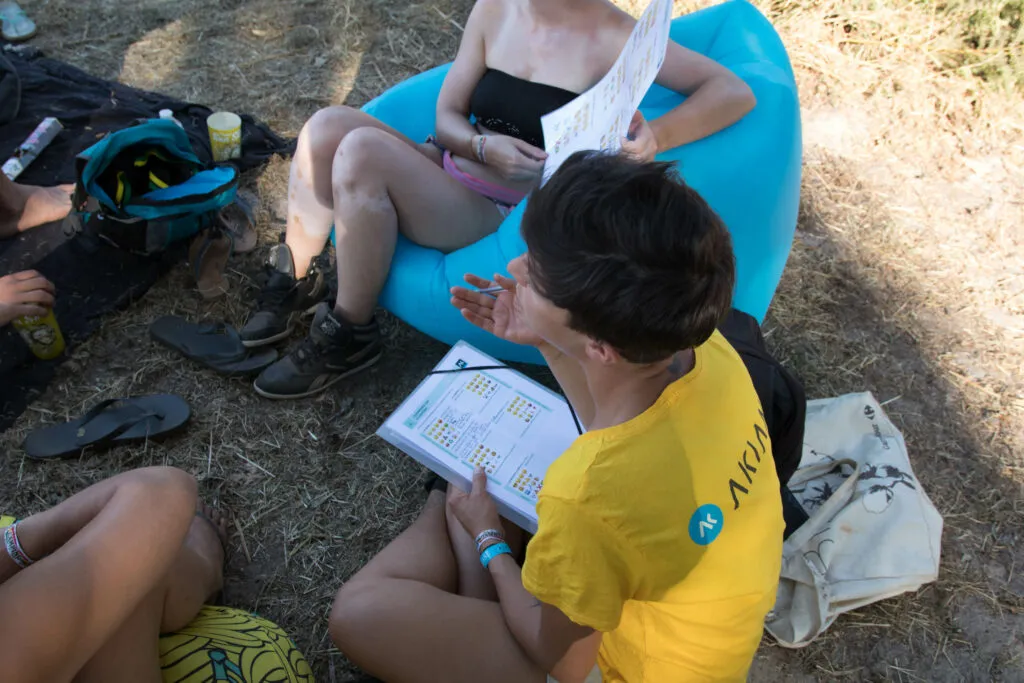
Let us know if this advice has helped you increase your chances of interviewing users during guerilla testing. On our side, we’re always open to your own tips for getting better. At the Reggae Sun Ska festival, we had the opportunity to put all this advice into practice. If you’d like to see more, take a look at our Reggae Sun Ska case study.