Artificial intelligence for everyone
Today, everyone is only talking about artificial intelligence. There are no more algorithms, only AI. In terms of usage, two risks seem to take shape: that artificial intelligence is not intelligent enough, and therefore disappointing, or too intelligent, and therefore unintelligible.  If it’s simply a new nickname for what we used to call algorithms, users won’t take long to figure out that the intelligence in question is sometimes logical and effective, but above all limited. Chatbots, those “conversational robots” you’re supposed to be able to talk with as you would with a human, demonstrate this every day. The value proposition risks not living up to the promise, creating disappointment and therefore degrading the experience. The second risk is the opposite: that the intelligence is extremely effective, far more than we humans could be. And then designers will face a different kind of challenge, that of its intelligibility. How do you explain the output of a neural network whose workings are so complex? We raised this risk in an article by coming back in particular to the Google Translate algorithm, as well as autonomous vehicles, or even the AlphaGo artificial intelligence (look at the commentators’ reaction in the video below!). The DARPA XAI model is one path to making these intelligences more understandable to humans.
Around blockchain
Blockchain opens the way to a new web, the decentralised web, and to a new digital economy, the token economy.

You can multiply the metaphors (sometimes very funny) to explain blockchain, but the bottom line is that in the end, not many people are interested in how it works. What we will all be interested in, however, is what it brings us, which problems it solves, and how much our life is simpler or safer because of it. And for now, you often have the feeling that it is more a marketing claim than a technology in the service of users (opens in new window). The challenge for designers will therefore be to demonstrate the added value of this new technology compared with what exists. And maybe to avoid boring the user with the details of the technology that is making their life safer. When you buy an alarm, you’re not so interested in the technology that makes it ring when it needs to, but in the fact that it does ring when it needs to.
Augmented and mixed reality
The promise is appealing: enrich the real world with information that would help people make decisions, understand things, in short, so that everyone becomes a bit of a fighter-jet pilot of daily life.
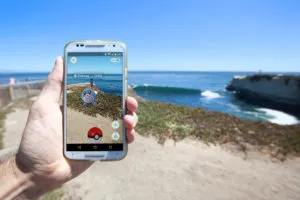
That’s the theory; in practice, it means wearing glasses, not necessarily very elegant ones, or holding your smartphone at arm’s length to scan the environment. Nothing very comfortable, and the technology will have to prove a strong added value before it becomes as widespread as hoped. Luke Wroblewski, a very well-known designer (Product Director at Google, no less; this man is brilliant, follow him on Twitter! (opens in new window)), has put together a list of useful uses of augmented reality on his blog (opens in new window). Plenty of very interesting ideas, including decoding the pictograms on clothes labels, foreign currency conversion on the fly, or showing user reviews on physical products.

In short, it’s about bringing the power of the web into “real life”. Far from most current augmented reality apps, which offer Pokémon hunting in parks or playing Street Fighter with the street as a backdrop for fights. Fun, but not very useful or exciting in the long run either.
Smart things (smart home, smart city, sometimes smart people)
In the same way as before, bringing sensors into the home, into the city or even onto ourselves, while it certainly lets us collect relevant data, has to be done with a clear focus on how citizens and visitors will actually use it, in order to get past the initial hype and ensure long-term value. Running apps collect data to give us personalised advice to improve, not just to sell us a new pair of shoes when our current pair has covered a certain number of kilometres. Measurements of how busy car parks or rooms in the house are may allow for automatic, adapted street lighting. In short, the future is here, but the question to ask remains the same: do these technologies meet a real user need? Amélie Boucher tackled this topic very well, as usual, at Paris Web 2018. Her talk (opens in new window) is online. She also talks about other topics around the future, in particular voice interfaces such as Google Home or Amazon Alexa. Go and watch it, it’s great.