


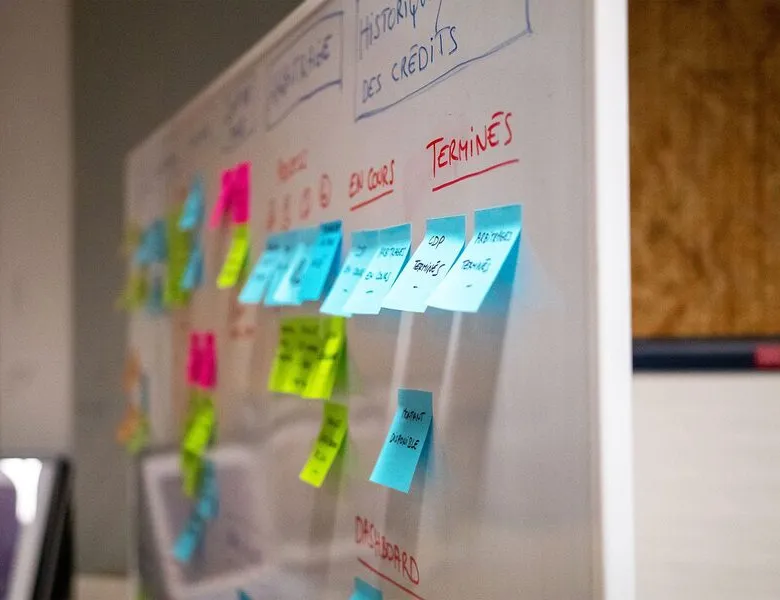


Design thinking is an innovation-management method. This thinking framework emerged in 1980 but only became popular in the early 1990s. The rise of the expression design thinking was largely carried by design firms, starting with IDEO (with the d-school) and Tim Brown.
The principle is simple, but it can vary depending on the school of thought. Some present the method in 5 steps, others trim it down to 4 or extend it to 7. The vocabulary and content of these steps can also vary, but the stages remain very similar.
01
Empathy
Ideally, you can engage directly with users to gather real, representative data on how they feel. At a minimum, you'll include exchanges with subject-matter experts and the sharing of information sources relevant to the topic.
02
Problem definition
Based on the previous step, the goal is to identify and prioritise the relevant topics, framed as a problem to solve.
03
Ideation
Often run as a workshop, this step is about generating possible solutions to discuss and refine with the group.
04
Design
Building a prototype, a mockup or other storyboards based on the chosen idea, and ideally something that can be tested afterwards.
05
Evaluation
Confronting the candidate solutions with potential users to gather their feedback and evolve the product or service. The conclusions of the evaluation can become the inputs of a new empathy phase, to progress through iterations.
Though optional, this step lets you have exchanges with target users, usually based on a prototype, even a very partial one. Evaluation and the prototype can take many forms depending on the project context.
It is important to make clear that this is not a recipe that guarantees success, but rather a working framework. Following the different steps mainly helps to limit the risk of forgetting a whole part of a project. Most UX approaches are carried out in the spirit of this 'design thinking', with longer or shorter periods devoted to each step. All of this depends on the stakes and the constraints specific to each project.
Though optional, this step lets you have exchanges with target users. In general, this is done on the basis of a prototype, even a very partial one. Evaluation and the prototype can take many forms depending on the themes of the projects. It is after this time of confrontation with real users that the process becomes iterative. When you widen the thinking to UX projects in general, every method can be considered (qualitative or quantitative).
The design sprint offers a condensed version of the design thinking process. In just a few days, the design sprint method promises to deliver very promising results. Feedback from experience mainly points to the quality of the awareness it raises (through experimentation) about the spirit of the user-centred design approach. Which is still an important first step!

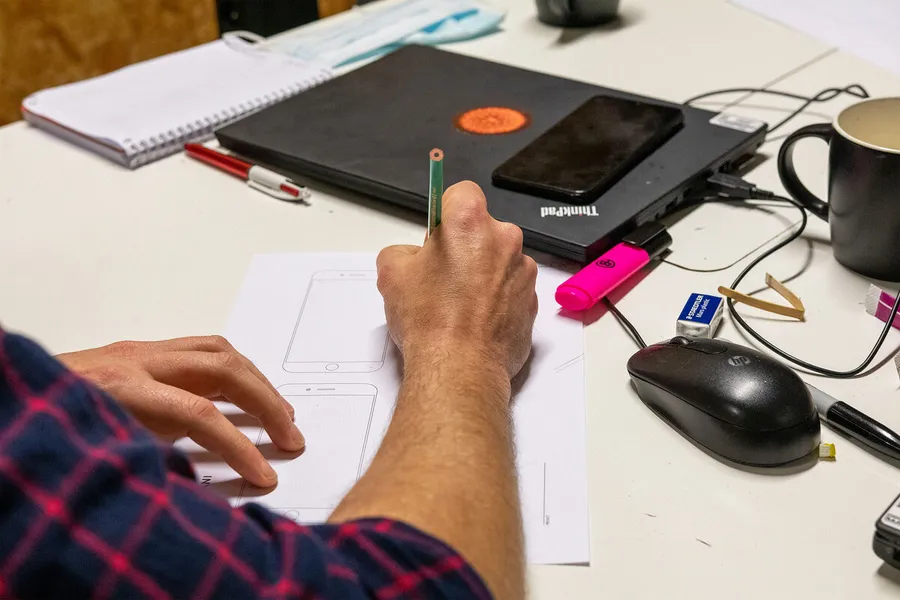




Sketching is a technique for creating interfaces as drawings, most often by hand. It is often used in co-design workshops.
Read more about SketchingUser testing has target users assess the usability of your product or service. Depending on the goals, several approaches exist.
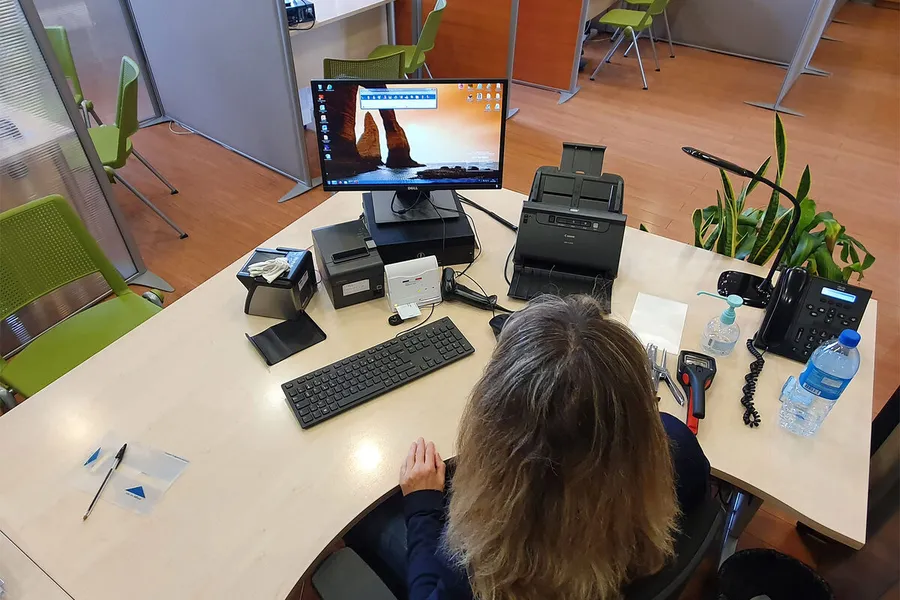
Read more about User testingService design shapes the whole experience of a service, online and at the counter, beyond its screens. Definition, public sector and examples.
Read more about Service designPersonas come out of work on user-profile modelling. They highlight behavioural archetypes that prove useful when designing.
Read more about PersonasDrawing on collective intelligence, these workshops align stakeholders and surface solutions with the team and/or the end users.
Read more about Co-designThe design sprint is a format, not a method, that condenses the design thinking steps into 5 days to tackle a problem as a group.
Read more about Design sprintMore or less advanced animation of the screens to present a dynamic journey to users and gather feedback.
Read more about PrototypeQualitative research explores users' motivations and barriers. It answers the why where quantitative metrics stop at the what.
Read more about Qualitative researchEveryone talks about user experience, service design, ergonomics...
It's not always clear, and you'd like to find out, or sharpen what you already know.