


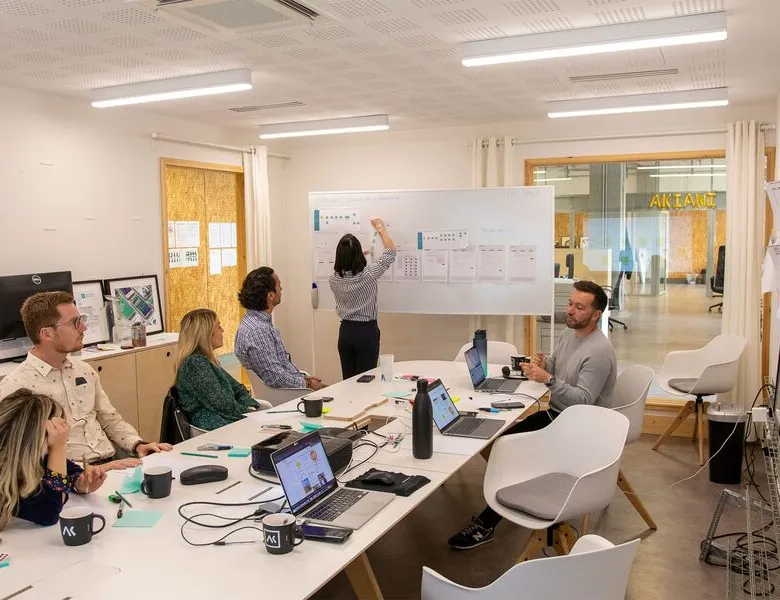


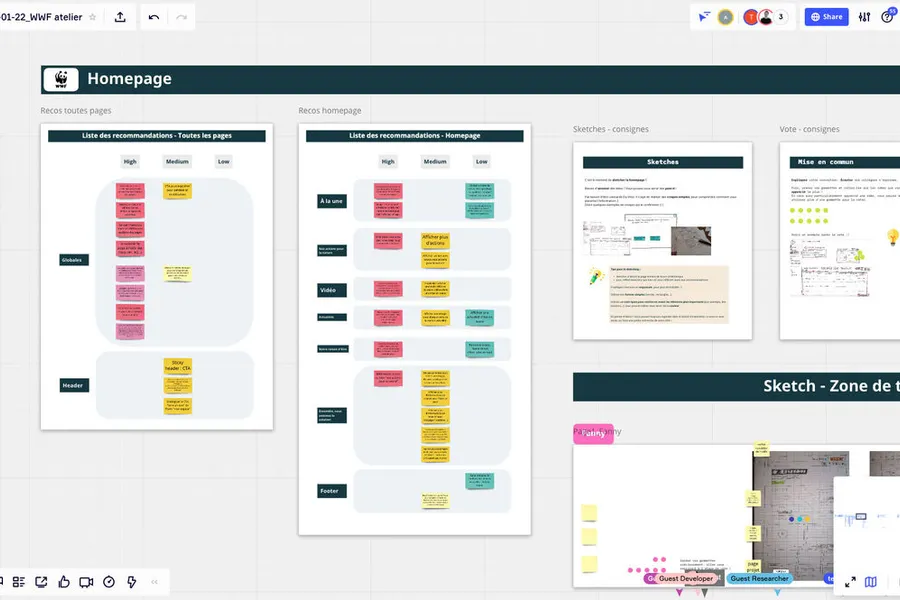
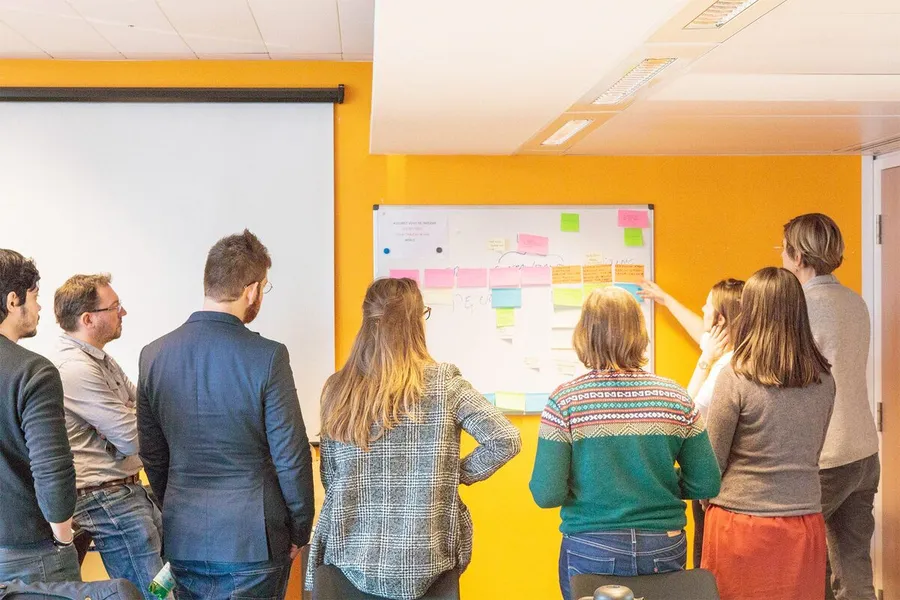
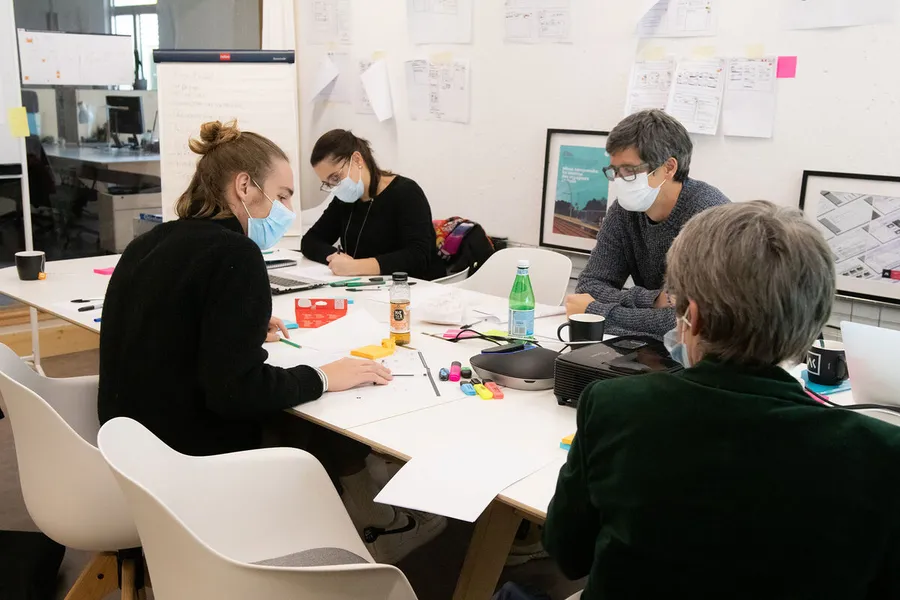
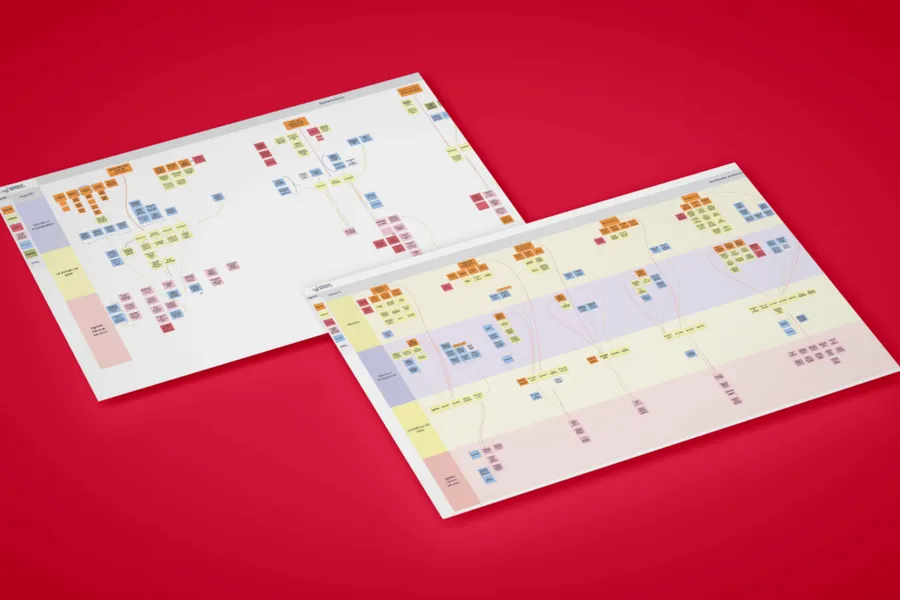
A very important stage in a project, the co-design workshop brings together subject-matter experts and designers to develop solution paths together. A co-design workshop can take several shapes: mapping user journeys, building proto-personas, sketching the first screens, and so on.
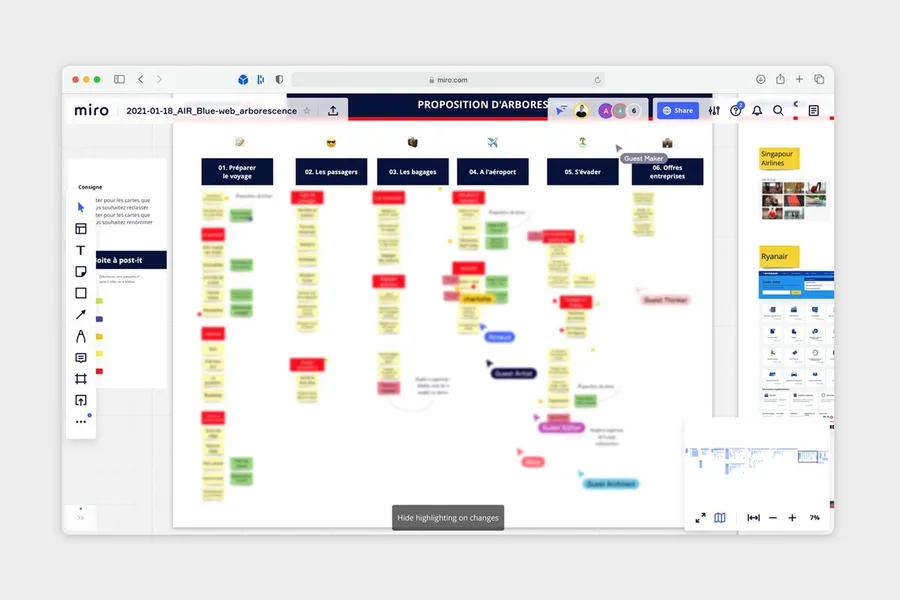
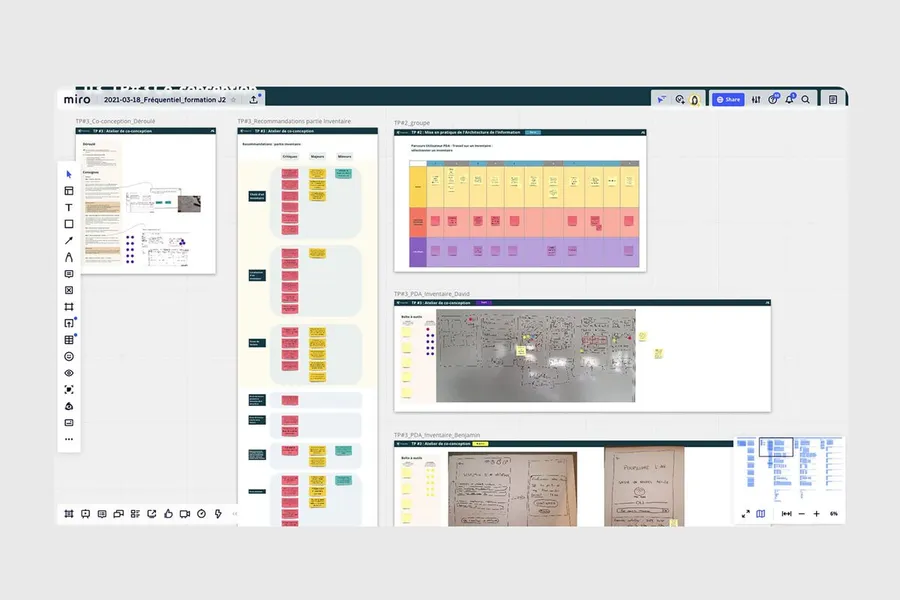
Co-design covers very different formats depending on what you are trying to produce: crazy 8, card sorting, co-sketching, journey mapping, and so on. There are two types of workshop depending on the goals: co-design with end users, to anchor solutions in real needs from the field, and co-design with subject-matter experts, to build operational constraints into the design phase. Both can be combined on the same project.
01
Start from solid ground
Take a teaching mindset and clearly explain how the workshop will run and what's expected
02
Feed the thinking
Lean on findings when you have them: user feedback, a benchmark, example solutions, anything that fuels the thinking and stops participants getting stuck
03
Facilitate the workshop
Frame the session by keeping an eye on time and steering attention back to the needs whenever discussions drift
04
Define the expected outcomes
Make sure you leave with material that can be used: annotated diagrams, a list of priorities, initial solution ideas, and so on. This will make the rest of the project much easier
The course of a workshop is often subject to scheduling constraints and to everyone’s availability. To make the most of this precious time and gain efficiency, it can be useful to arrive at the workshop with a first draft. It will then be put to the test, questioned and enriched by the participants in order to bring out avenues for improvement and new ideas.
This approach avoids blank page syndrome. It offers a concrete starting point to critique, enrich and evolve, while helping participants project themselves. In short, it is an excellent way to kick off the thinking and fuel the discussion.
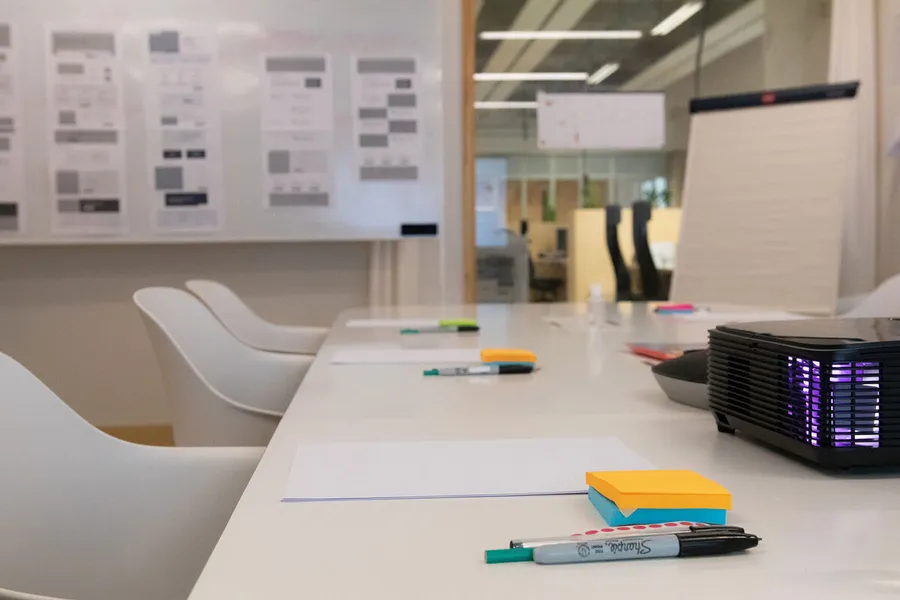
A co-design workshop usually lasts between half a day (3 to 4 hours) and a full day. Rarely less on paper, but everyone’s availability means you adapt constantly. The length varies with the complexity of the problem to tackle, the number of participants and the activities planned. Bear in mind that remotely, on dedicated tools such as Miro, FigJam or Klaxoon, you quickly lose the attention of participants and a workshop that runs too long will be counterproductive.
User testing and co-design do not take place at the same point in the process. In the first case, the user reacts to a solution submitted by the team. In the second, they help build it. The two are complementary: co-design generates ideas anchored in real needs, user testing checks that the solutions designed do meet those needs.
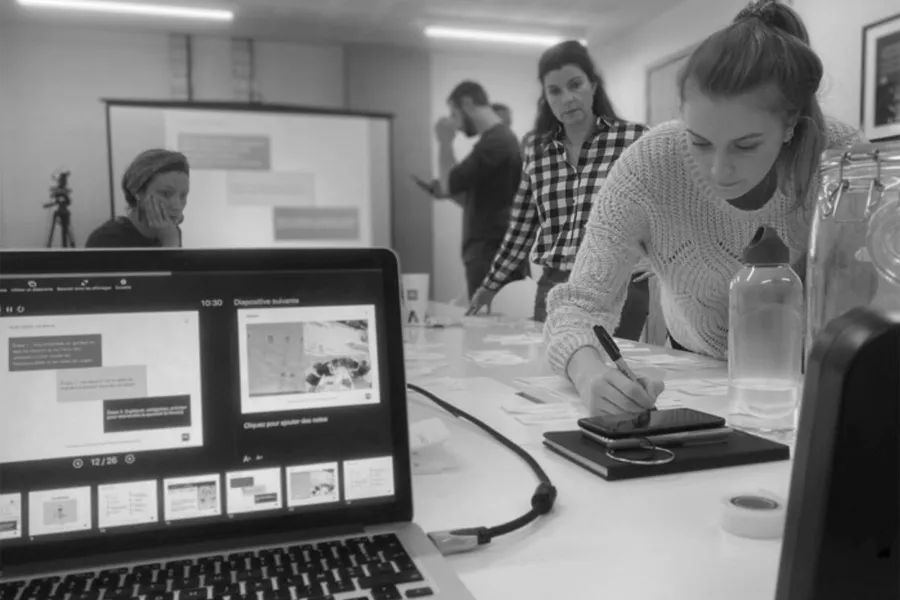
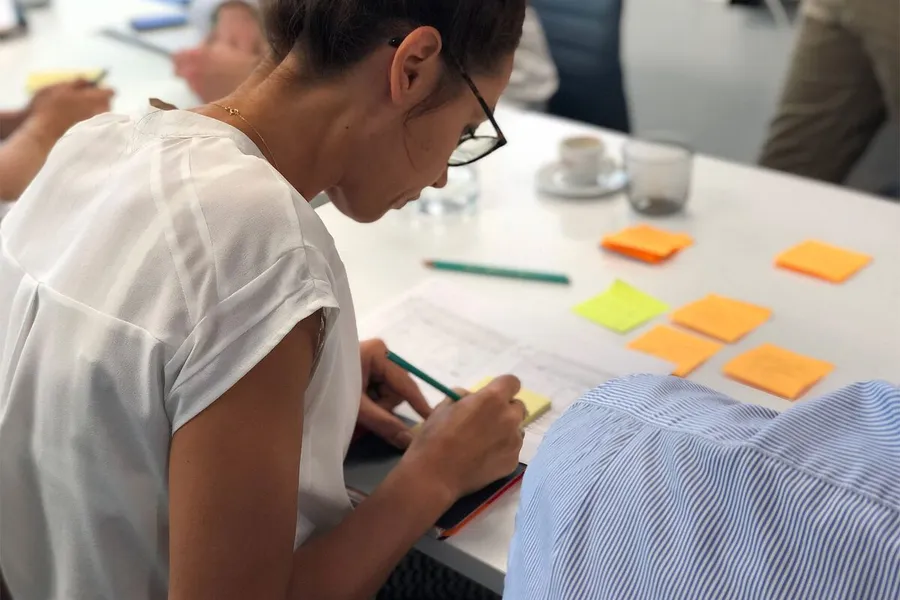
The workshop relies on activities that allow non-designer participants to contribute without mastering design tools. Co-sketching, reworking user journeys or building usage scenarios are accessible to everyone. The principle remains the same: one phase to generate ideas, another to select them. The workshop is facilitated by the designer in charge of the project, often a UX practitioner supported by a lead, who balances contributions when the workshop brings together people at very different levels of seniority, such as decision-makers, users and technical experts.
Co-design and expert design are not mutually exclusive, but they answer different needs. Co-design brings all the stakeholders together to draw on everyone’s expertise and vision, and to prioritise together the areas for exploration that will address the various needs. Expert design (us) gives shape to those solutions by fitting them consistently into a system. What we often do is combine the two: co-design upstream to understand what is really at stake, then hand the execution to experts (still us) to produce a coherent solution on those foundations.
For most projects, we still find it worthwhile to take a little time to think through solutions together. At worst, it lets everyone get aligned, identify the risks, prioritise the next steps and quite simply talk about the direction to take.




The design sprint is a format, not a method, that condenses the design thinking steps into 5 days to tackle a problem as a group.
Read more about Design sprintMore or less advanced animation of the screens to present a dynamic journey to users and gather feedback.
Read more about PrototypeA storyboard illustrates a usage scenario in context. It is a UX tool for exploring a service idea or specifying the sequence of interactions.
Read more about StoryboardAn innovation-management method built on 5 pillars that make for a useful thinking framework. A heads-up: it's no magic recipe.
Read more about Design thinkingA discussion group, run by a facilitator, where users speak about a shared theme through structured debate.
Read more about Focus groupField observation watches users in their real context, with a structured observation grid.
Read more about Field observationEveryone talks about user experience, service design, ergonomics...
It's not always clear, and you'd like to find out, or sharpen what you already know.