


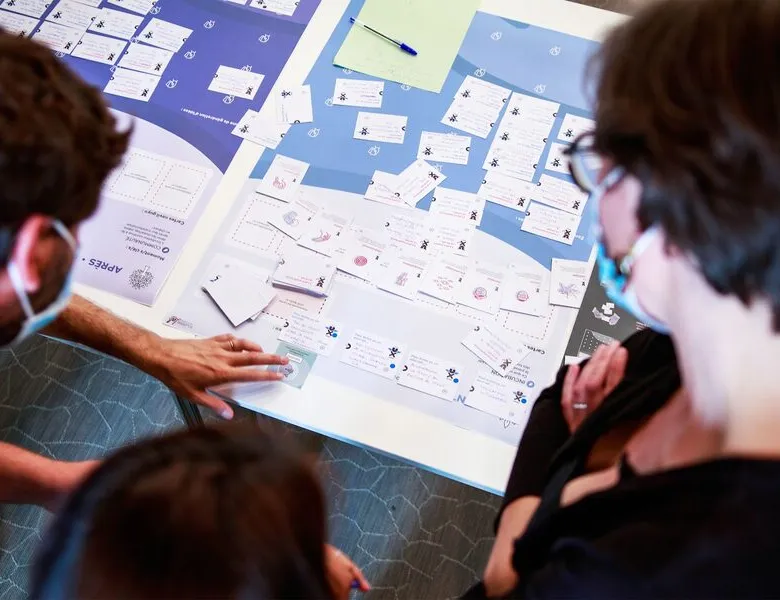


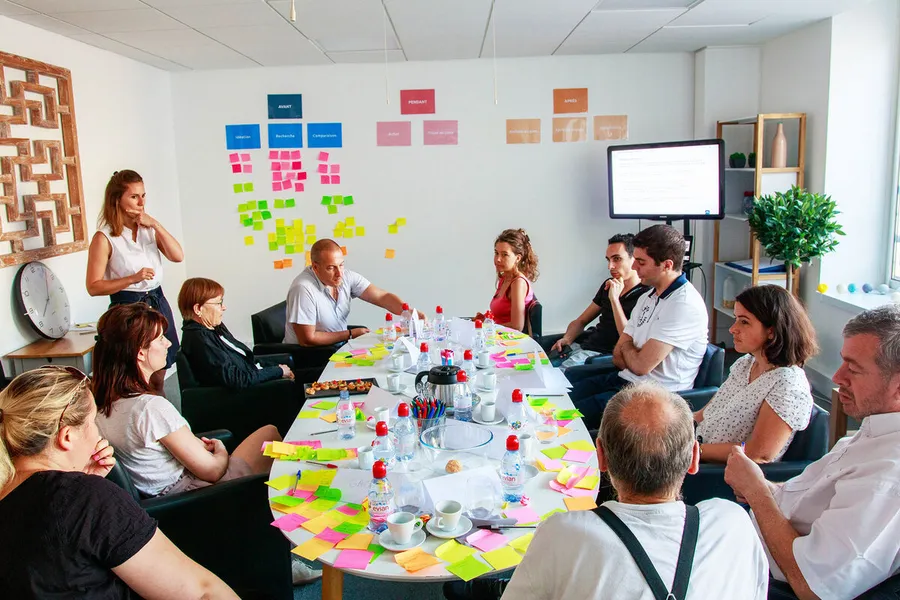
A focus group, or discussion group, is a moment of dialogue led by facilitators where users exchange around a shared theme. A small group (usually 6 to 8 people) is brought together to share their lived experience, their needs and their frustrations on a topic. Compared to one-on-one approaches, the focus group gathers a wider variety of perspectives in a shorter time. On the other hand, a focus group often centres on a predefined topic (the focus itself), which rules out getting very detailed feedback from each participant. What the approach loses in singularity, it gains in collective intelligence: one person's ideas resonate with the others and bring up points they wouldn't have raised on their own. The dynamic is facilitated so that everyone has a chance to contribute and has room to speak.
01
Preparation
Set the goal and the protocol, produce a facilitation guide, define the exercises and the materials needed to gather the data you're after. Depending on the topic, the materials vary: a journey skeleton, inspiration material, visuals to spark reactions in the group, videos, and so on.
02
Recruiting participants
Recruitment criteria matter for this exercise. It's essential to build groups that are homogeneous with respect to the topic being studied. For instance, you'll avoid mixing expert users with beginners.
03
Facilitating the focus group
Energisers and ice-breakers are planned to create an atmosphere that supports creative thinking. Individual preparation time alternates with shared time, to allow people to bounce off each other and collaborate. Facilitating a discussion group is demanding. You'll make sure everyone gets airtime by paying attention to participants who might monopolise the floor. Managing time and keeping the discussion focused on the key topics are part of what makes it work. Facilitating in pairs makes it easier to handle both the facilitation and the note-taking.
04
Working with the data
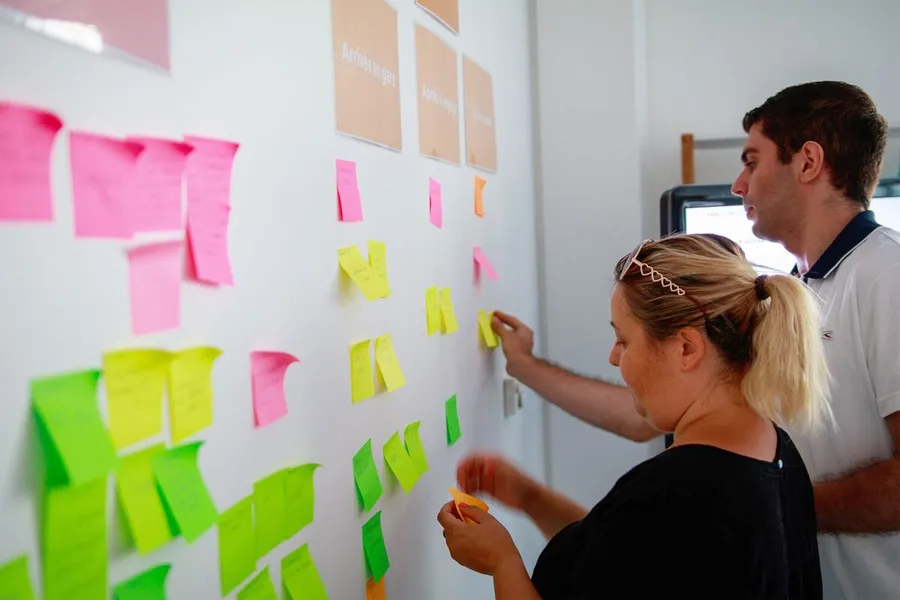
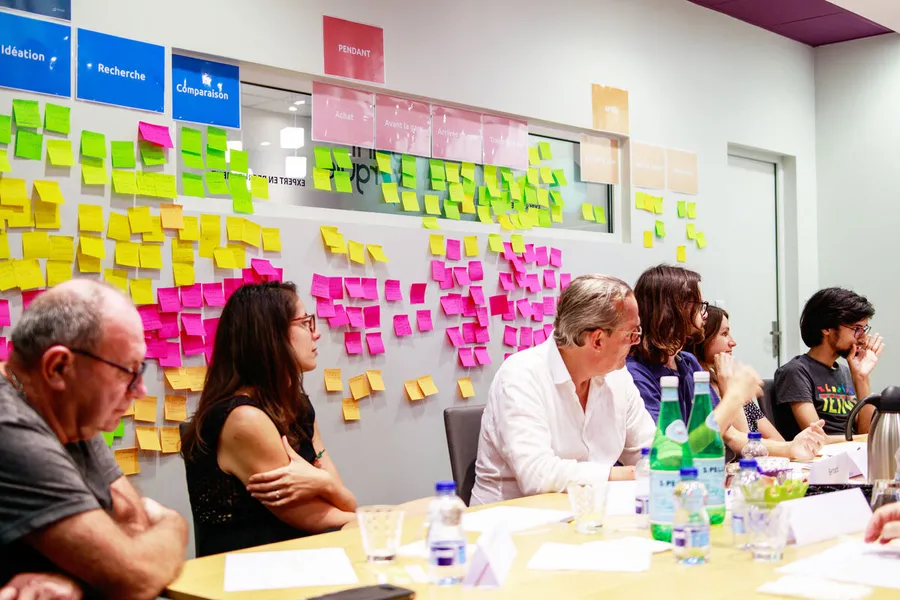
Depending on what the method should deliver, the analysis can take more or less time. Ideally, we make sure the exchanges with participants are captured directly on a shared board. To that end, using a template and displaying boards on the wall to fill in during the session helps with the write-up. Focus group sessions are most often recorded so you can revisit them alongside the notes.
Welcoming and running a group takes time and energy. We recommend having at least two people to facilitate the session. Arrivals, which often happen in dribs and drabs, and the closing of the session are moments that can take a while. In some cases, the client may want to take part in the session, either in person, behind a one-way mirror, or remotely through a live stream.
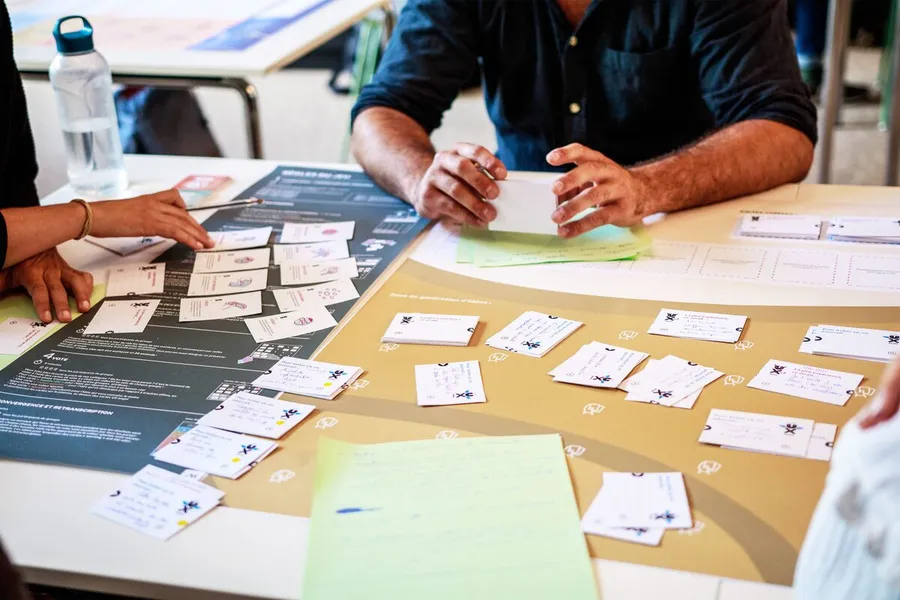
A focus group needs a meeting room big enough to hold the group. So that everyone can talk to the others, you generally plan a way for people to identify themselves (a badge or a name card, for instance). You often need to display materials on the walls. If you want to capture the discussion, plan for a microphone and/or a camera.
The exercise is harder when the group is remote, particularly when it comes to keeping every participant engaged for the whole session. When bringing the participants together in one place is too complicated, it remains a workable option. As is often the case in UX research, you have to find the best compromise to meet the goals of the project.
As a rule, focus group sessions are recorded (audio and video capture) so you can go back over various passages after the session. Alongside the facilitator, a second expert handles the note-taking.
Since the data can be very different, the analyses are just as varied. When the focus group aims to trace user journeys or service maps, the analysis will mostly involve synthesising the discussions. For focus groups run as a collective debate, you can opt for discourse analysis.
It all depends on whether the focus group is part of a wider qualitative study or is run on its own. Since it brings together real users or real customers for one to several hours, the raw material can be a deliverable in its own right. Depending on the analyses, the results are gathered in a summary report with extracts from the discussions.




The user journey breaks a process down into steps to surface user needs and expectations for a given goal.
Read more about User journeyField observation watches users in their real context, with a structured observation grid.
Read more about Field observationDrawing on collective intelligence, these workshops align stakeholders and surface solutions with the team and/or the end users.
Read more about Co-designThe design sprint is a format, not a method, that condenses the design thinking steps into 5 days to tackle a problem as a group.
Read more about Design sprintPersonas come out of work on user-profile modelling. They highlight behavioural archetypes that prove useful when designing.
Read more about PersonasThe user interview goes after what questionnaires don't capture. 5 types of interviews, how to choose, and the trap of social desirability.
Read more about User interviewQualitative research explores users' motivations and barriers. It answers the why where quantitative metrics stop at the what.
Read more about Qualitative researchEveryone talks about user experience, service design, ergonomics...
It's not always clear, and you'd like to find out, or sharpen what you already know.