


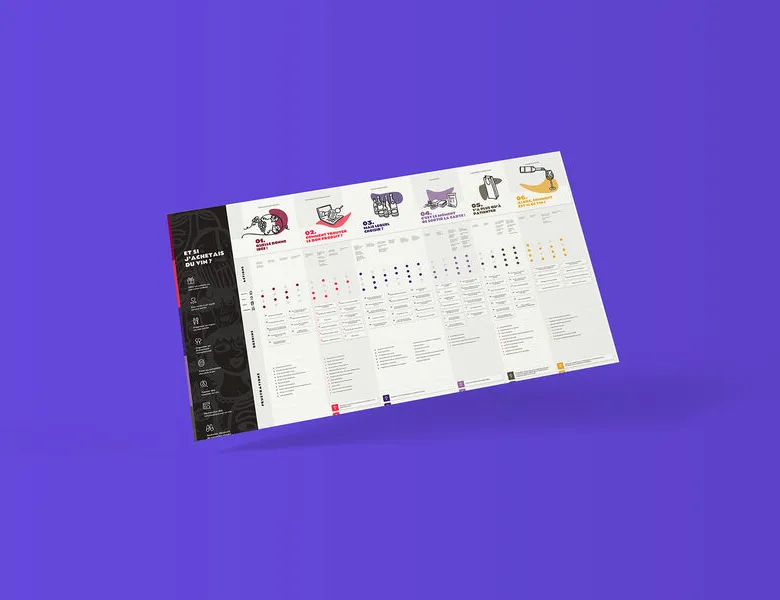


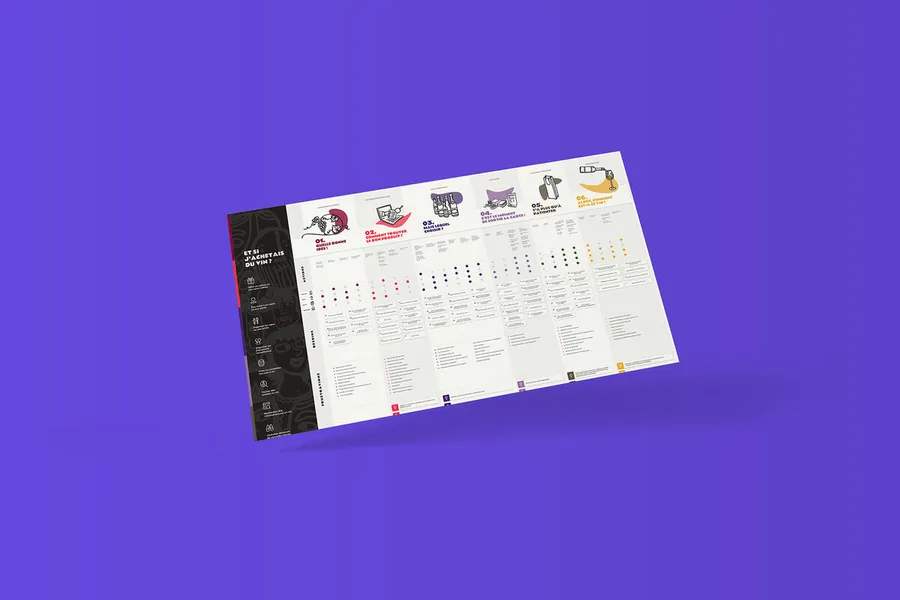
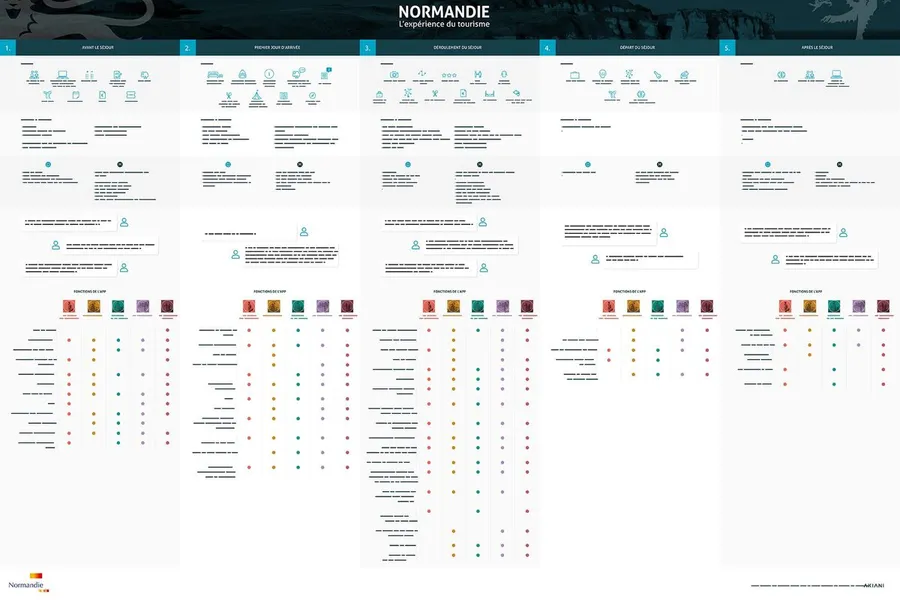
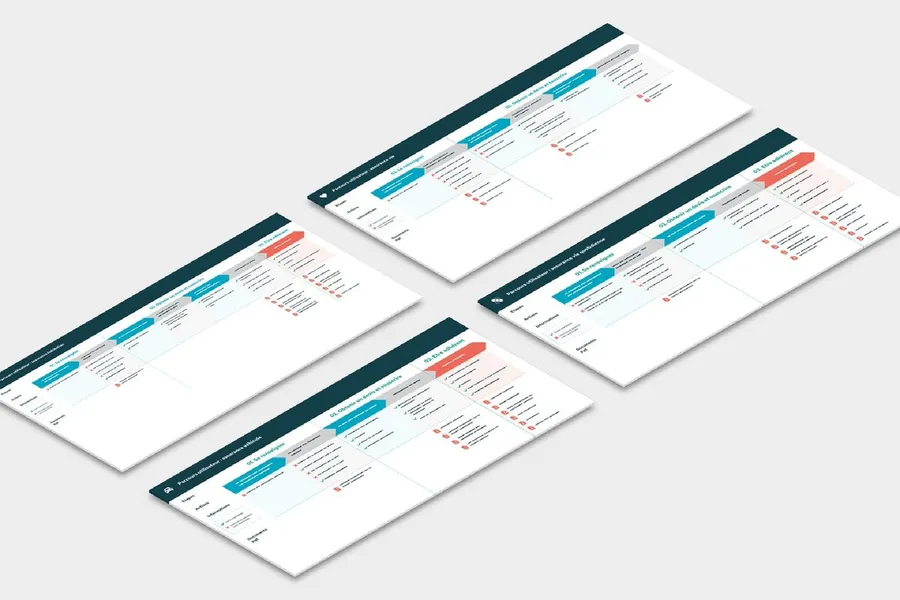
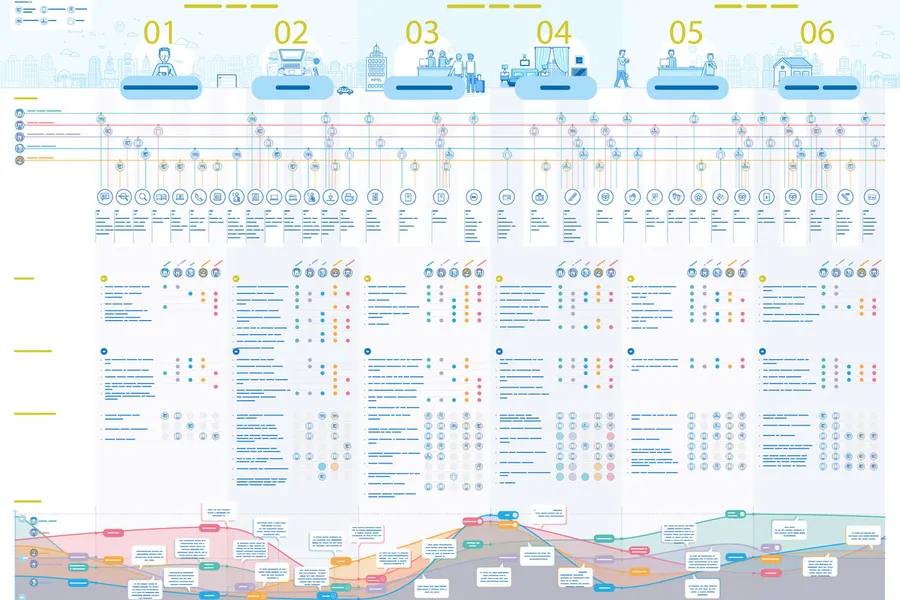
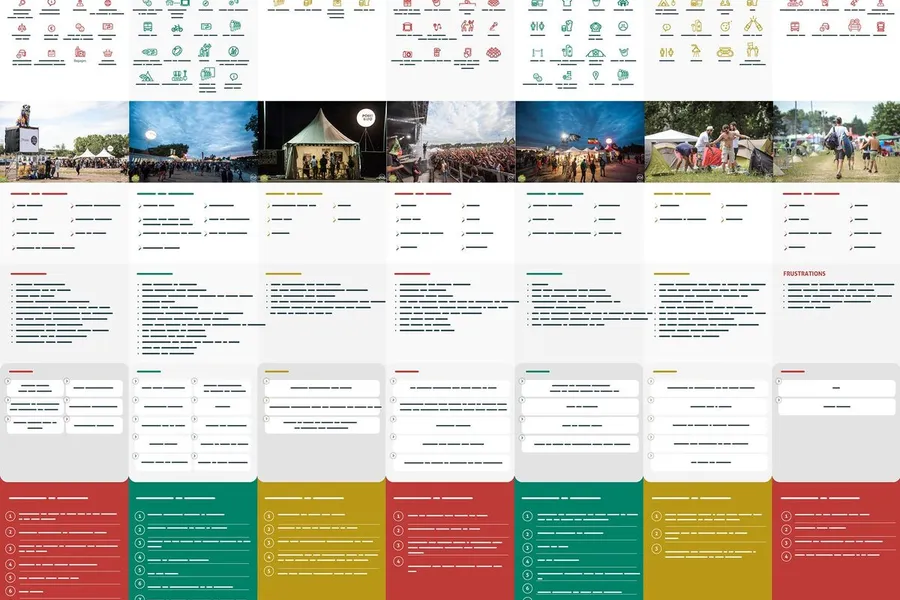
The user journey, also called customer journey or journey map, is a very common tool in UX. The term refers to a generic principle of visualising the process a user follows to reach a goal. This formalisation focuses on the steps of the user journey for a given scenario. The user journey presents a chronological breakdown of this scenario into steps. For each step, you record, at the very least, the actions taken by the user following the path. In more detailed forms, the users' needs, expectations and frustrations are also captured. You can represent variations for the different user types (mainly personas) on a specific journey. A user journey can be produced based on expert analysis, business data, or even directly on user data. Depending on the project, the user journey can take many shapes, more or less detailed. When the part lived by the user is very detailed, you'll lean towards an experience map. When you focus on the internal organisation of the various touchpoints and how they work, you'll lean towards a service blueprint.
01
Goals and needs
The goals the user wants to reach (note-N-map, jobs to be done) and the path taken to navigate the information architecture (user flow).
02
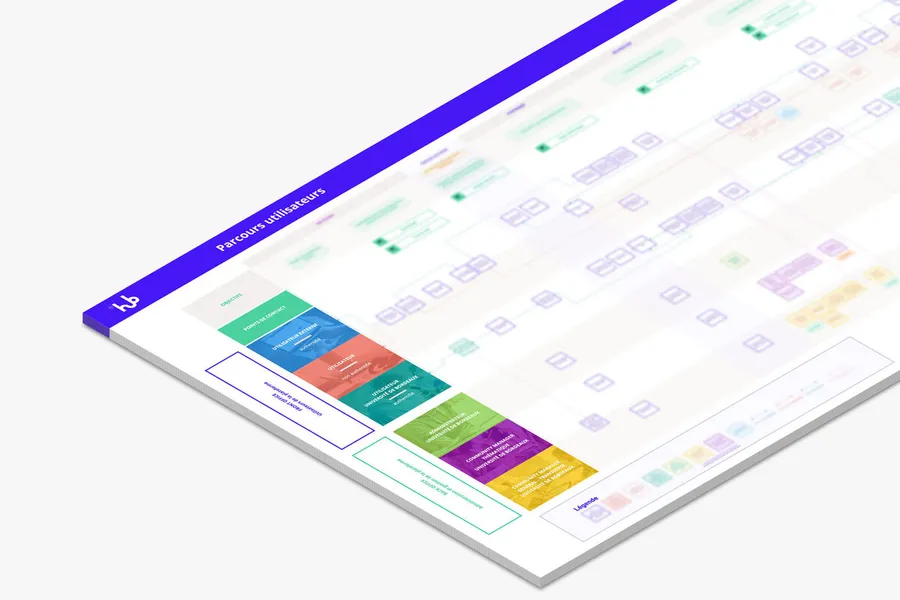
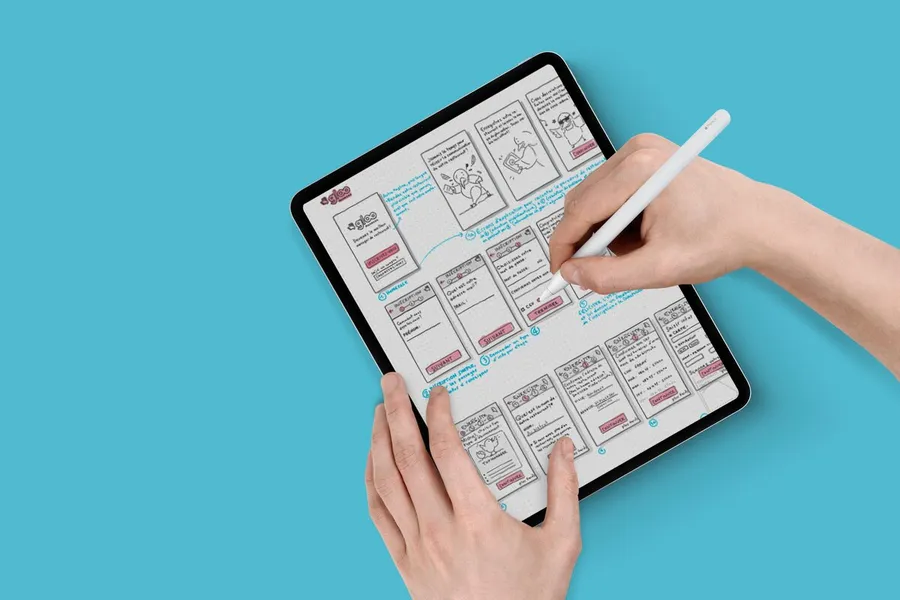
Screens and interactions
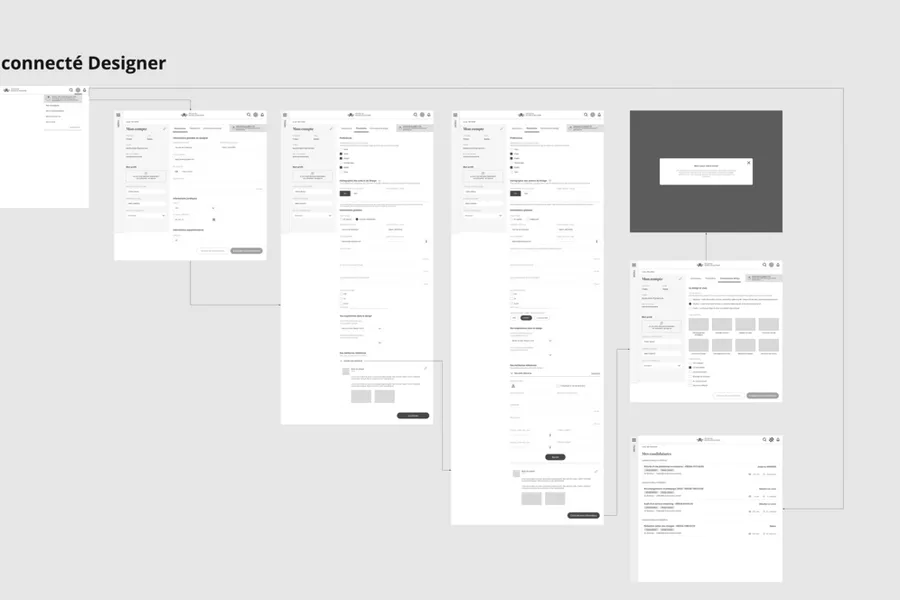
The sequence of screens the user goes through (screen flow) and how an interface behaves in a given scenario (prototype).
03
Concepts and experience
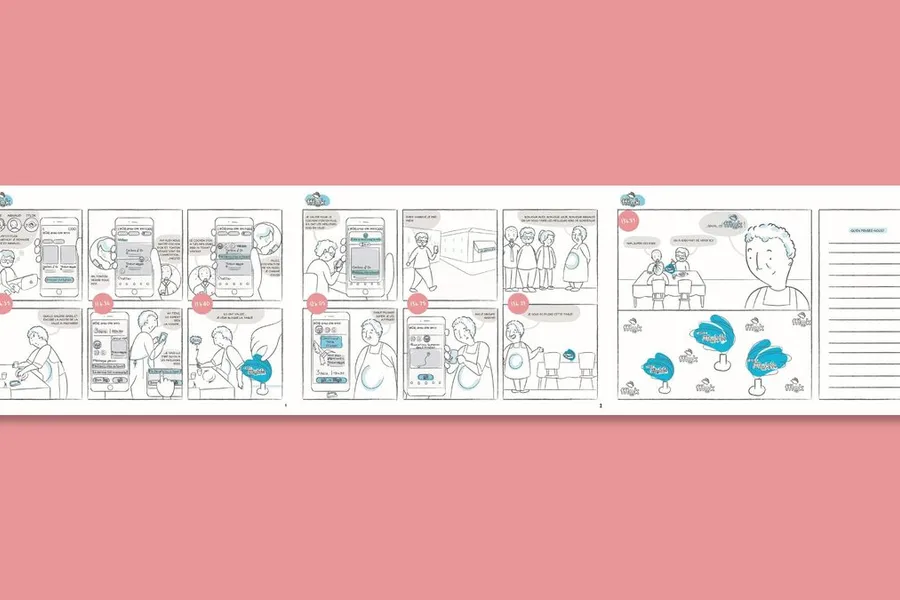
Demonstrating the concepts tied to a step of the journey (storyboard) and the characteristics of the lived experience (experience map).
04
Internal system
How the system works internally at the various steps (service blueprint).
We’ve taken part in several ergonomics and design conferences to share our expert approach, which rests on building user journeys. You can find an example presented at UX days in 2021 in a dedicated blog article on UX design from user journeys.
The persona describes a user archetype based on behavioural variables that come from user research. The user journey describes what happens for one or several personas across a succession of moments in the experience.
There are several formats of user journey, and therefore different methods for building them. In general, you draw on observation or interview data, which makes it possible to start from real, lived situations that are described along the dimensions included in the journey.
The user journey is the experience as it is offered to the user of a service. The service blueprint is the whole organisation of the touchpoints that make the various services work at each step of the journey. The first gives the visible part of the iceberg and the second the submerged part.




Personas come out of work on user-profile modelling. They highlight behavioural archetypes that prove useful when designing.
Read more about PersonasService design shapes the whole experience of a service, online and at the counter, beyond its screens. Definition, public sector and examples.
Read more about Service designThe user flow is a visual representation that models the paths a user can take when going through a site or an app.
Read more about User flowA storyboard illustrates a usage scenario in context. It is a UX tool for exploring a service idea or specifying the sequence of interactions.
Read more about StoryboardUX mapping represents a concept or a problem in a simplified form, to make it easier to understand and take ownership of.
Read more about UX mappingThe experience map focuses on the visible part of the experience: what a user goes through with a service or product, before, during and after.
Read more about Experience mapThe service blueprint represents the back-office side of the experience. It describes the organisation of the touchpoints the user crosses.
Read more about Service blueprintEveryone talks about user experience, service design, ergonomics...
It's not always clear, and you'd like to find out, or sharpen what you already know.