Affordances explained simply
First, the term affordance is a neologism proposed by Gibson back in 1979 to describe the possibilities for interaction offered by the environment. This depends on the motor repertoire of a living being. More simply, a chair suggests the action of sitting down for a human, but not for a dog. Indeed, the dog’s motor repertoire doesn’t have the same way of sitting as humans do: the chair therefore doesn’t suggest the same possibility for interaction to the dog.
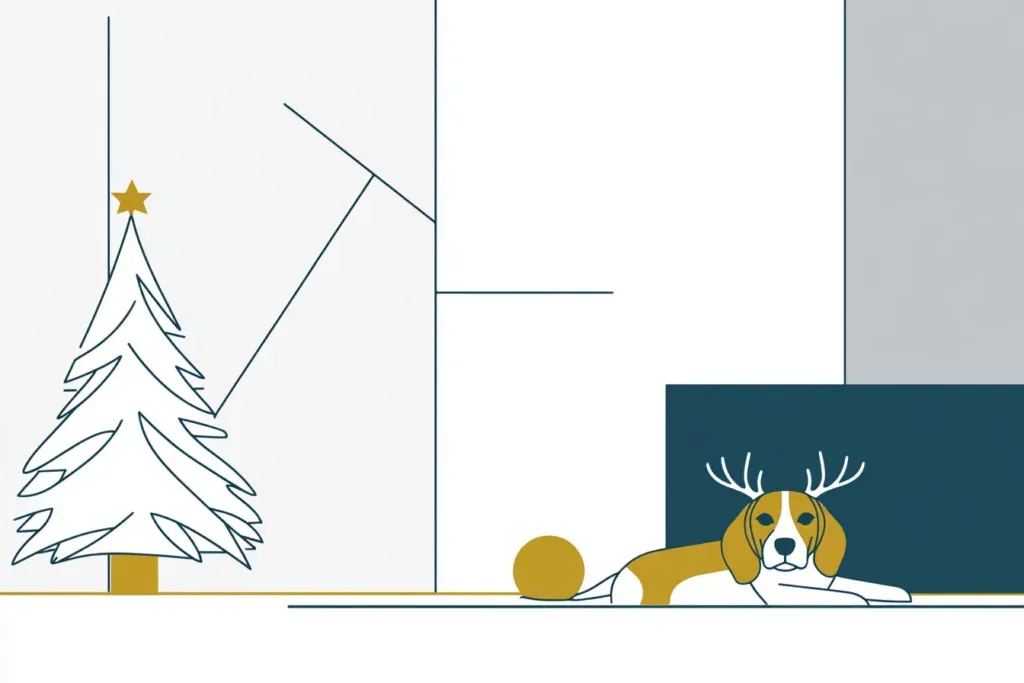
And this is true for plenty of things in our environment: who thinks of pushing a door when a vertical bar fixed to that door spontaneously suggests the action of pulling it to open it? To identify these issues and others tied to the user experience, our experts carry out comprehensive UX and usability audits.
The war of the “buttons” (on an interface) explained to your little brother
Interest in this perceptual-motor phenomenon gave rise to a debate between ecological psychology and cognitive psychology over the last 30 years (Garbarini & Adenzate 2004).
But advances in research methods have refocused the debate on the study of the properties of the neurophysiological substrates involved in these processes. And it is the so-called visuomotor neurons that are particularly in the spotlight to explain the neural processes involved in this coupling between perception and action.
The “visuomotor neurons” moment, the moment to nick a few potato puffs from your cousin’s plate
IMPORTANT NOTE: the rest of the article discusses findings made only in primates, never directly in humans. These findings should therefore be approached with caution, and should not be overgeneralised.
But mirror neurons, that rings a bell, doesn’t it? Well, without knowing it, you already know one type of visuomotor neuron. If this subject interests you, discover our training Introduction to neuroergonomics.

Broadly, visuomotor neurons are a type of neuron located in the brain areas involved in movement. These neurons activate (mad scientists say they “fire”) when a motor action is carried out. But spectacularly, they also activate when the same motor action is suggested in the environment (Rizzolatti et al. 1997; Rizzolatti & Craighero 2004):
- in particular, mirror neurons fire when observing an action carried out by someone else, in primates;
- other visuomotor neurons, called canonical neurons, fire when observing an object that allows a functional interaction (a hammer that suggests striking something, for example).
So researchers point out the importance of this network formed by visuomotor neurons for its fundamental role as an action simulator. It would seem that, on merely observing an object, the neural system activates as if the observer were interacting with it. This would let it anticipate the object’s function (Garbarini & Adenzate 2004). As a result, researchers think these neurons play a fundamental role in the perceptual emergence of an affordance.
Uncle René hasn’t understood affordance
Well, it’s all very nice to know that specific neurons fire in the motor areas of the brain, but what happens in the other areas? How is all the information needed for the perceptual phenomenon of affordance to emerge conveyed?
In fact, the brain areas don’t work in isolation, but as a network. In the case of the affordance process, it would seem that 2 distinct pathways activate in particular (Borghi & Riggio 2009; Binkofski & Buxbaum 2013):
- the first is called the “ventro-dorsal parieto-frontal visuomotor pathway” (a bit of a mouthful). This is where a specific component of affordance is generated, called stable affordance. This component refers to a functional constant suggested by the object or by the environment. It depends on intrinsic properties such as shape, which determine how the object can be manipulated or used (a tool, for example).
- the second pathway is called the “dorso-dorsal parieto-frontal visuomotor pathway” (and there you go, Uncle René, had enough yet?). This is where the temporary affordance component is potentially generated. It represents the extrinsic, context-dependent characteristics of an object or of the environment (for example the distance of an object or its orientation). These cognitive abilities are particularly important in optimising performance, as we study in our project on improving the performance of esport players.
Grandma’s been paying attention: “But why does it matter to understand all this?”
It turns out that studying these visuomotor pathways helps us understand how affordances are selected.
By “selection”, you should understand that there isn’t the emergence of a single solution, but of multiple potential motor solutions when perceiving an object. The optimal motor solution would be selected among the potential motor solutions at the heart of this network, on the basis of the convergence of other sensory information of all kinds in these pathways (in addition to visual information, then) (Thill et al. 2013).
To put it simply:
-
the emergence of multiple perceptual-motor occurrences of affordances would be visuomotor;
-
the selection of the appropriate affordance and the associated gesture is contextualised by other sensory information.
A small example to understand this better? I’m thirsty, and I have a bottle of water in front of me. Given its shape, its size and its distance, I can grab it with my right hand or with both feet, among the infinite number of motor solutions suggested by this bottle. But since I’m really very thirsty, I don’t want to spill any on the floor: I will therefore select the solution of grabbing the bottle by hand.
Shall we run through it again? Given its shape (stable affordance), its size and its distance (temporary affordance), I can grab it with my right hand or with both feet (multiple potential motor solutions). But since I’m really thirsty (sensory context), I don’t want to spill any on the floor: the selected solution will therefore be to grab the bottle by hand (final motor selection = “final” affordance = perceptual occurrence that will guide the final motor action).
Wrap-up on affordance
So what’s the point of all this in UX? In conclusion, simply to feel more at ease the next time you try to create an interface that makes sense to the user. The neurophysiological mechanisms underlying users’ behaviour are pretty complex. To check how effective your interfaces are, don’t hesitate to set up regular user tests. On the same Christmas theme, we’d recommend two articles. The first on procrastination, and the second on Father Christmas-centred design.
References
Binkofski, F., & Buxbaum, L. J. (2013). Two action systems in the human brain. Brain & Language, 127, 222-229. doi:10.1016/j.bandl.2012.07.007.
Borghi, A.M., & Riggio, L. (2009). Sentence comprehension and simulation of object temporary, canonical and stable affordances. Brain Research, 1253, 117–128. doi:10.1016/j.brainres.2008.11.064.
Gibson, J.J. (1979) The ecological approach to visual perception. Boston:Houghton Mifflin.
Garbarini, F., & Adenzato, M. (2004). At the root of embodied cognition: cognitive science meets neurophysiology. Brain and Cognition, 56, 100–106. doi:10.1016/j.bandc.2004.06.003.
Rizzolatti, G., Fadiga, L., Fogassi, L., & Gallese, V. (1997). The space around us. Science, 277, 190–191.
Rizzolatti, G., & Craighero, L. (2002). The mirror-neuron system. Annual Review of Neurosciences, 27, 169-192.
Thill, S., Caligiore, D., Borghi, A.M., Ziemke, T., & Baldassarre, G. (2013). Theories and computational models of affordance and mirror systems: an integrative review. Neuroscience and Biobehavioral Reviews, 37, 491–421. doi:10.1016/j.neubiorev.2013.01.012.
The illustrations in this article were generated by AI (see our AI use statement).