


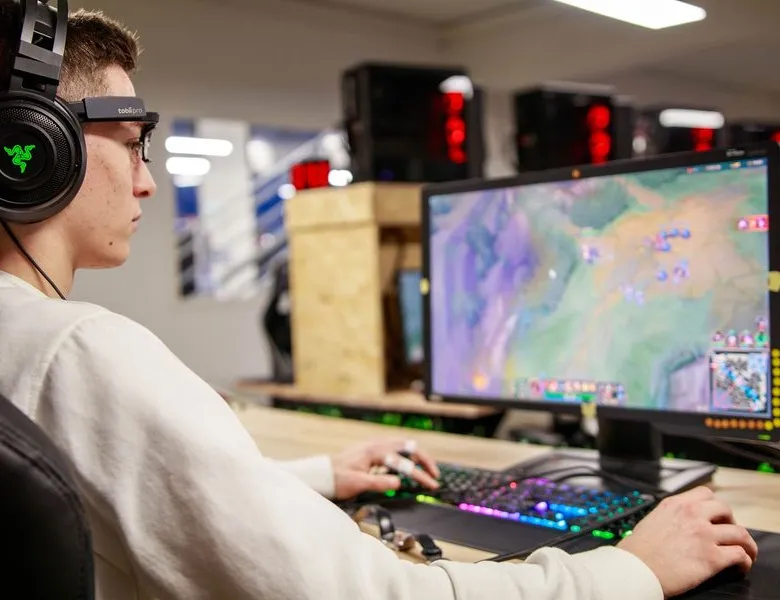


Eye tracking, or oculometry, is a technique that follows the position of users' gaze. It applies to different contexts, whether you are browsing a mobile interface, a computer or a touchscreen kiosk, or quite simply in a physical place. Several technologies exist, and they measure either basic information such as gaze direction (with a simple webcam) or finer measurements such as eye blinks (through image analysis algorithms). Eye tracking identifies which elements a user has looked at. You can determine which element is looked at first, and how long or how often it is viewed. You can also reconstruct the pattern the gaze draws during a measurement phase. Used in more controlled conditions, and with more advanced equipment, it can measure pupil dilation, which is associated with the notion of mental effort (or cognitive load).
To be upfront, eye tracking is no miracle recipe! A few years ago we saw plenty of pseudo marketing studies publishing results whose validity was more than doubtful. That said, eye tracking tools are valuable in contexts where taking in visual information matters a great deal. By keeping rigour in the preparation, the collection and the analysis, you get the following benefits: • the ability to report on what is seen or not, and in what way (frequency, time spent) • objective results based on indicators • which you can interpret against the scientific literature • a detailed and precise analysis, when you use good equipment and respect the conditions under which the measurement holds.
Psychophysiological measures and human metrology
We did some fun things in our lab, looking at indicators that can be associated with emotional and cognitive states. We did that with eye tracking, but also by measuring variations in sweating, and variations in heart rate.
No. You have to draw an explicit distinction between resting your gaze on an element and taking the information in. Identifying a gaze point (or gaze plot) on an element does not let you conclude that the user has read the information. Perception and attention are two different cognitive processes.
The heatmap is a very widespread example of visualisation. By superimposing an image with a participant's gaze tracking, it shows the way those areas were looked at by the user. You often find heatmaps with a colour gradient (hot = a lot of time spent; cold = little or no time spent). You can also draw heatmaps that aggregate the data of several participants.
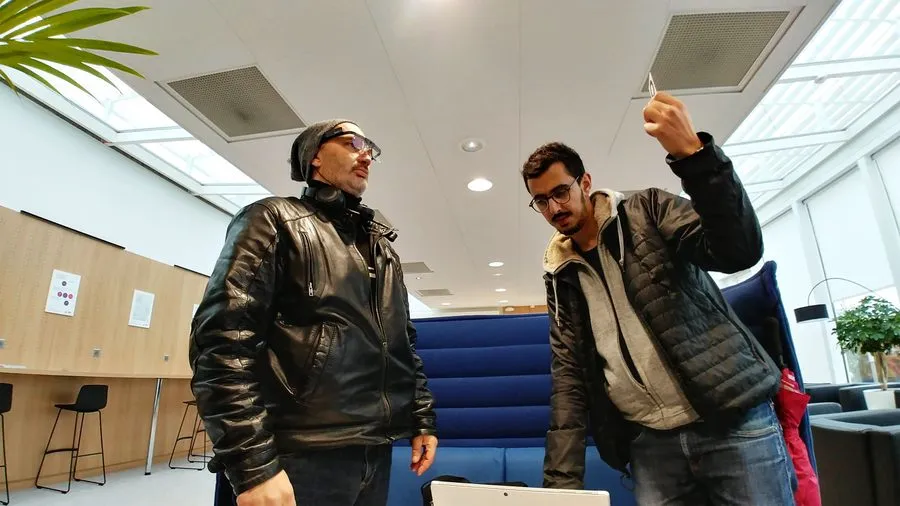
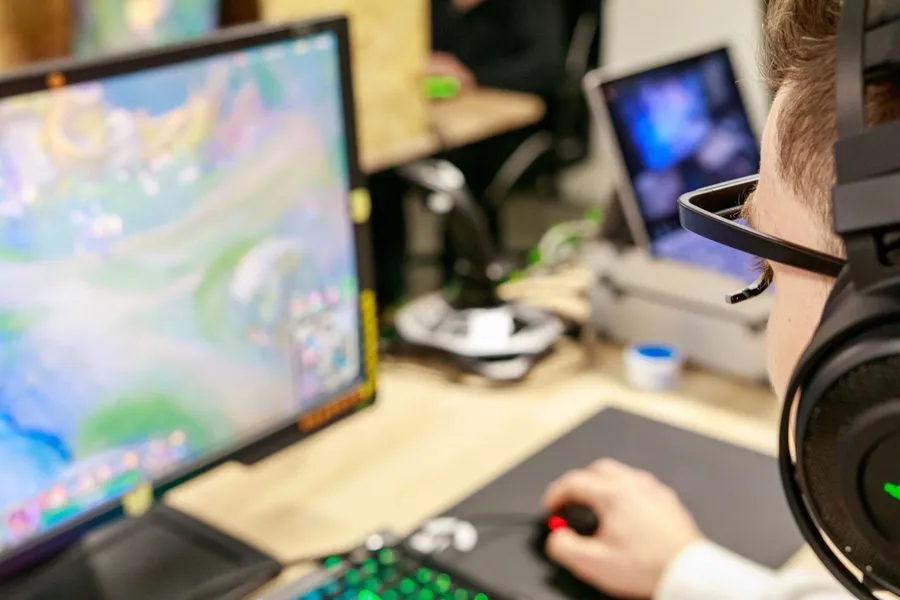
There are several systems, more or less elaborate. You can do basic tracking with a webcam and an image processing algorithm. There are standalone devices you can plug into a computer to follow gaze position on a screen. There are wearable devices in the form of a pair of glasses, which offer an interesting trade-off between measurement quality and complexity (but at a price that is still high). Finally, there are multi-camera devices you can install in a multi-screen setup (e.g. cockpit, control room, simulator, etc.). They are far more precise but require “laboratory” conditions and call for more advanced expertise.
While the technical principle is comparable, there are different types of eye tracker (built into a screen or directly into a pair of glasses). In lab conditions, you can allow yourself devices that are more invasive but very precise. Above all you control the other factors that influence the measurement (e.g. the brightness of the room). That level of rigour makes eye tracking more complex to use but lets you go further in the analyses. In UX research, people tend to use wearable eye trackers or remote eye trackers. Precision is lower, but it is enough to determine which elements are correctly perceived and which are not.
No. First because you do not pull out an eye tracker the way you whip out a guerrilla test. And then, eye tracking only gives information about the elements the user's gaze has passed over. That is useful, but it is often too restrictive for an analysis. So you can run user testing with an eye tracking setup, to have other information on top of what a test collects.
In absolute terms, eye tracking is valuable for all interfaces. Depending on the interface, you will choose one technique rather than another. For everything that happens on a computer screen, infrared bars are very effective. For touchscreen kiosks or tangible interfaces (e.g. signage), a glasses-type eye tracker is preferred. On mobile, the glasses version can be used too, though you will lose some precision.







Quantitative research measures the scale of UX problems. It answers how many and where, alongside qualitative research, which explains why.
Read more about Quantitative researchThe research protocol describes the conditions, the resources and how an experiment or test runs, along with the questions it sets out to answer.
Read more about Research protocolThe UX questionnaire collects self-reported data at scale. Well designed, it measures satisfaction and usage. Badly designed, it confirms what you wanted to hear.
Read more about UX questionnaireSystematic, detailed analysis of an interface (web, mobile, business tool) against a set of criteria, used to surface friction points and produce illustrated recommendations.
Read more about UX auditUser testing has target users assess the usability of your product or service. Depending on the goals, several approaches exist.
Read more about User testingA mental model is the representation a user builds of a system. Designing in line with those models reduces errors and friction in use.
Read more about Mental modelEveryone talks about user experience, service design, ergonomics...
It's not always clear, and you'd like to find out, or sharpen what you already know.