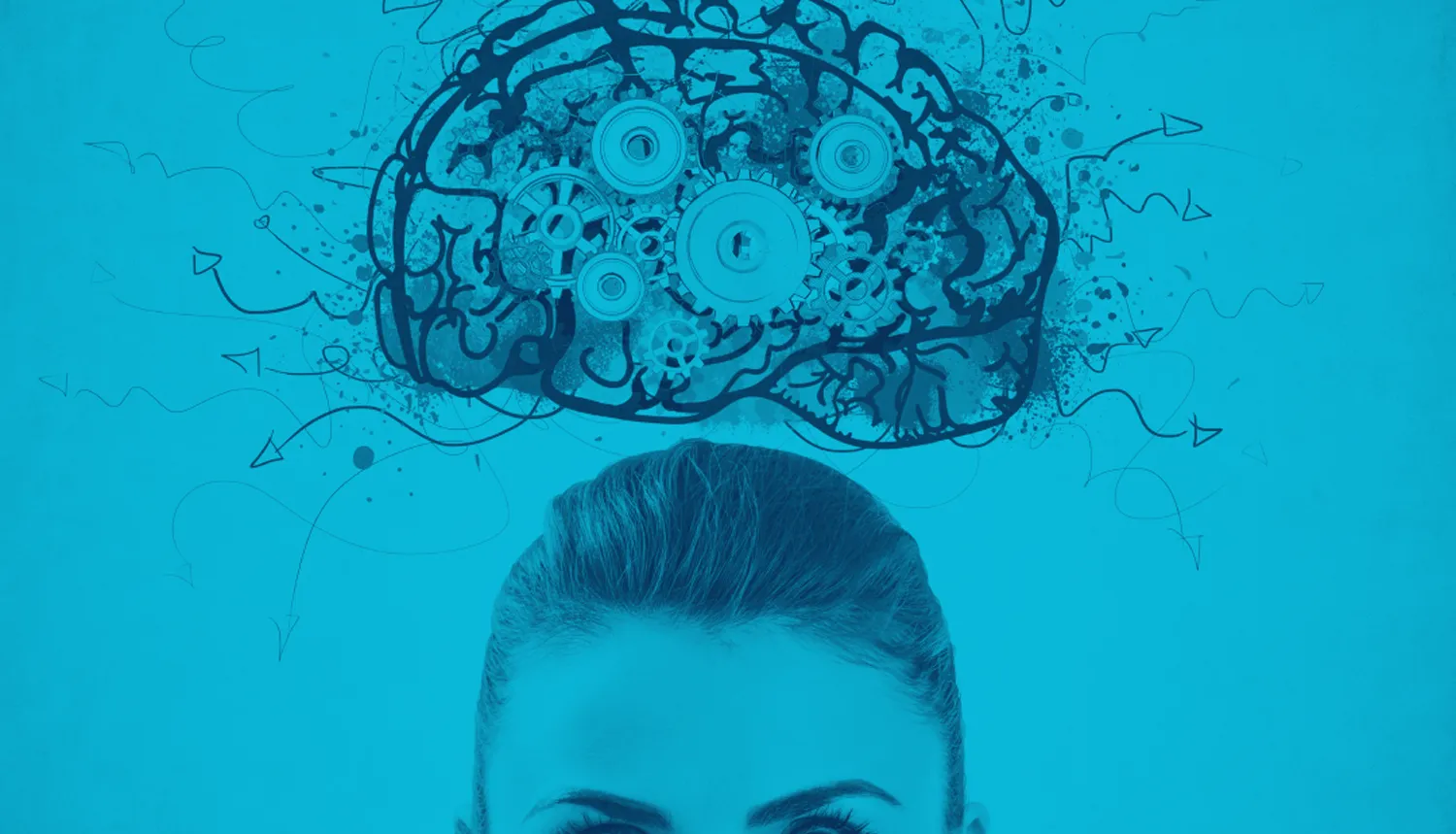
To start with, what is cognitive psychology? What is it for?
Cognitive psychology sets out to understand how attention, memory, perception, anticipation and decision-making work. It studies in particular knowledge systems, along with the processing operations used and created by the human mind, in order to adjust to the situations in its physical, social and technical environment.
In short, cognitive psychology is a scientific foundation that a UX designer relies on in their work to understand and take users into account. It is also an important tool in usage research. To learn more about our approach to ergonomics based on cognitive sciences, check out our methodology.
Let’s start with memory and the memorisation process
The number 7, or Miller’s law:
In the early 1950s, the psychologist Miller (opens in new window) proposed that the short-term memory of the average human can only hold 7 elements, plus or minus 2. In 2011, Jeanne Farrington challenged Miller’s law in an article in the journal Performance Improvement Quarterly. According to her research, short-term memory is limited to a maximum of 5 elements; beyond that, the difficulty increases. So we should aim for less cluttered user interfaces, in order not to increase decision time and response time.
The role of chunks in the memorisation process:
The concept of chunking was introduced by the psychologist Miller in 1956. It is strongly tied to short-term memory, whose average capacity would be to handle 7 chunks ±2. Information storage is significantly improved through an operation we perform more or less consciously: chunking. It consists in not considering items individually but instead considering them as groups. These groups are called chunks.
The cognitive processes involved in visual perception
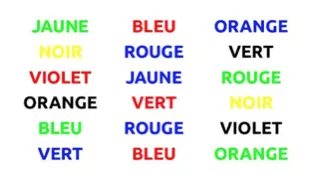
Visual perception and mental models: the Stroop effect
When there is a contradiction between the colour of the word and the information conveyed by the word, the task is harder. To carry it out, we have to inhibit our first intuition, which corresponds to the meaning of the word and not to the colour of the ink.
Judgement bias and halo effect
A cognitive bias (a distortion in the cognitive processing of information) affecting the perception of people or brands. It is a selective interpretation and perception of information that goes in the direction of a first impression we’re trying to confirm. As a result, the positive or negative qualities we may perceive in someone are extended to the whole person and their behaviour.
Examples of the halo effect:
- In a group where there are speeches or statements made in turn, what one person says can be influenced by what a previous speaker said, especially if that speaker has a strong personality.
- Some people are judged more intelligent than others purely on the basis of their physical appearance.
The cognitive processes involved in decision-making
Semantic priming
https://www.youtube.com/watch?v=sPNdyKHAIXA
The Zeigarnik effect
We remember interrupted tasks, when we are otherwise trying to finish them, better than tasks we have already completed. Engaging in carrying out a task creates a motivation for completion. This motivation will remain unsatisfied if the task is interrupted. Under the effect of this motivation, an interrupted task is meant to be remembered better than a completed one.
These cognitive processes are particularly important to understand in the context of our projects, in particular ones like improving the cognitive performance of esport players, where optimising mental capacities is essential.
The doorway effect, the effect tied to a change of environment:
Sometimes, when you walk into a room, you forget what you were planning to do in that room.
Moving from one place to another and going through a door creates a kind of break point in our brain, a hurdle. The simple act of moving from one room to another makes us change physical environment. Usually, there is no problem, but when working memory is overloaded, we forget what we wanted to do.
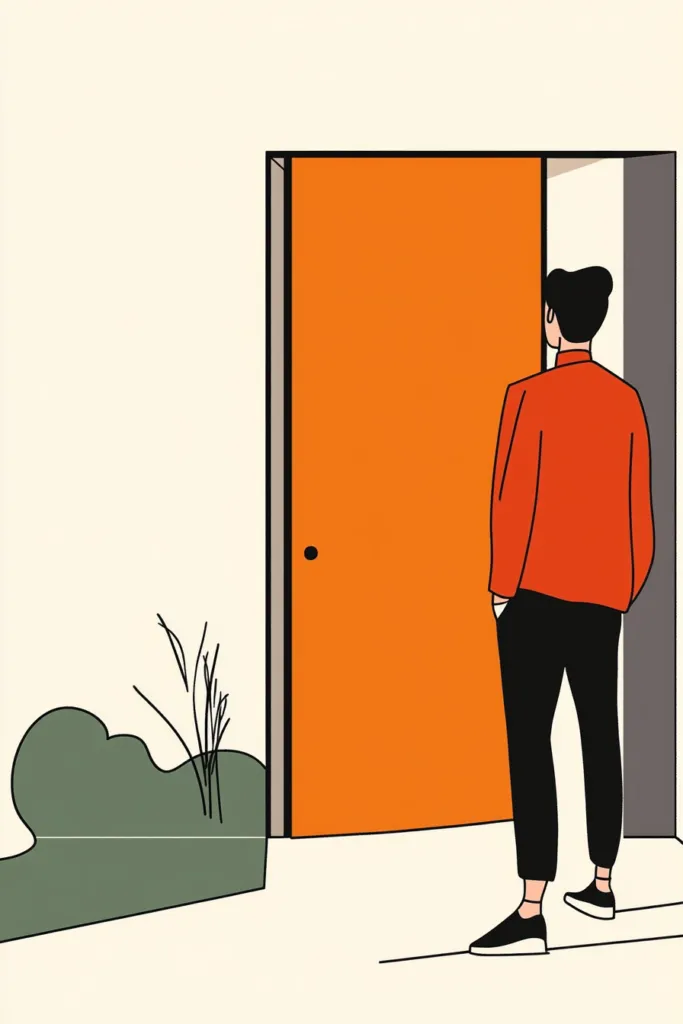
Gabriel Radvansky, professor of psychology at the University of Notre Dame in Indiana, has tried to clear up the cause of this strange universal phenomenon. According to him, “entering or leaving a room closes a chapter in our mind, which separates different periods of activity and stores them away. It is hard to recall the decision or the activity that was carried out in another room because it has been filed away and compartmentalised”.
https://www.maxisciences.com/memoire/quand-les-portes-provoquent-des-trous-de-memoire_art18962.html
Judgement bias and the anchoring effect
https://www.youtube.com/watch?v=OgKtztN71cU
In short, an extra and very interesting point to take into account in our day-to-day work when designing questionnaires, test instructions and so on.
Let’s stop here for this first part on cognitive psychology. If this topic interests you, we have an article on the Gestalt theory. To dig deeper into these concepts, you can also look at our training Introduction to neuroergonomics, which explores human cognitive and emotional states.