Day I - UX and science, phygital experiences and UX for children
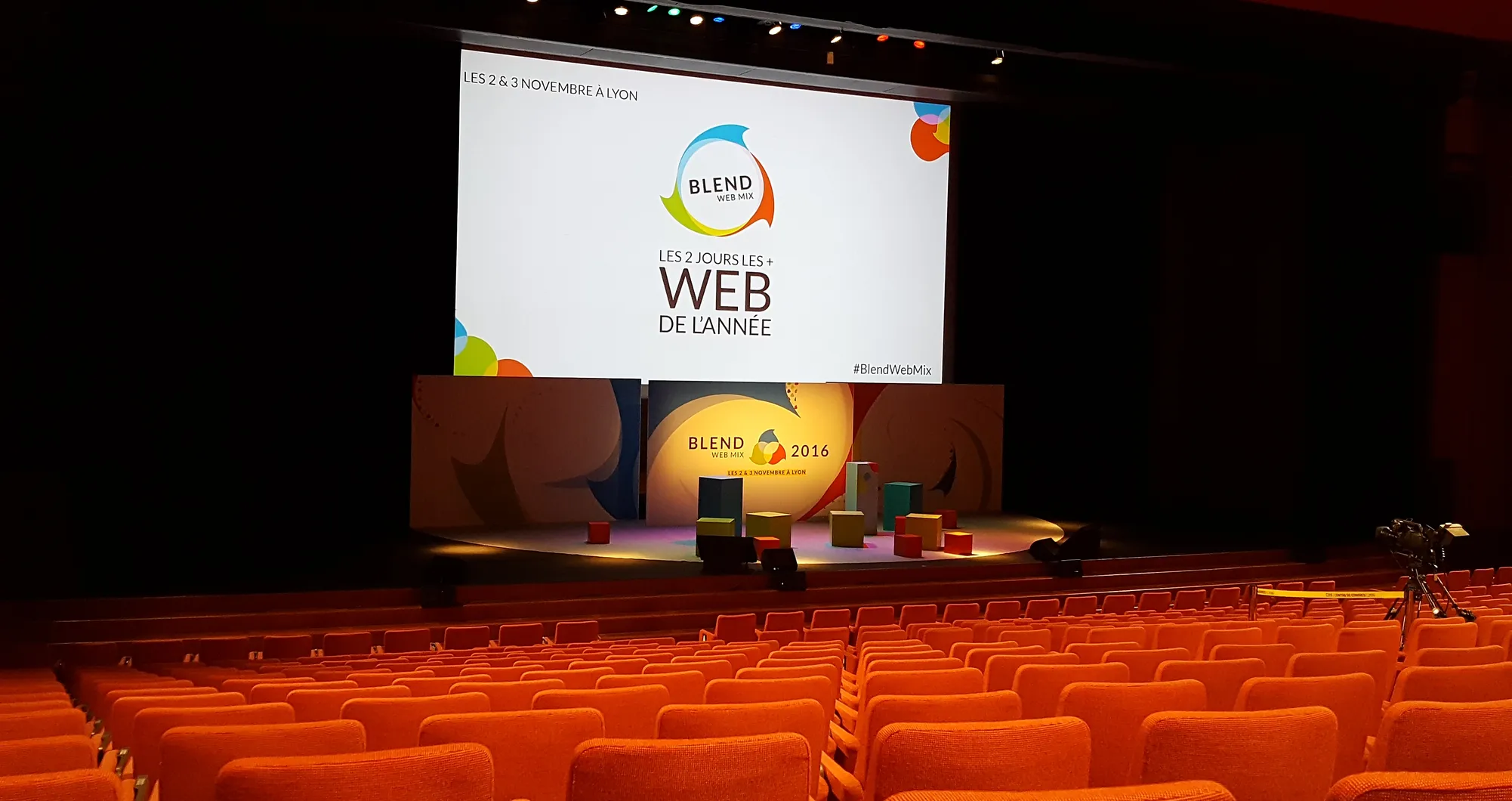
We kicked off the first day of Blendwebmix 2016 on stage. Our talk: “Professor Y., brings back the one you love, helps you win the lottery, UX designer”. Behind that esoteric-sounding title, the first idea was to question the definition of the UX designer’s job. From there, we turned to the contribution a scientific approach brings to a UX process.
Next, we got to sit in on a talk about phygital, weighing up the pros and cons of online versus offline presence in retail. The first part looked at how consumers behave and shop on the internet and in physical stores. Three flagship examples rounded out the presentation, among them the connected showroom MADE.com had recently opened in Paris.
The project shows how cleverly you can pair the digital and the physical for a great user experience. On one side, the sensory dimension (seeing the furniture in context, feeling the materials). On the other, the informational layer (technical details via a tag, or browsing the different variants on your phone).
To close out the day, there was a really interesting talk on user experience design for children.
Drawing on more than 400 user tests run with children, the speakers shared what they had learned about designing interfaces for younger users. The takeaway: children don’t read when they move through an interface, and they always try to push forward in their interaction with your products.
Day II - web performance and UX, designing with “protocol” in mind, and design fiction
The day opened with a talk on designing for performance. The key idea: factoring in development constraints right from the design phase is essential to delivering a great user experience.
Among the “Blend” sessions, we were drawn to the one given by the OL group’s digital team. A chance to hear first-hand how they had reorganised the digital division, in particular around the goals of fan experience.
Later in the afternoon, we got back into the swing of things with a talk on the use of protocols in design. By that, they meant the various phases a user goes through when interacting with a system. A nicely handled thread running through this idea of a chain of interactions, with a beginning and an end, where the challenge is to optimise certain phases. Among the angles raised was the division of tasks between the system and the user.
For dessert, we were introduced to the “Design Fiction” approach, built on the logic of “what if?”. The presentation walked through real examples, from the self-driving car to the future of sports journalism. The aim is simple, and wonderfully compelling as a way to help people picture what’s coming. Starting from the technology that already exists, you imagine the future in collaborative ideation sessions. The ideas that come out of these workshops are then turned into tangible, familiar objects (fictional magazines, billboards, catalogues, newspaper front pages). That fictional material is put in front of users to gauge their reactions and spark questions. These methods are used with retail clients, local authorities, and even the European Space Agency!
In short, BlendWebMix 2016 was great, and roll on the next one
BlendWebMix 2016 is also about intense networking. A chance to meet experts from all sorts of fields and spot potential partnerships!
The next edition runs on 26 and 27 October 2017, and we’ll be there! Will you?
You can find our 2018 edition, here.