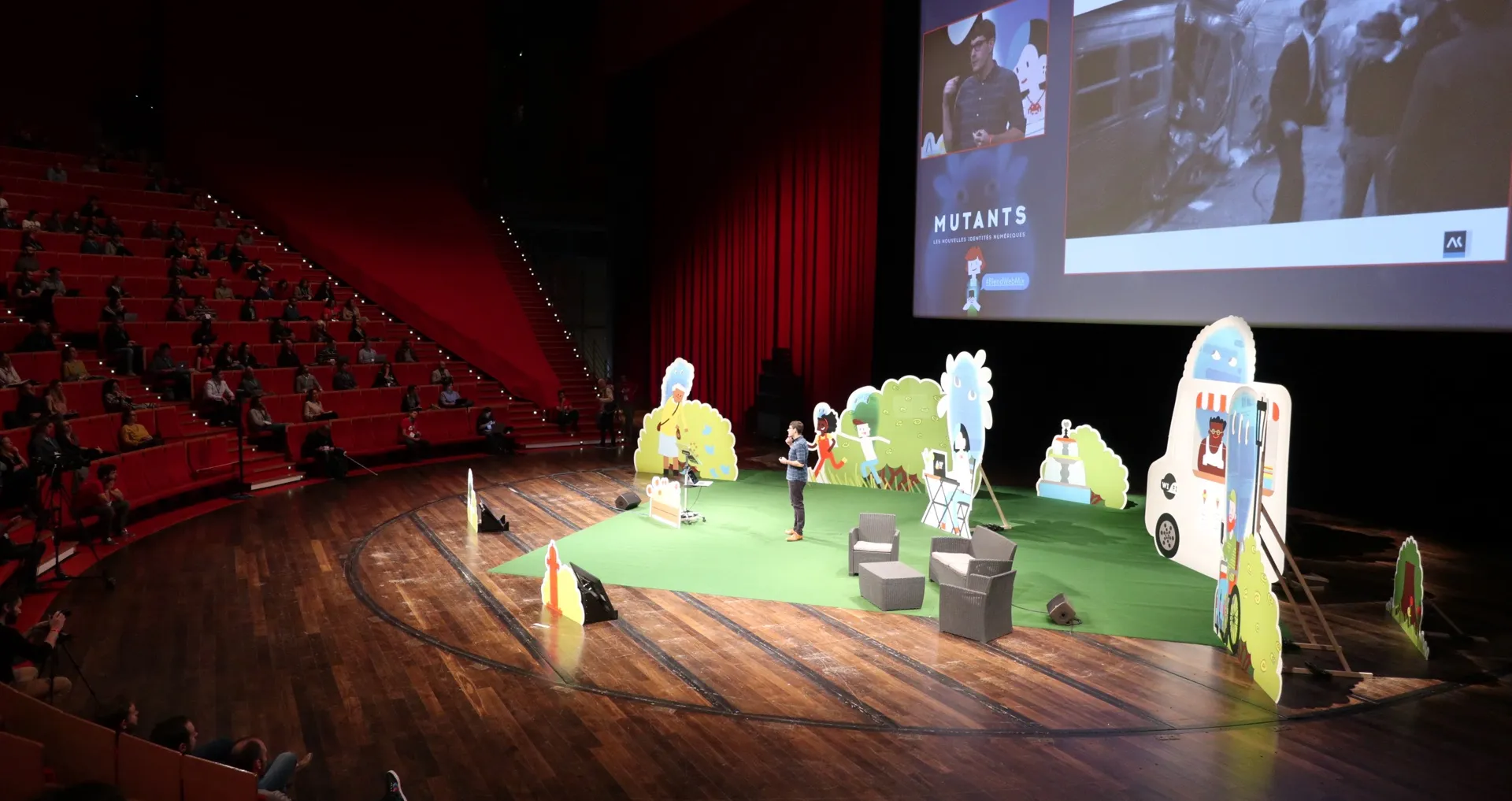
Day 1 - Awakening, future and shift
The first day of Blend was marked by a wide gap. The first talk brought a critical look at the data business. In the afternoon, you could discover the new era of the Anthropocene, in which the future of digital raises a good many questions. Finally, the day ended on the other side of the world, to discover the (ongoing) shift in how technology is used in China.
An explosive breakfast keynote
Aral Balkan, activist-designer-developer, opened the proceedings with a question:
Are we people or are we property?
Drawing first on concrete examples of services with dubious ethics, he describes how the web is today being diverted from its original purpose of globalised access to information. In the era of data and behavioural targeting, priority is given to exploiting and monetising data of all kinds. Aral then goes beyond this observation and proposes to (re)define an alternative model, one that is more ethical, moderate and respectful of fundamental human rights: Peerocracy. It’s hard to do this talk full justice in a few lines, so we invite you to take a look at this explosive keynote (opens in new window). Thanks Aral for warming up the room. We had a ready-made bridge between his opening on a more ethical design and our message for a usage-led, more human approach to design.
What trajectory for technology in the age of the Anthropocene?
That is (very briefly) the question tackled by Alexandre Monnin and Diego Landivar, two researchers behind the Closing Worlds (opens in new window) project. With their project of a last start-up before “the collapse of the world”, they invite us to reflect on delusions of grandeur in a time of decline. They start from where we are, respond to received ideas and propose to think about a soft landing. Do we have the means to absorb the ongoing race for innovation? The answer is no, and we need to act fast because time is short. Among the possible paths, you find the concepts of degrowth, technological dismantling, or even obsolescence to plan for. Doing justice to such a broad and well-documented topic would call for a dedicated article. We’d recommend revisiting the talk by these two speakers, who have interesting things to say! (opens in new window)
China: the innovation laboratory!?
In her presentation, Laura Pho Duc, Marketing & Communication Director for Europe at Alibaba, presented a completely different view of today’s web. Beyond the business and marketing aspects, what we mostly took away was some impressive usage data. Among the examples shown: giving money to a homeless person using a QR code; “mobile only” usage; phygital experiences at the supermarket; car vending machines; or even a pavement lane reserved for smartphone users. We’ll let you judge these shifts; in any case, they won’t leave you indifferent! 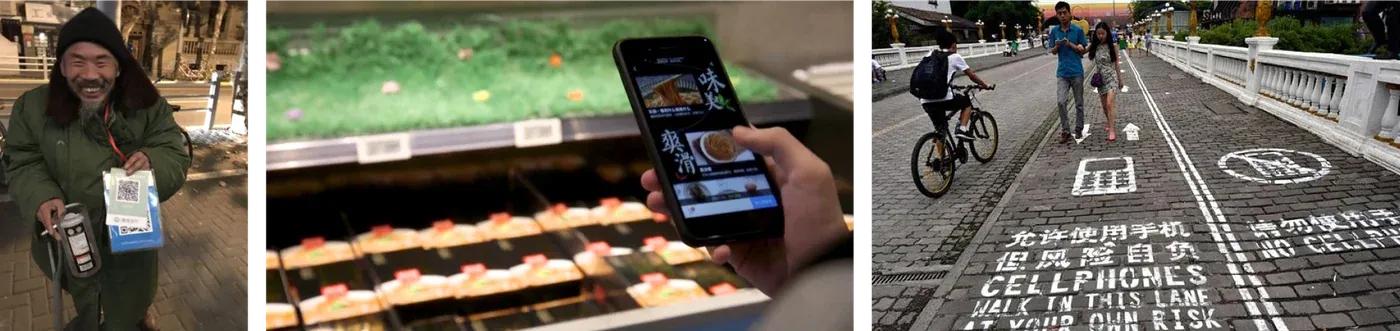
Day 2 - Identity, accessibility and autonomy
After a good night’s sleep, off we go again for the second day.
Identity, digital and public-service design at Gov.uk
How do you handle the issue of individual identity in a public-service digitalisation effort? That is the question answered by Anna Goss, Lead service designer in the UK government’s digital team. Starting from an open letter to the prime minister 8 years ago, Gov.uk set in motion a deep transformation of its digital services. This colossal undertaking is probably one of the most remarkable in terms of large-scale digital services. In this redesign, the question of the identity of the digital citizen who wants to carry out administrative formalities from home is central. As an example, the estimated loss for the UK government due to fraud is put at over £5M! How do you define identity from objective criteria? By what means do you verify it? How do you structure a service offering that works at the scale of a country? Anna gives the answers in her talk, among which we’ll note these 2 points: 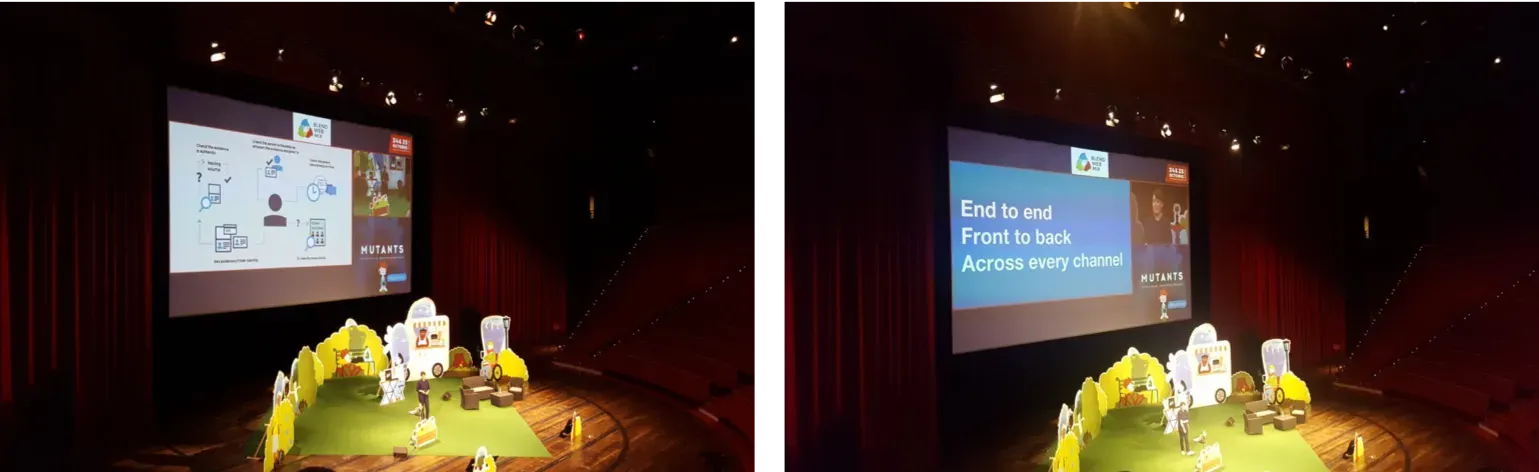 A very interesting subject with big challenges, which you can watch in video form. (opens in new window) PS: Anna’s team is also behind an international group of designers working for institutions to share good practice (opens in new window)!
Accessibility through example
Among the most striking talks, we note Sylvie Duchateau’s talk (opens in new window). A partner and digital accessibility mediator at Access42 (opens in new window), Sylvie came to tell us about her daily life. In a nutshell: the nightmarish experience of web navigation for a person with a disability. Blind from birth, Sylvie has us experience the barriers she comes across every day when browsing with a screen reader. While we focus our efforts on issues of making access to information easier, this puts things into perspective. What’s more, the solutions are within reach. A few well-used tags and respect for good practices, and you can make your services accessible to everyone. Disability concerns 1 in 5 people in France, do you still think accessibility is optional? We invite you to check out the resources for an accessible web made available by Access42 (opens in new window).
An inspiring closing as dessert
Last but not least, we attended Geoffrey Dorne’s talk (opens in new window). More than a talk, you could call it an account of his own experience. At a brisk pace, Geoffrey came to share with us a large number of questions he asks himself. In the second part, he shared his vision of the design of the self: for and through autonomy. Here again, it’s the kind of talk that doesn’t leave you indifferent, and that we invite you to watch (opens in new window)! We had to make choices, and we couldn’t tell you everything! For those who want the full experience by the fireside, find the complete playlist of recordings on the Blendwebmix YouTube channel (opens in new window).