Affordances explained simply
First, the term affordance is a neologism proposed by Gibson back in 1979 to describe the possibilities for interaction offered by the environment, in a way that depends on a living being’s motor repertoire. Put more simply, a chair evokes the action of sitting down for a human, but not for a dog. Indeed, the dog’s motor repertoire doesn’t have the same sitting motor pattern as a human: the chair therefore doesn’t evoke the same possibility of interaction for the dog.
And this is true for plenty of things in our environment: who thinks of pushing a door when a vertical bar fixed to that door spontaneously evokes the action of pulling it open? To identify these problems and others tied to user experience, our experts run complete ergonomic UX audits.
The war of the “buttons” (on an interface), explained to your little brother
Interest in this perceptual-motor phenomenon led to a debate between ecological psychology and cognitive psychology over the last 30 years (Garbarini & Adenzato 2004).
But the advance of investigation techniques refocused the debate on the study of the properties of the neurophysiological substrates involved in these processes. And it is the so-called visuomotor neurons that are at the centre of attention in particular, to explain the neuronal processes involved in this coupling between perception and action.
The “visuomotor neurons” moment, when you steal pommes dauphines from your cousin’s plate
IMPORTANT CAUTION: what follows in this article concerns observations made only in primates, never directly in humans. This knowledge should therefore be taken with a step back, and these fundamental findings should not be wrongly generalised.
But mirror neurons, that rings a bell, right? Well, without knowing it, you already know one type of visuomotor neuron. If this topic interests you, discover our training Introduction to neuroergonomics.

Broadly, visuomotor neurons are a type of neuron located in the brain areas involved in motor activity. These neurons activate (the mad scientists say they “fire”) when a motor action takes place. But spectacularly, they also activate when the same motor action is evoked in the environment (Rizzolatti et al. 1997; Rizzolatti & Craighero 2004):
- in particular, mirror neurons fire during the observation of an action carried out by someone else in primates;
- other visuomotor neurons, called canonical neurons, fire during the observation of an object that accepts a functional interaction (a hammer evoking the action of hitting, for example).
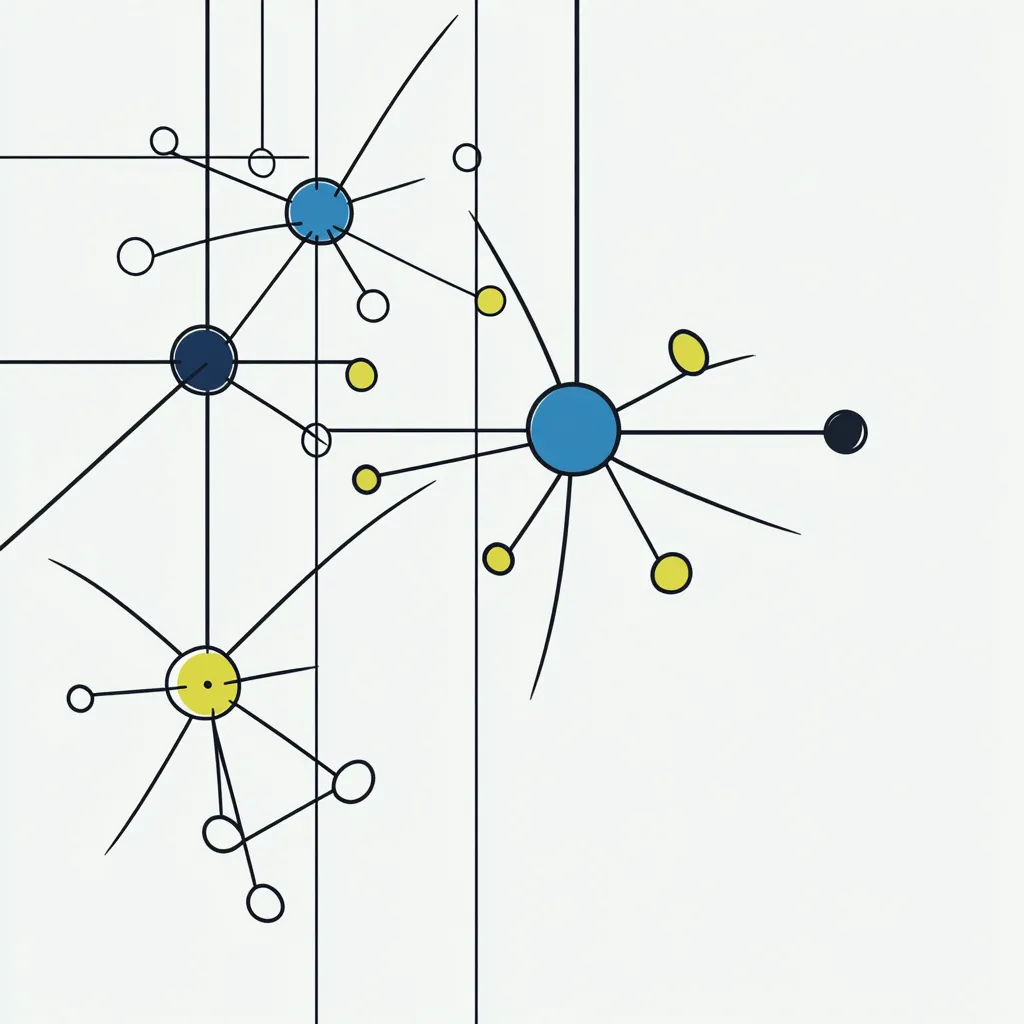
So researchers point to the importance of this network formed by visuomotor neurons for its fundamental role as an action simulator. It would seem that on the mere observation of an object, the neuronal system activates as if the observer were interacting with it. This would allow them to anticipate its function (Garbarini & Adenzato 2004). As a result, researchers think that these neurons play a fundamental role in the emergence of the perceptual occurrence of affordance.
Uncle René didn’t get affordance
OK, it’s all well and good to know that specific neurons fire in the motor areas of the brain, but what happens in the other areas? How does all the information needed for the perceptual phenomenon of affordance to emerge get carried around?
In fact, the brain’s areas don’t work in isolation, but as a network. In the case of the affordance process, it would seem that 2 distinct pathways activate in particular (Borghi & Riggio 2009; Binkof