





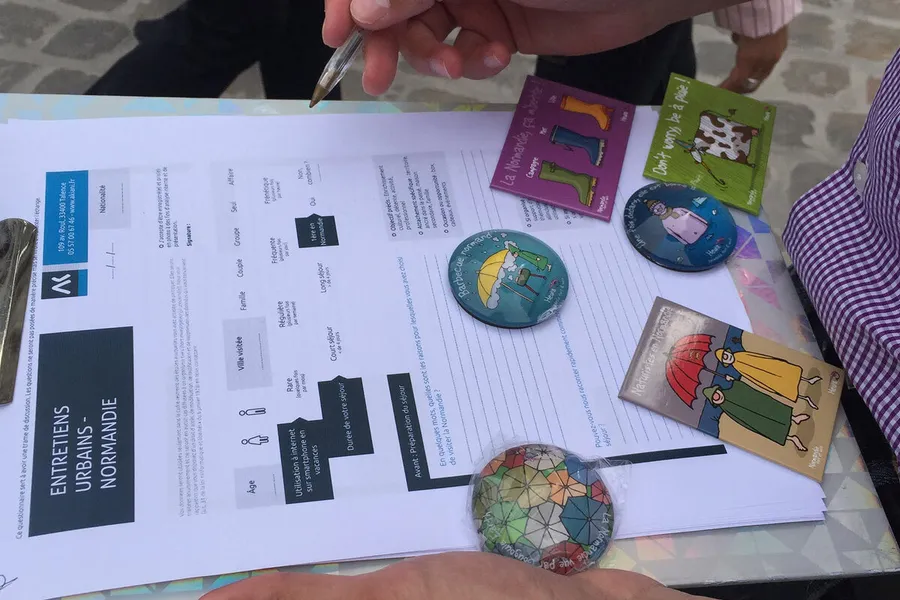
Guerrilla testing, sometimes called intercept interviews, means approaching users on the spot to ask for their feedback on a given theme or concept. There's no upfront recruitment, but you can filter for the right profiles. You head into the field and only the people who agree are interviewed. The respondents' characteristics, useful for the project, are noted to make sure feedback diversity is properly accounted for. Finding the right spot in a high-traffic location (to maximise potential participants), the right posture (an open attitude, getting past your shyness) and ideally a small gift (some sweets, goodies, a free drink and so on) all support the recruitment. Although it's labelled a "method", a guerrilla test is really a lightweight format for running individual interviews or user tests. We reuse the usual structure and methodology and adapt them into a simplified version that needs less preparation. This approach fits a "simple" project, where budget and timeline optimisation is the key: no recruitment overhead, everything is handled on the fly.
01
Before going out
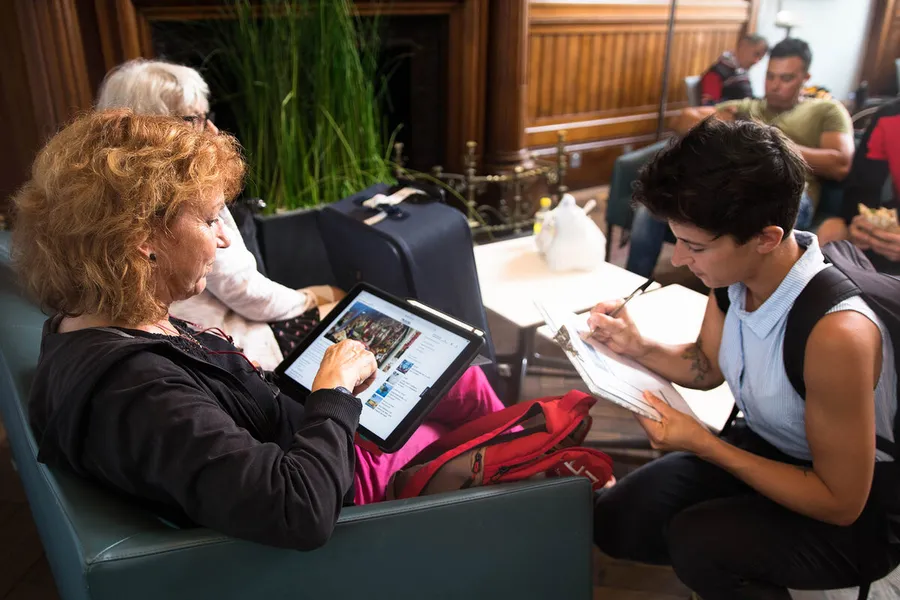
Define a light protocol and prepare the gear needed to gather the data. Print the guide and/or observation grid and keep them in front of you to run the conversation. Be aware that you sometimes need to adapt your wording and/or the order of the questions and scenarios depending on the person you're approaching. Target the spot(s) where you're most likely to find potential users of the service. (It can be in the street, in a café, near a specific venue, and so on.) Plan for the right format for the venue (e.g. a tablet to show an interface in a constrained setting). If you plan to settle in a private space like a café, give them a heads-up beforehand.
02
In the field
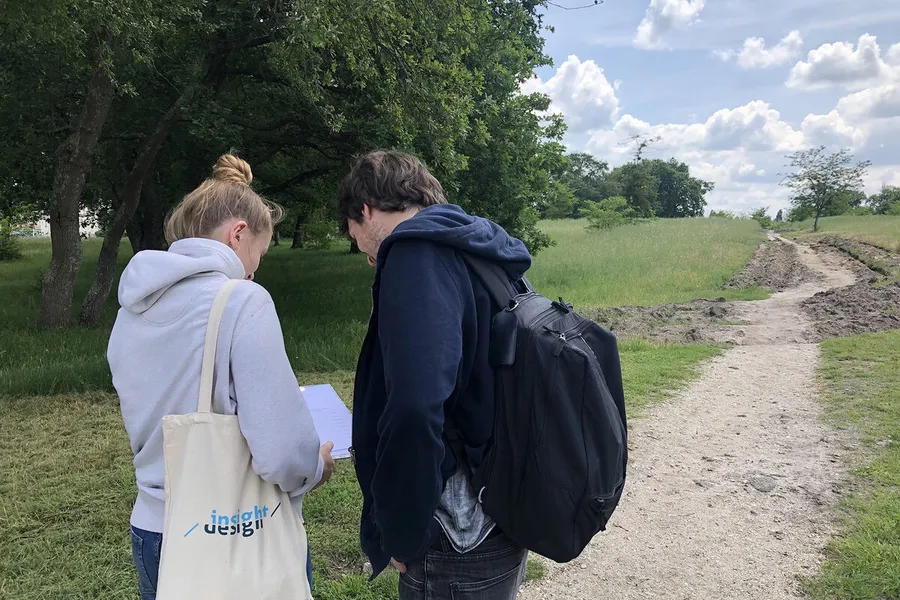
Approach the user when they arrive at the spot if possible, with a simple, quick opening line. Tell them how much time you need and the topic of your study. If needed, ask the user whether they're okay being photographed and/or recorded.
03
For the analysis
Filter the results by accounting for contextual biases: a noisy environment, behavioural biases (irritation, wanting to wrap up quickly, distraction, and so on). Analyse the results to surface insights and any other indicator you were after. A guerilla test rarely produces a detailed deliverable; a debrief with the client or the design team usually fits better.
Since meeting users is left to chance, nothing guarantees the representativeness or relevance of the profiles interviewed for the study at hand, but that’s not the point. Also, this approach mostly fits the general public and isn’t recommended for gathering feedback from professional profiles.
Lastly, time is limited with each user; don’t expect to test several scenarios on a prototype or dig deep into a specific topic.
Guerrilla testing (or guerrilla usability testing) is an informal and quick form of user testing, carried out without prior recruitment. You approach people in a public space (café, library, coworking space) and give them a prototype or an interface to observe their behaviour on one or two tasks. Each session lasts 5 to 15 minutes. The aim is to obtain quick feedback at low cost.
At the start of a project, to quickly validate design hypotheses before investing in formal recruitment. For lower-stakes decisions where you do not need a precise user profile. Or when the schedule leaves no time to organise a formal session. Guerrilla testing does not replace a rigorous user test on qualified profiles, but it detects obvious problems and costs very little.
Participants do not necessarily match the product's real users. You cannot recruit very specialised profiles (doctors, chartered accountants, developers) in a café. Usage contexts are not controlled. And approaching strangers can introduce a politeness bias: people are reluctant to openly criticise what you present to them. These limits make it a complementary method, not a standalone one.
You prepare 2 to 3 tasks at most, framed in an open way without indicating where to look. You make sure the prototype or interface works without a connection or with a minimal one. You prepare a 30-second introduction to reassure the participant and explain that you are testing the interface, not them. And you train yourself not to step in when the participant is stuck.
Between 5 and 10 people are enough to identify the main problems. Beyond that, observations start to repeat. The point is not statistical representativeness but the detection of the most salient friction. Three well-observed sessions are often worth more than a dozen run hastily without structured note-taking.








User testing means having target users assess the usability of your product or service. Depending on the goals, several approaches are possible.
Read more about User testingEveryone talks about user experience, service design, ergonomics...
It's not always clear, and you'd like to find out, or sharpen what you already know.