


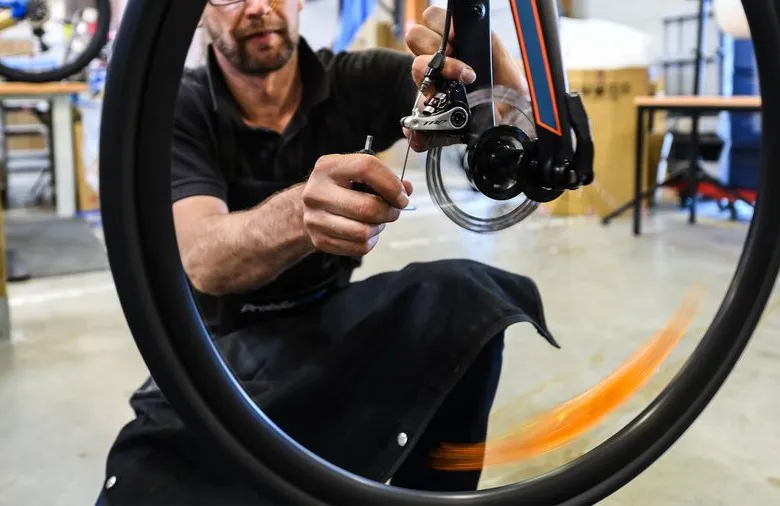


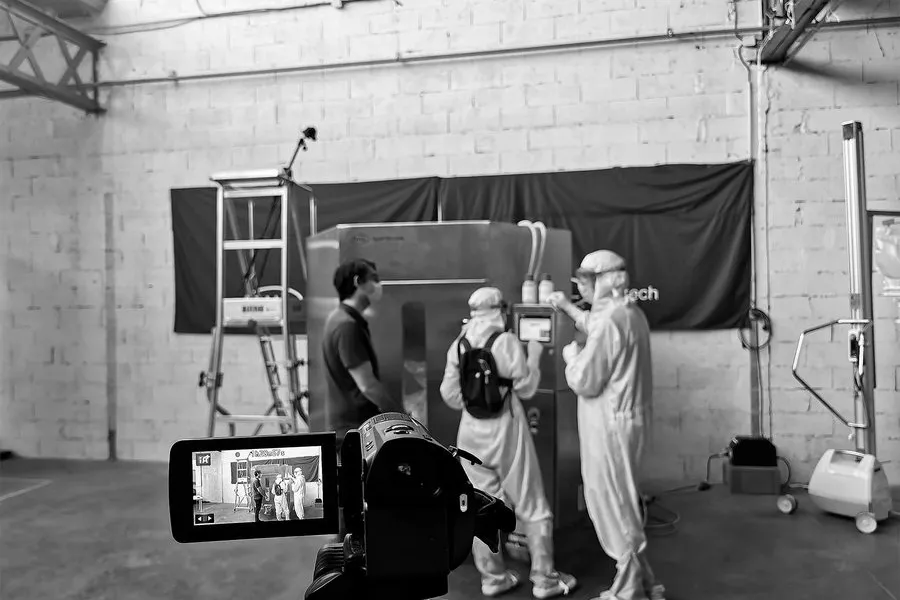
Field observation consists in observing users as close as possible to their usual conditions of use of a product or a service, with the help of an observation grid. Less immersive than ethnography, it remains more revealing than tests run out of context. Observing real behaviours gives access to many clues users wouldn't express in an interview; access to the context enriches the analysis by providing additional cues for interpreting it.
Field observation is one of the foundations of ethnography, which doesn't stop there: ethnography draws on several data collection methods and involves immersion in a real situation, generally over a long period. Field observation, for its part, remains an observation technique, supported by a structured observation grid.
01
Indirect observation
Through cameras, or after the users have passed through, as in the aisles of a shop for example.
02
Situated observation without interaction
Carried out directly in the field, limiting contact with the people observed: staying back at an observation point (fly on the wall), or following a user at a distance along a journey (shadowing).
03
Participant observation
Takes place in a real situation, by taking direct part in the experience: testing the service as a user, or accompanying the person who interacts with a user (a life-swap approach).
They aren't really comparable, but you can draw a parallel between them. Ethnography draws on several data collection methods. Field observation is one of the foundations of ethnography, which consists in immersing yourself in a context to study the practices of a certain category of users.
Before going out to observe, you start by defining what you are going to look at in particular, and how you are going to capture the information. Depending on the project, observation slots are sometimes fairly open (one particular theme, but few preconceptions about what matters) or more tightly framed (e.g. an observation plan for a sequence of actions by a user carrying out an action, several predefined metrics to record, and so on).
The data collected during an observation phase can vary. You can note down what you see on blank paper or fill in an observation sheet. You can count, measure times or occurrences of an action. You can also trace movements, represent flows within a space.
When the contexts of use are very specific, as in an analysis of an operator's activity, going straight into the field is a real plus. You always make sure you can put the feedback you get from users into context. However, there are also plenty of weaker signals that will struggle to emerge spontaneously in an interview over the phone, for example.


The user interview goes after what questionnaires don't capture. 5 types of interviews, how to choose, and the trap of social desirability.
Read more about User interviewEthnography observes users in the field. It captures what interviews miss: automatic behaviours, tacit practices.
Read more about EthnographyUX mapping represents a concept or a problem in a simplified form, to make it easier to understand and take ownership of.
Read more about UX mappingService design shapes the whole experience of a service, online and at the counter, beyond its screens. Definition, public sector and examples.
Read more about Service designThe service blueprint represents the back-office side of the experience. It describes the organisation of the touchpoints the user crosses.
Read more about Service blueprintEveryone talks about user experience, service design, ergonomics...
It's not always clear, and you'd like to find out, or sharpen what you already know.