


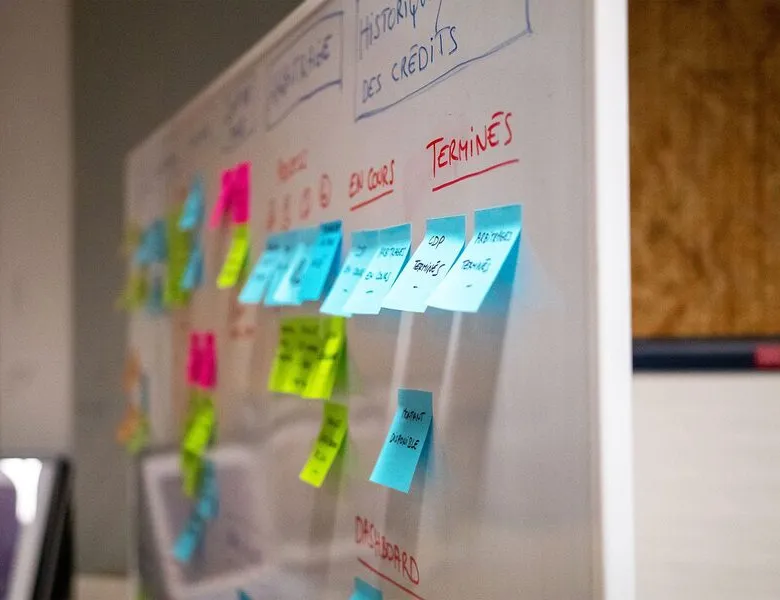


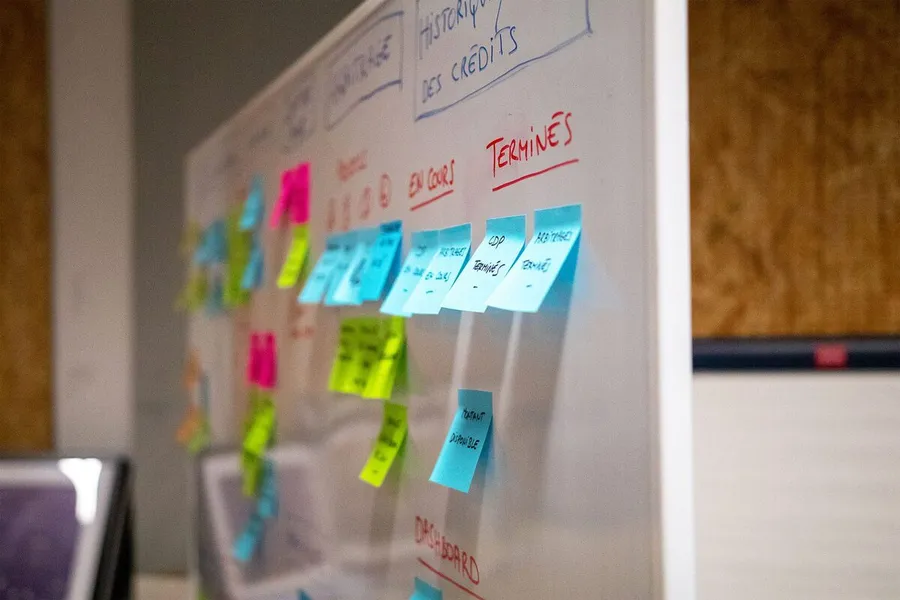
Design thinking is an innovation-management method. This thinking framework emerged in 1980 but only became popular in the early 1990s. The rise of the expression design thinking was largely carried by design firms, starting with IDEO (with the d-school) and Tim Brown.
The principle is simple, but it can vary depending on the school of thought. Some present the method in 5 steps, others trim it down to 4 or extend it to 7. The vocabulary and content of these steps can also vary, but the stages remain very similar.
01
Empathy
Ideally, you can engage directly with users to gather real, representative data on how they feel. At a minimum, you'll include exchanges with subject-matter experts and the sharing of information sources relevant to the topic.
02
Problem definition
Based on the previous step, the goal is to identify and prioritise the relevant topics, framed as a problem to solve.
03
Ideation
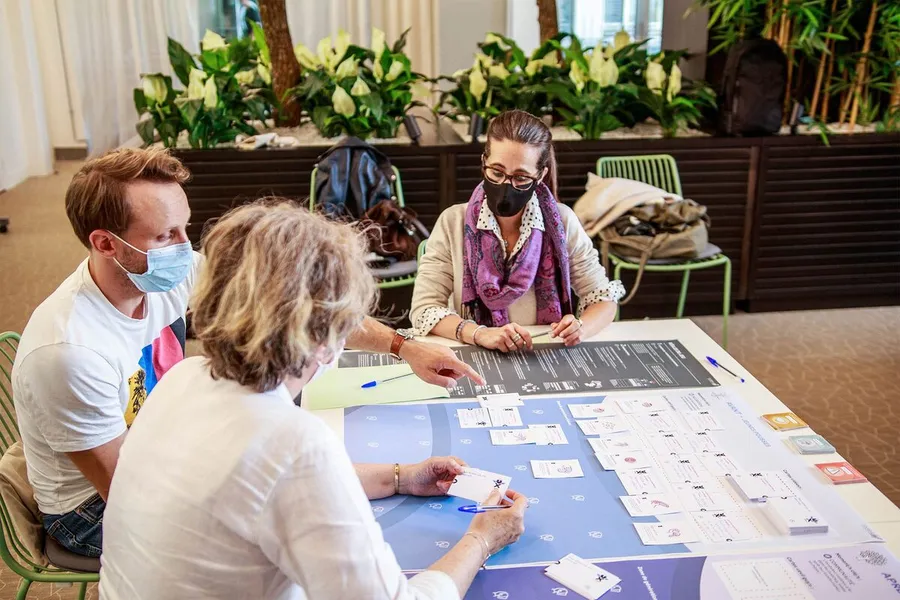
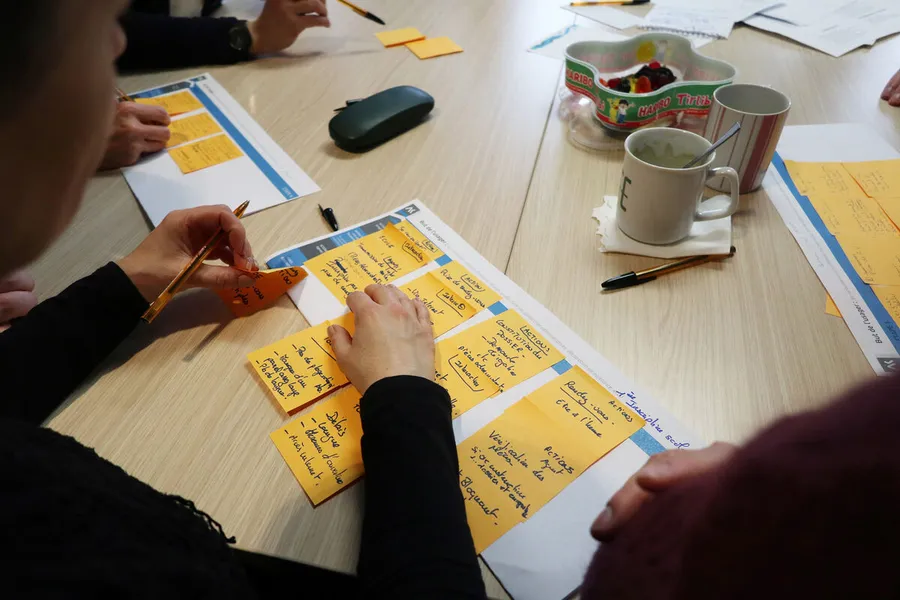
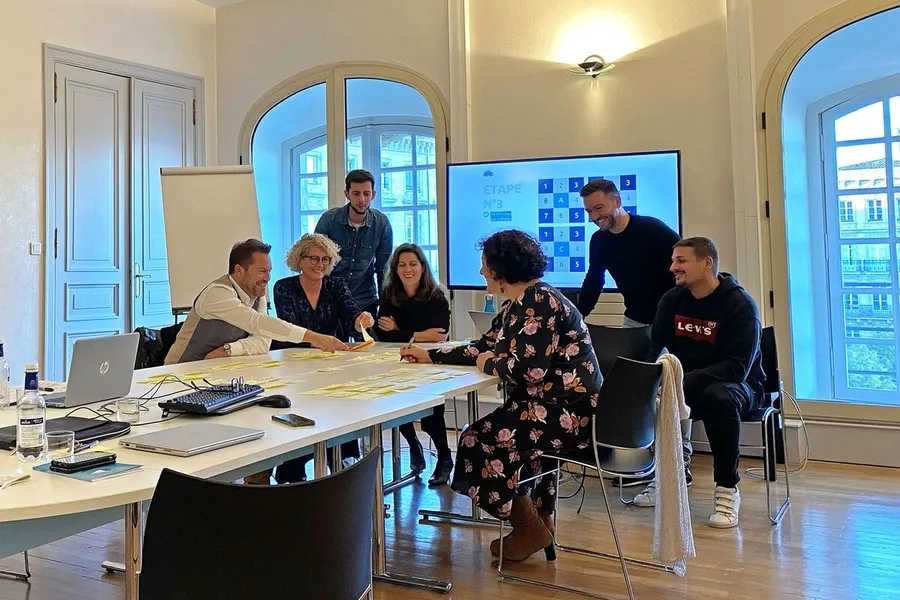
Often run as a workshop, this step is about generating possible solutions to discuss and refine with the group.
04
Design
Building a prototype, a mockup or other storyboards based on the chosen idea, and ideally something that can be tested afterwards.
05
Evaluation
Confronting the candidate solutions with potential users to gather their feedback and evolve the product or service. The conclusions of the evaluation can become the inputs of a new empathy phase, to progress through iterations.
Though optional, this step lets you have exchanges with target users, usually based on a prototype, even a very partial one. Evaluation and the prototype can take many forms depending on the project context.
The most widespread model, developed by Stanford's d.school and IDEO, distinguishes five phases: Empathize (understanding users through field research), Define (framing the problem to solve), Ideate (generating ideas without filter), Prototype (building quick representations of solutions), Test (confronting the prototypes with users). These phases are not strictly linear: you can go back depending on what you learn at each stage.
Design thinking is a problem-solving framework applicable to any field, not only to digital design. UX design is a discipline that shapes user experiences on digital or physical products. You can practise UX design without following design thinking, and design thinking can be applied to problems unrelated to user experience (strategy, organisation, physical product).
IDEO defines ideal solutions as sitting at the intersection of three criteria: desirability (what people really want), technical feasibility (what technology makes possible) and economic viability (what is sustainable for the organisation). A solution that satisfies all three is considered innovative. Design thinking serves to navigate between these three dimensions by systematically starting from desirability.
No. That is precisely one of its strengths: design thinking is designed to be practised by cross-functional teams. It relies on collaborative workshops accessible to non-designer profiles (product managers, engineers, marketers, decision-makers). That said, an experienced facilitator remains necessary to frame the sessions and prevent the divergence and convergence phases from getting mixed up.
You start by delimiting the scope of the problem to explore, then you organise a field research phase to anchor the work in concrete user realities. Before the ideation workshops, it is essential to have formulated a clear « creative challenge »: an open question that frames the thinking without imposing a solution. It is often the formulation of this challenge that determines the quality of the ideas generated.
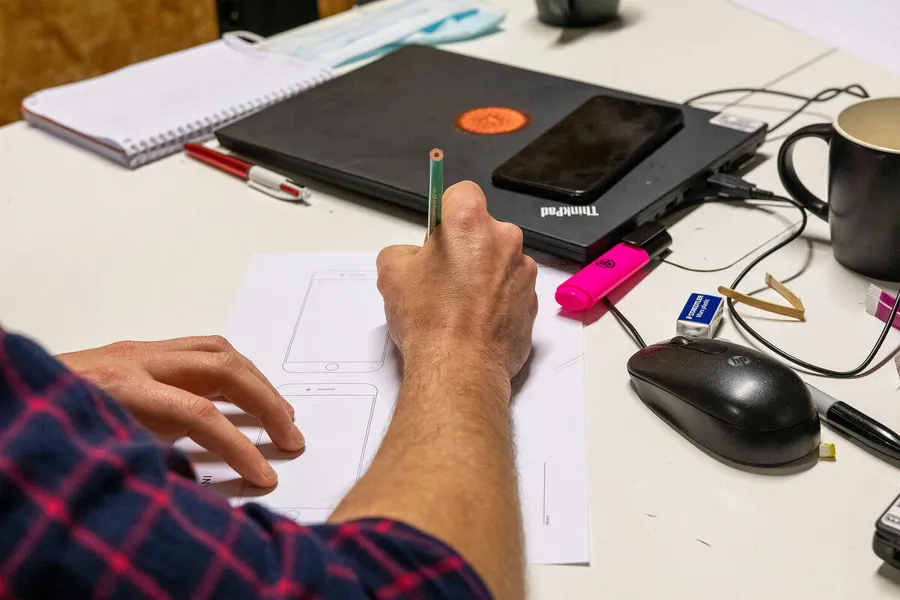


Paper sketches refer to creating user interfaces as drawings, most often by hand.
Read more about Paper sketchingUser testing means having target users assess the usability of your product or service. Depending on the goals, several approaches are possible.
Read more about User testingEveryone talks about user experience, service design, ergonomics...
It's not always clear, and you'd like to find out, or sharpen what you already know.