


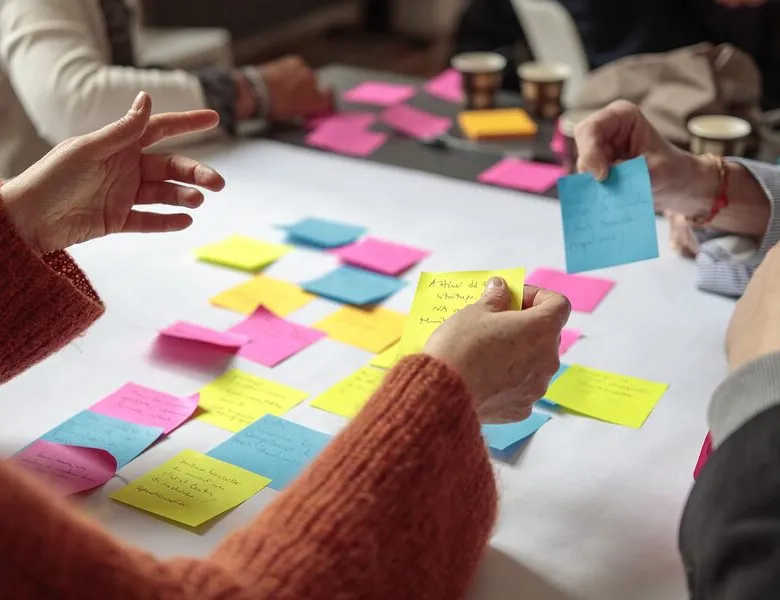


The design sprint is a short, framed format for tackling a given problem. Over 5 days, the participants follow the steps of the approach with the aim of producing a testable prototype by the end of the week. Theorised in a book by Jake Knapp, the approach gained a lot of visibility among professionals looking for something new.
The design sprint is a format, not a method. It offers, over 5 days, an accelerated version of the steps drawn from design thinking. Spoiler alert: it's no magic recipe either!
01
Day 1: define the problems to solve, set a goal, exchange and take notes, generate How Might We questions with experts around a customer journey to pin down the target and the experience step to address
02
Day 2: competitive review and lightning presentations, individual sketching and user recruitment in parallel for Friday
03
Day 3: pick the best ideas and build a storyboard
04
Day 4: split tasks, build the prototype and prepare the user tests
05
Day 5: user testing and trend analysis, closing the sprint with an immediate debrief alongside the participants
Depending on availability or appetite, the 5 days set by the format are sometimes spread over several weeks, or even condensed into four days. A typical design sprint runs as follows:
Day 1: define the problems to solve, set a goal, exchange and take notes, generate How Might We questions with experts around a customer journey to pin down the target and the experience step to address.
Day 2: competitive review and lightning presentations, individual sketching and user recruitment in parallel for Friday.
Day 3: pick the best ideas and build a storyboard.
Day 4: split tasks, build the prototype and prepare the user tests.
Day 5: user testing and trend analysis, closing the sprint with an immediate debrief alongside the participants.
The Design Sprint is a 5-day process developed by Google Ventures to quickly solve an important problem by going through understanding, ideation, decision, prototyping and testing. In five days, a cross-functional team moves from a fuzzy problem to a prototype tested on real users. It is a method for accelerating decision-making, not a substitute for a complete experience design process.
Monday: understand the problem in depth and define the target of the sprint. Tuesday: explore solutions individually (sketching, crazy 8). Wednesday: decide collectively on the solution to prototype. Thursday: build a high-fidelity prototype in one day. Friday: test the prototype on 5 users and analyse the results. The AJ&Smart version (modified Sprint) condenses the process into 4 days or even 2 days for seasoned teams.
For important, poorly defined problems, where the team holds diverging opinions and needs to converge quickly. Ideally: a stake significant enough to justify 5 days of intense collective work, with genuine uncertainty about the solution. The sprint is less useful for incremental optimisations or already well-mapped problems. It is particularly valuable for testing a strategic hypothesis before investing in lengthy development.
The ideal team is 5 to 7 people: a decider (the 'Decider' who has the authority to make the call), a facilitator (who guides the process), and 3 to 5 participants representing the key areas of expertise (design, development, product, marketing, business). Experts can be invited for short sessions (Monday morning) to share their knowledge without taking part in the whole sprint. Beyond 7 participants, sessions become hard to facilitate.
The Design Sprint is a highly structured and timed implementation of design thinking. It follows the same logic (understand, define, ideate, prototype, test) but within a rigid 5-day frame with precise exercises at each stage. Design thinking is a general thinking framework; the Design Sprint is an execution method. You can do design thinking without a Sprint, but a Sprint systematically applies the principles of design thinking.
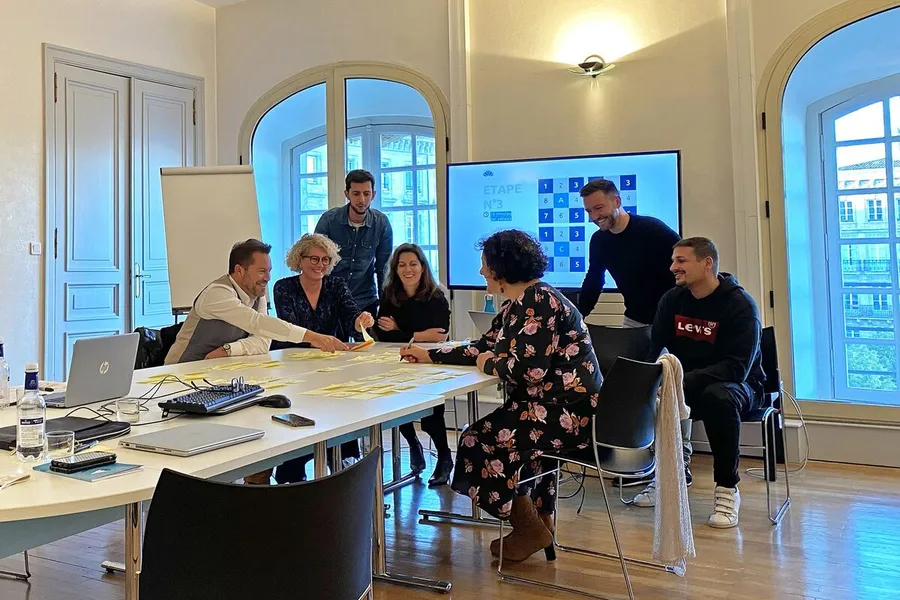
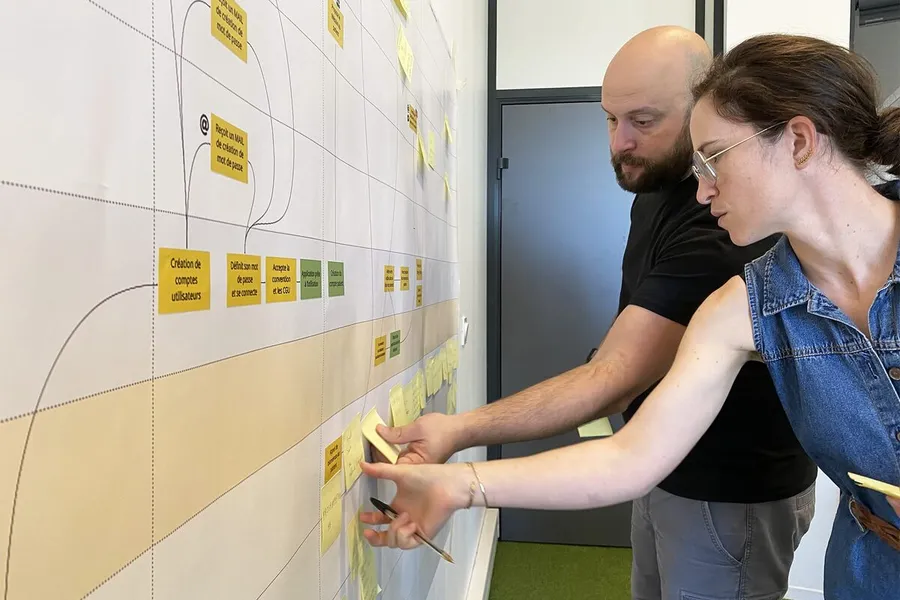
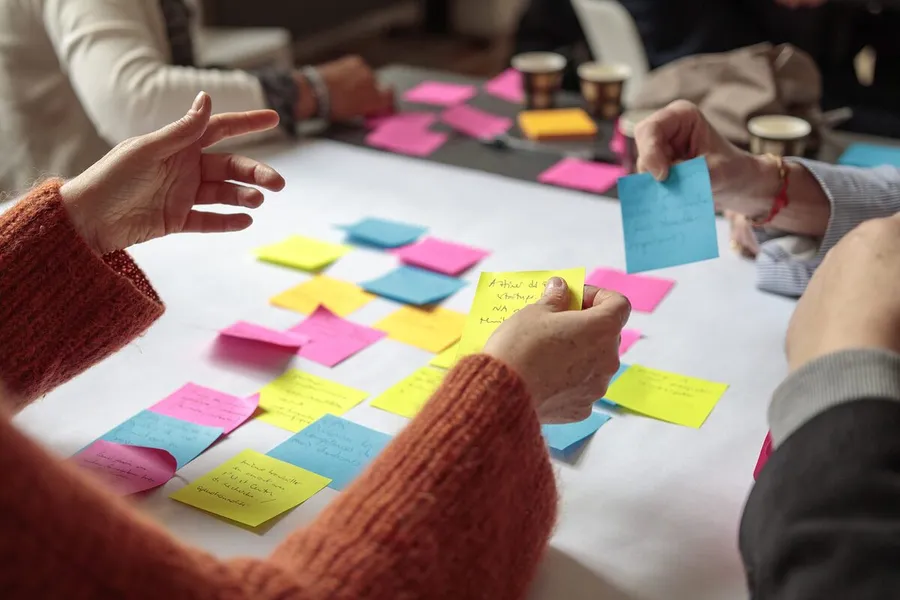
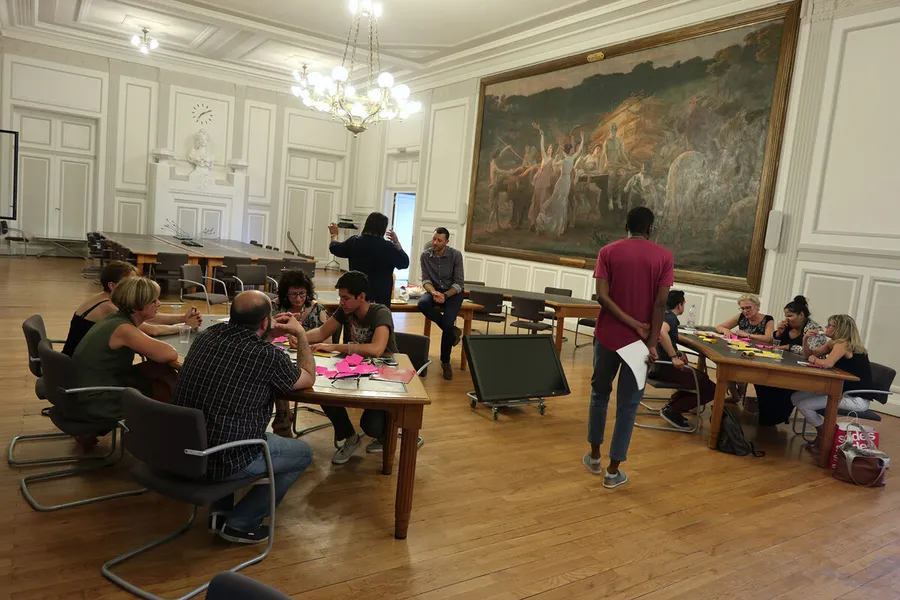
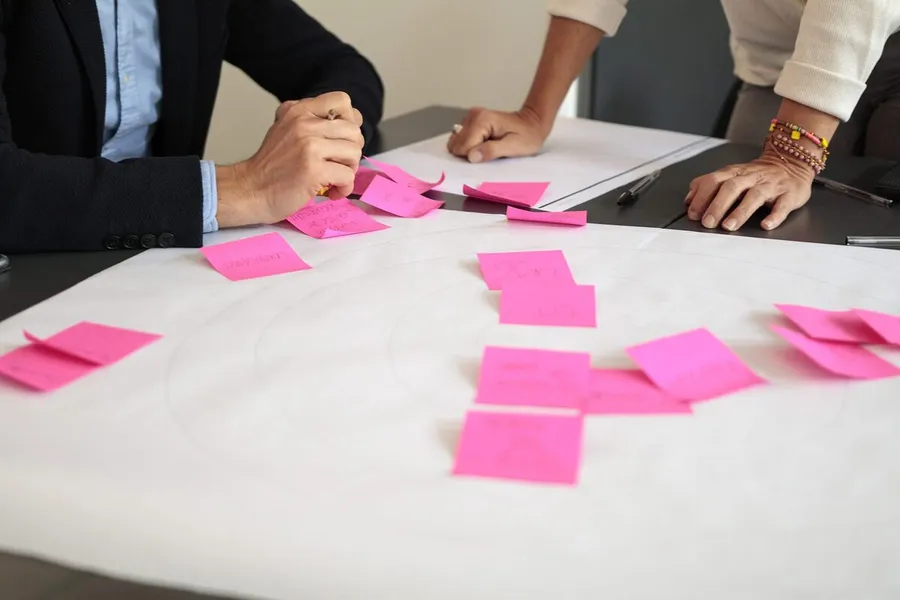
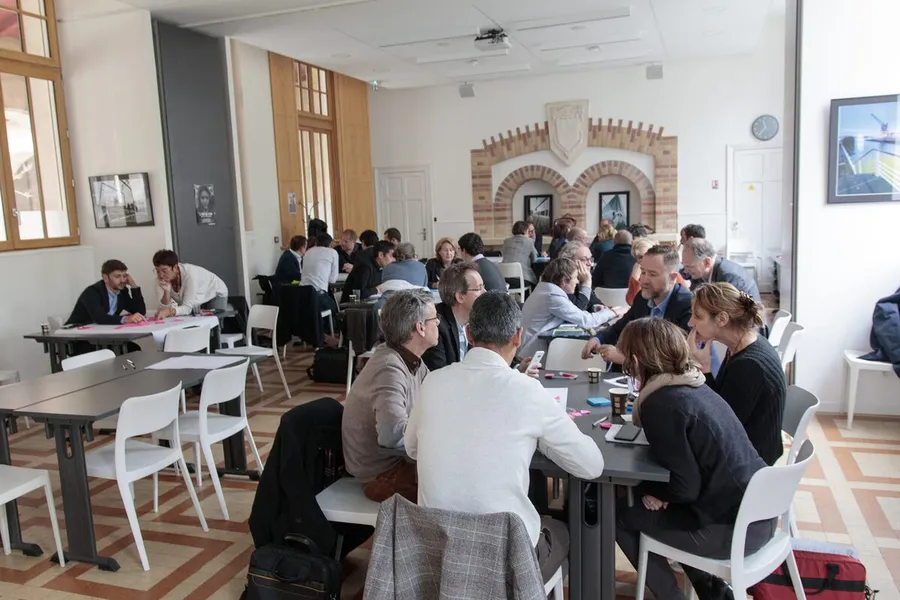
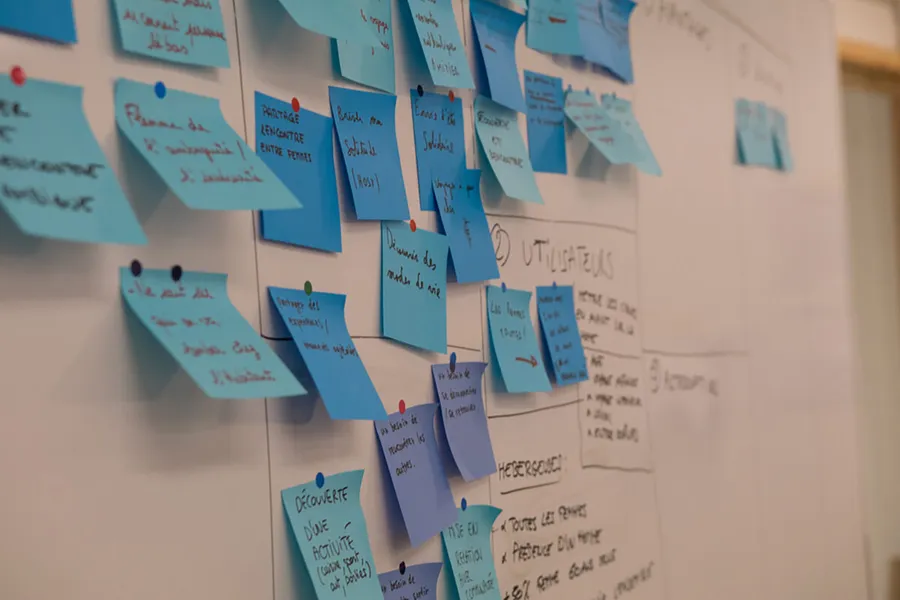
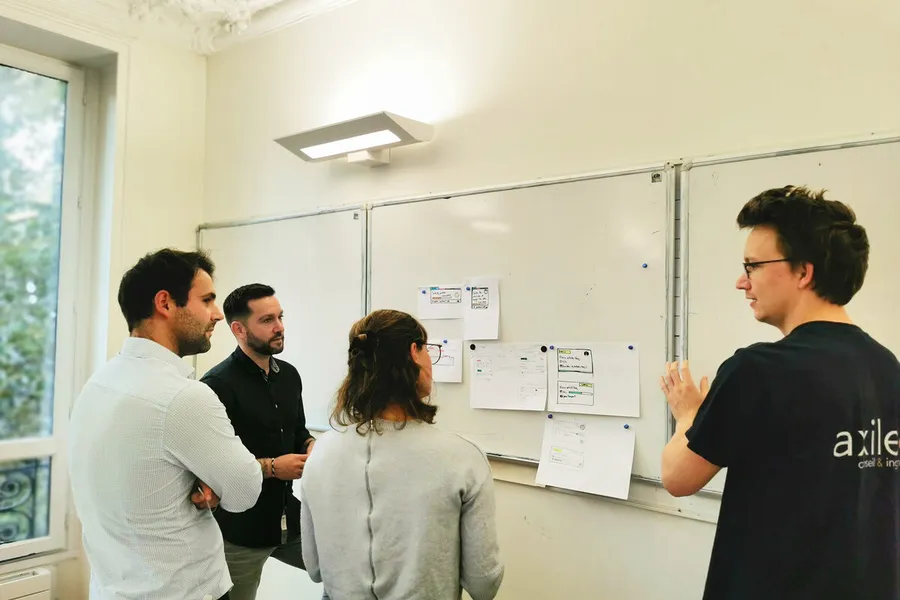
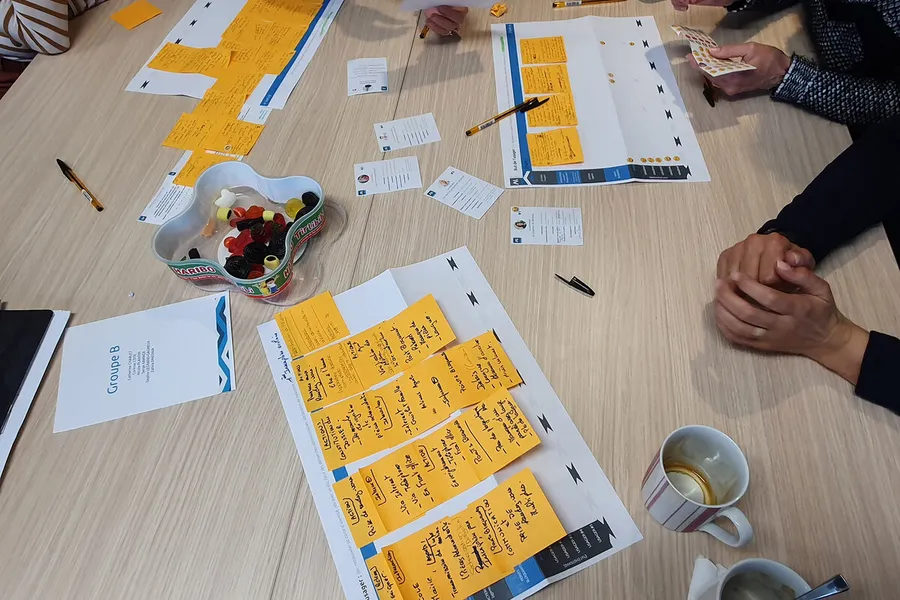


A co-design workshop draws on collective intelligence. These sessions help surface solutions with the project team and/or the end users.
Read more about Co-design workshopMore or less advanced animation of the screens to present a dynamic journey to users and gather feedback.
Read more about PrototypeUser testing means having target users assess the usability of your product or service. Depending on the goals, several approaches are possible.
Read more about User testingEveryone talks about user experience, service design, ergonomics...
It's not always clear, and you'd like to find out, or sharpen what you already know.