


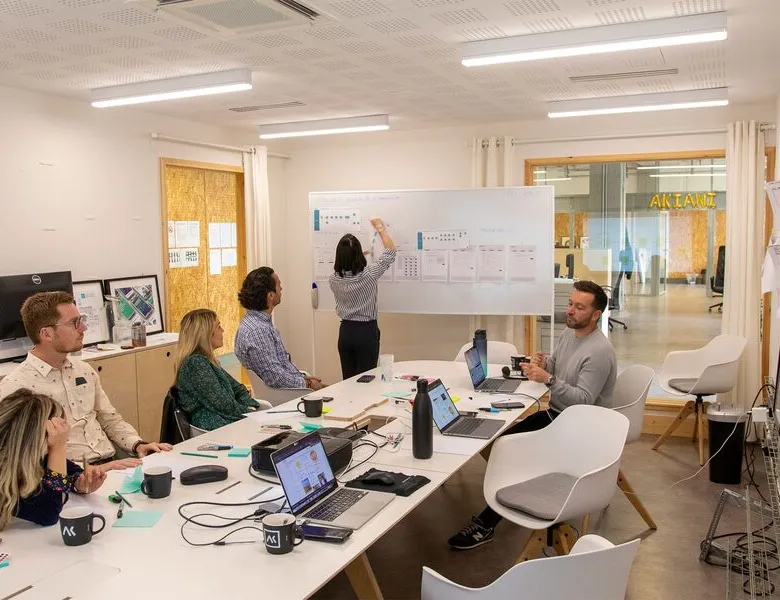


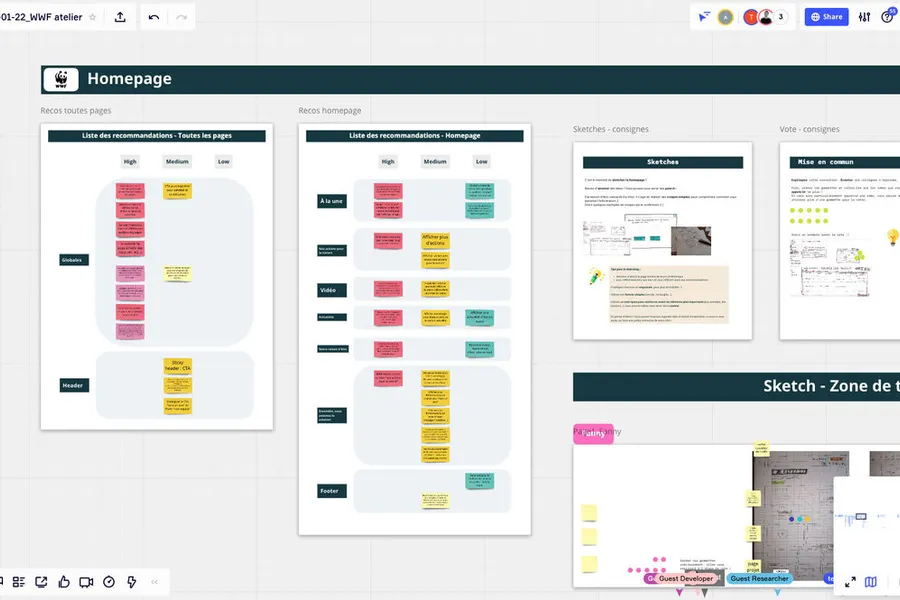
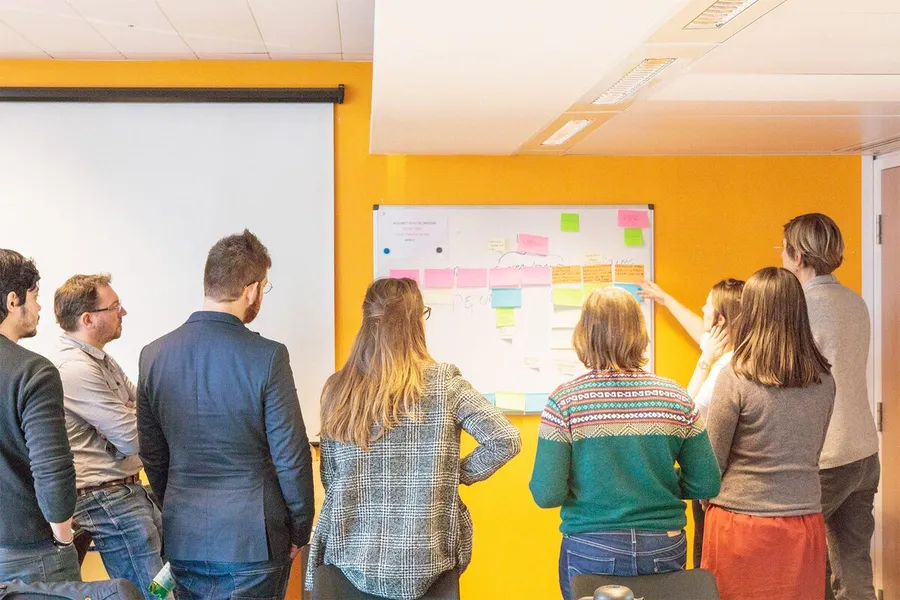
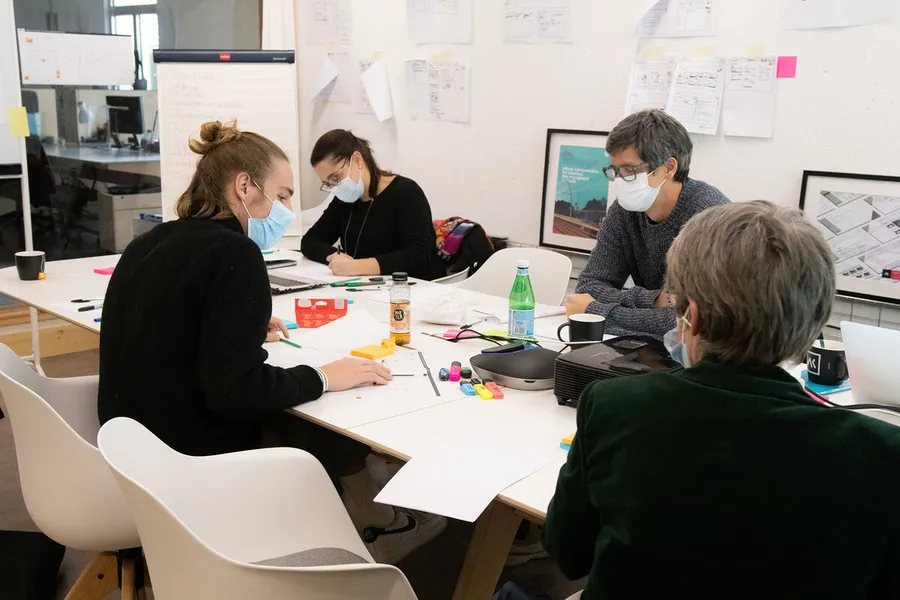
A very important stage in a project, the co-design workshop brings together subject-matter experts and designers to develop solution paths together. A co-design workshop can take several shapes: mapping user journeys, building proto-personas, sketching the first screens, and so on.
Different co-design methods all sit within the same user-centred approach. These sessions are designed to be participative, to encourage thinking and to bring together the expert views of the various stakeholders. Whichever method you pick, the following principles are worth keeping in mind:
01
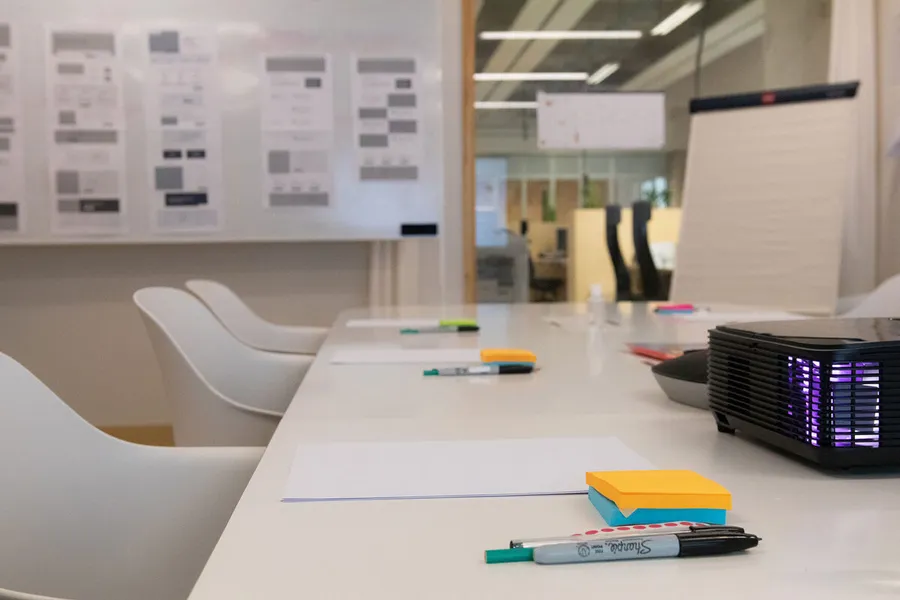
Prepare the co-design
Take a teaching mindset and clearly explain how the workshop will run and what's expected
02
Give participants input
Lean on insights when you have them: user feedback, a benchmark, example solutions, anything that fuels the thinking and stops participants getting stuck
03
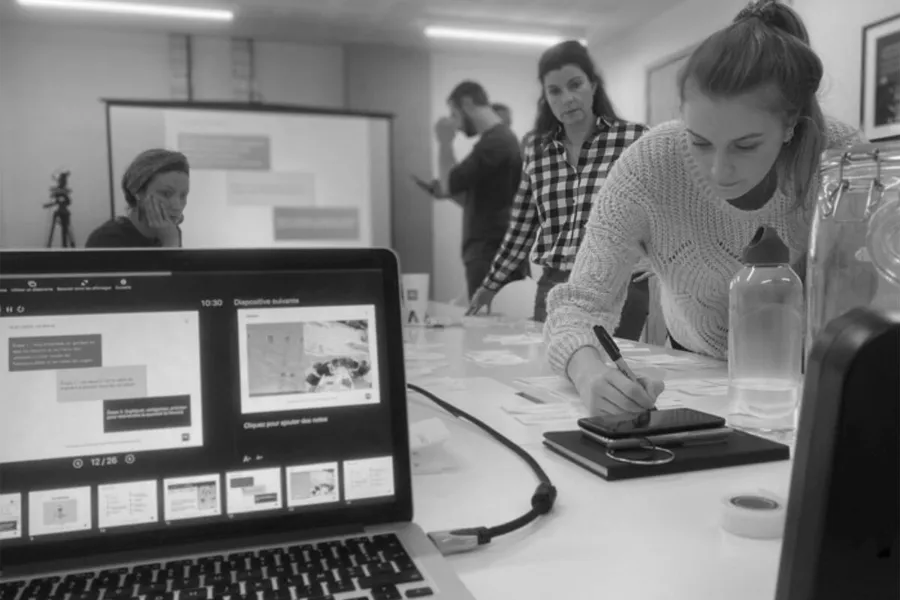
Facilitate the co-design
Frame the session by keeping an eye on time and steering attention back to the needs whenever discussions drift
04
Close the workshop
Make sure you've gathered enough feedback and material by the end of the session (for the rest of the project)
The course of a workshop is often subject to scheduling constraints and to everyone’s availability. To make the most of this precious time and gain efficiency, it can be useful to arrive at the workshop with a first draft. It will then be put to the test, questioned and enriched by the participants in order to bring out avenues for improvement and new ideas.
This approach avoids blank page syndrome. It offers a concrete starting point to critique, enrich and evolve, while helping participants project themselves. In short, it is an excellent way to kick off the thinking and fuel the discussion.
Co-design (or collaborative design) is an approach that actively involves users in the design process, beyond simply consulting them. Users are not observed or questioned: they take part directly in generating solutions, in a workshop with designers and product teams. It is based on the principle that the people most affected by a problem are also those who hold the most relevant information to solve it.
User testing evaluates a solution that has already been designed. Co-design involves users in creating the solution. In a user test, the user reacts to what the team has produced. In a co-design session, they help produce alongside the team. The two are complementary: co-design generates ideas anchored in real needs, user testing checks that the solutions designed do meet those needs.
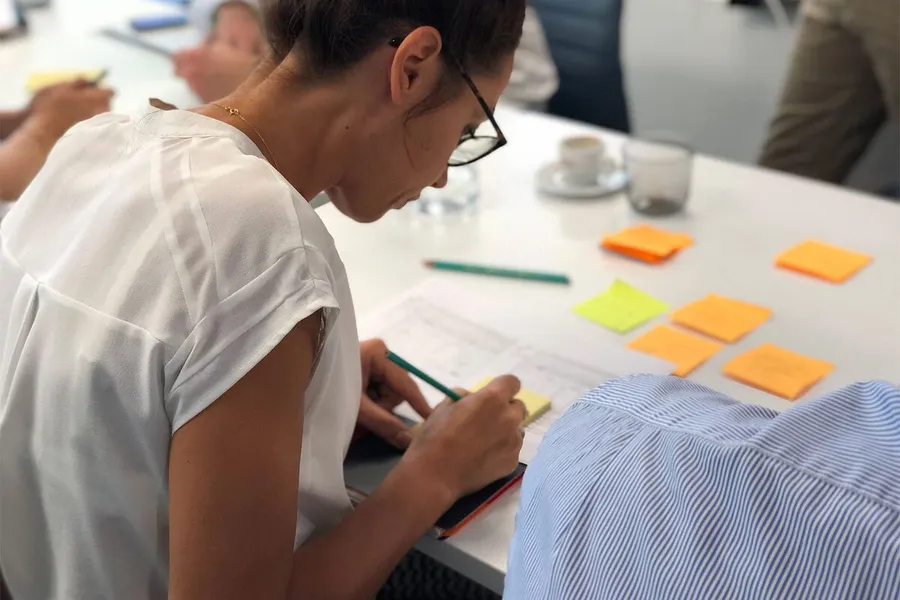
You prepare structured activities that allow non-designer participants to contribute without having to master design tools. Techniques such as the « crazy 8 » (8 ideas in 8 minutes), priority sorting or the construction of usage scenarios are accessible to everyone. You alternate between divergence phases (generating ideas) and convergence phases (selecting and refining). A neutral facilitator, distinct from the designers, helps to balance who speaks.
It produces different results, not necessarily better in every respect. Ideas from co-design are often more grounded in real practices and more easily adopted by the users who took part. On the other hand, they can lack systemic consistency or technical feasibility. Co-design is most valuable when the problem to solve is complex, poorly defined, or when user buy-in is a critical success factor.
No. It requires a significant investment of time (recruitment, workshop organisation, analysis) and is only relevant if users have direct experience of the problem to solve. It is particularly suited to public services, complex professional tools and projects where users have practices that are hard to observe from the outside. For incremental improvements on well-understood interfaces, lighter evaluation methods are generally enough.


Personas come out of work on user-profile modelling. They highlight behavioural archetypes that prove useful when designing.
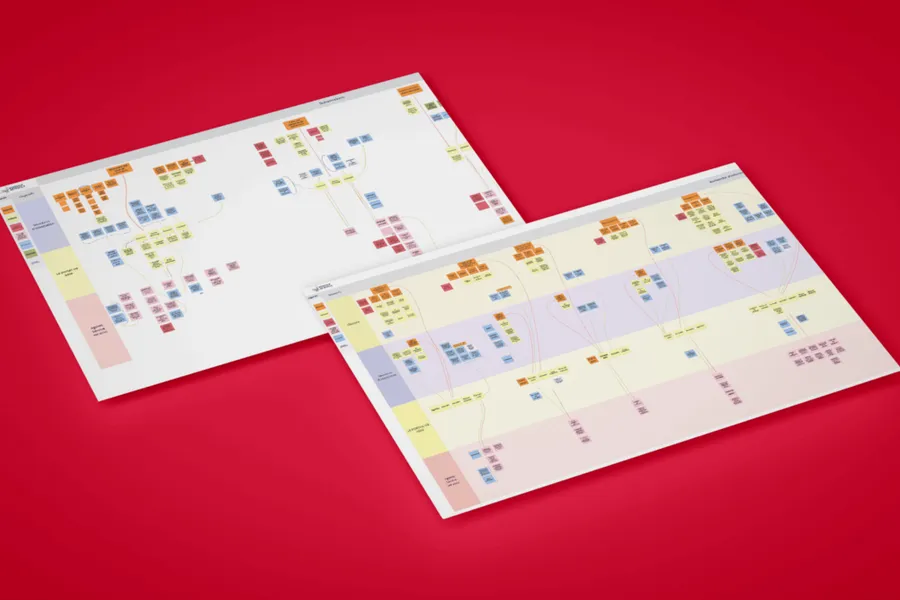
Read more about PersonasBreaking a process down into steps to bring out user needs and expectations, either for a given goal or when interacting with a specific product or service.
Read more about User journeyEveryone talks about user experience, service design, ergonomics...
It's not always clear, and you'd like to find out, or sharpen what you already know.