




Who are the festival-goers?
At the start of the project, we begin from the real needs of festival-goers.
Building on the previous editions, we run a behavioural study of festival-goers to understand their behaviours, what makes them different and what they share. We create personas and an experience map to think about the different steps of the journey, the actions taken, the expectations and the frustrations.


How do we lay out the space to address their needs?
From the steps of the festival-goer experience to the festival venues, the journey is carried over into physical space.
Several co-design workshops are run to rethink the site layout: discussions on the festival’s values, work on the main experience themes, sessions to design innovative features.
With the festival team, we developed a layout centred on the different festival-goer journeys, taking technical and budget constraints into account.


And what was the feedback in the field?
A study around innovation in lived experience cannot be carried out without a prototyping and field-evaluation phase.
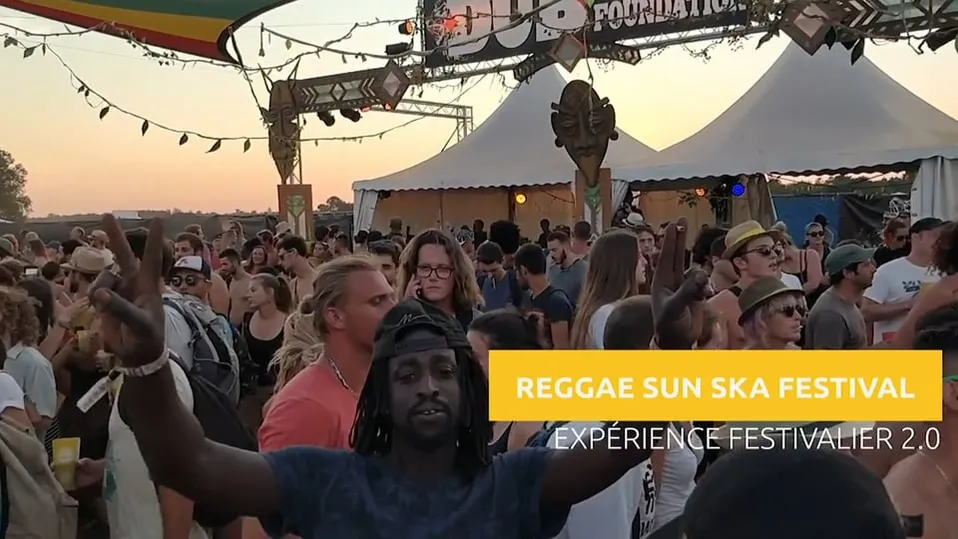
So we take advantage of the 2018 edition of the festival to test some of the ideas that have surfaced and to go and observe and talk with festival-goers on site.
3 days in the field, in a heatwave, walking the festival to meet those who bring it to life.


From the co-construction of the offer through to finalising the deliverables, we benefited from dedicated support by experts in user experience, public flow and space-layout optimisation. This work, run in workshops with all the teams, made it possible to rethink the way we work, and the results went beyond the initial expectations. The relationships with the teams were excellent, with a strong grasp of our challenges, our ways of working, and the priorities of the large-scale cultural events sector.