
Where the word stands
While it’s admirable to argue for proven solutions, you still need to know exactly what you’re talking about. At this point, a main pitfall appears: the way we understand this word. Depending on the field of knowledge, the area of application, or even the period, different definitions compete with one another, sometimes radically so. To see this for yourself, just type the word “resilience (opens in new window)” into your favourite search engine. From psychology to economics, from banking systems to space shuttles, the capacity for resilience comes in many versions, sometimes even opposing ones.
Let’s look at building common resilient organisations, such as our companies, to illustrate the point. How do you make them able to absorb radical changes in how they operate? In what they produce? But also in their external and internal relationships?
Anticipation
Let’s rise to a higher level: in the context that interests us specifically, resilience would essentially be the ability of organisations, a company here, to adapt to and anticipate unforeseen events. It’s worth pointing out right away that adaptation alone isn’t the only ability a resilient system pursues, even though it is its main observable feature. The ability to anticipate, through a projective system that learns continuously, is the real key to this kind of organisational model.
So putting in place processes that enable this “agility” would seem to be the solution to guarantee the resilience of our organisations. You might then ask: what’s the point on a UX-focused blog? On closer thought, this kind of problem isn’t so far from our areas of interest, all the more so if we look at it through the lens of strategic UX.
Resilience and strategic UX
A few months ago, we already covered strategic UX as a meaningful tool for supporting change management. This time, we’ll try to assess the added value that strategic UX could bring to building resilient organisations.
A first, fairly common mistake would be to define just a series of ad-hoc processes that, on their own, would supposedly let the organisation reach this holy grail. Take the common example of deciding to put in place a feedback system within the organisation to become resilient. Of course, this feature alone won’t be enough to transform the organisation effectively.
It’s the actual implementation of this feature, through the quantitative and qualitative analysis of the data gathered, and through capitalising on the sharing of experience, that will make this process lead to a better assessment, or even an anticipation, of risks.
In the same way, delegating decision-making or empowering people to decide, in relation to the hierarchy, can only work if the possible mistakes in delegated decisions are truly accepted. Otherwise, you risk seeing a certain wait-and-see attitude, or delays, in those same decisions. Both are incompatible with project dynamics.
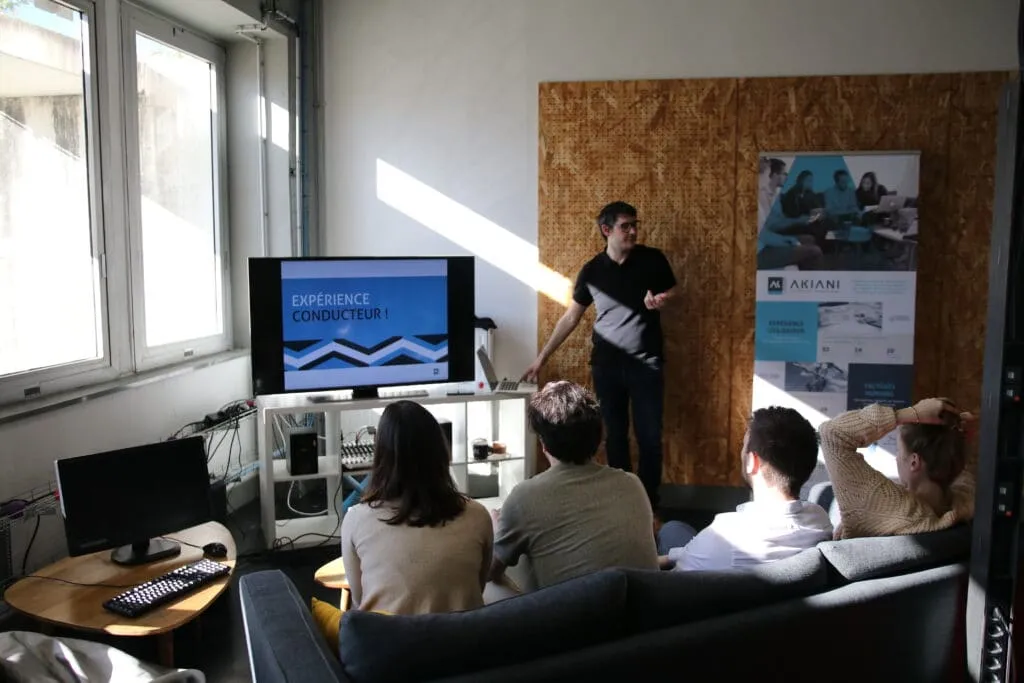
Strategic UX: the mistakes to avoid
This brings a deep change in the interactions within the organisation, and ultimately in how the organisation runs day to day. These changes are often far deeper than the relevant management teams first imagine. These management teams will have to make a fairly radical shift in their managerial paradigm. The various leaders will have to migrate from a role that is largely about deciding to one of guiding, supporting, teaching and facilitating their team members.
The ultimate aim of this shift is to give team members greater confidence in their ability to take initiative, and in empowering their own decision-making.
This migration of management is really the most critical point in successfully setting up a resilient organisation. But its acceptance by the hierarchy is, in practice, often limited.
A second mistake would be to forget people as operators of the system, and how well they fit with resilience: we need to keep this in mind from the recruitment stage. Of course, suitable training must be put in place systematically, and on a regular basis. For some particularly exposed roles, the choice of candidate may even rest mostly on their capacity and their willingness to be resilient, rather than only on their expertise.

Emotional intelligence in strategic UX
Emotional intelligence is talked about a lot these days, which is on the whole a good thing for organisations and people. But reducing resilience to this one feature remains a risky bet. Emotional intelligence carries interesting potential. It is directed towards self-knowledge and recognising emotional patterns in others. It can be seen as the ability to move past stress and to build alternatives. But the robustness and the relevance of these constructions will depend above all on the capacity for abstraction and for breaking away from conventional patterns.
So, what should we make of resilience in the UX field?
You can clearly see that strategic UX has real potential, and a genuine contribution to make to organisations that want to become more resilient: through its ability to understand user practices, but also to picture the needs of people interacting with the capabilities of systems.