Law of good form
First, the law of good form. With it, the brain will try to perceive “good forms” in a more or less random grouping of parts.
Law of proximity
We group together the elements closest to one another, because we see them as belonging to the same group. We don’t see two distant elements as being in one set.
Example of an internet search on Google:
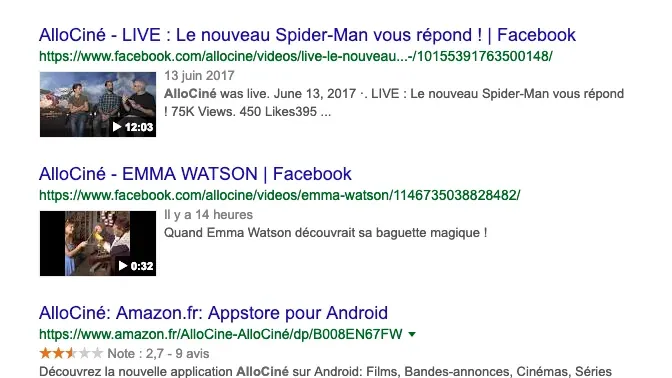
Explanation: in this example, the white space allows our brain to tell the difference between the different groups on a page. It guides the user in their search, their navigation, and so on.
Tip: creating space between homogeneous groups of information helps users tell them apart.
Example of the IBM logo (opens in new window): taken on its own, each line of the logo means nothing. But as a whole, they form the letters “I”, “B” and “M”. It’s our brain that reconstructs them.
Law of similarity in Gestalt theory
If our brain doesn’t manage to group elements together by proximity, we will then look to spot the most similar ones in order to perceive a shape. Shapes that share similarities (in form, colour, orientation, and so on) are spontaneously grouped together.
Example of a search on a website:
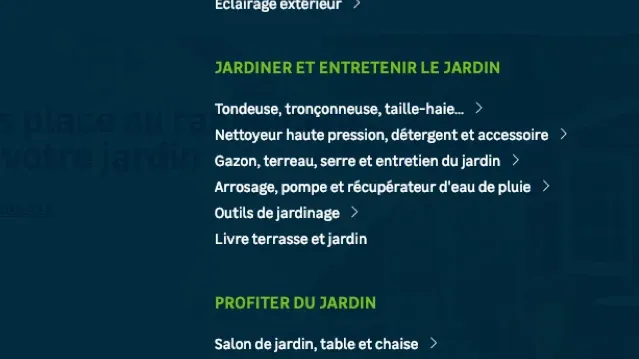
In this example: thanks to the green colour of each title and to their uppercase styling, we recognise that they are the titles of each category.
Tip: consistency in the titles of each section: colour, typography, weight, and so on.
Law of closure
When images are imperfect or when a series of events is incomplete, our brain tends to fill in the blanks in order to perceive this information as a whole. On top of that, a closed shape is more easily identified as a figure (or as a form) than an open one.
Tip: the key to closure is to provide enough information so that the eye finishes the job on its own. If too many elements are missing, we see the shape as a set of unrelated, incomprehensible forms.
In the example below: we more easily understand the organisation of the table, because the area assigned to each element is clearly delimited and defined.

Law of symmetry in Gestalt theory
When the elements we look at have axes of symmetry, they are more easily perceived as a whole. In the example below, the drawing on the right is more easily perceived as a whole than the one on the left.
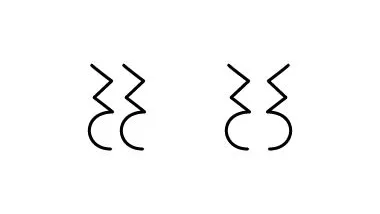
Tip: it isn’t only the content that creates symmetry, but also aesthetic elements such as colour or design features. A symmetrical site draws the eye onto each of the various elements of the overall composition.
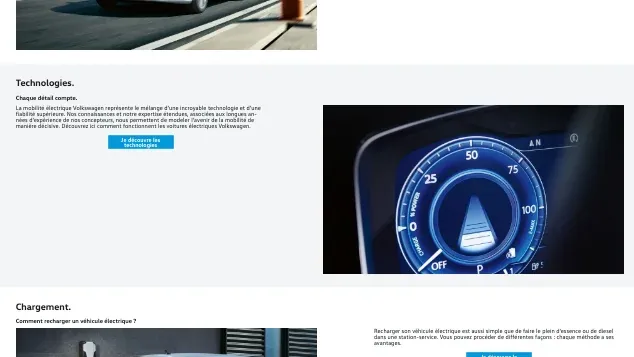
In the example below: the symmetry of the elements placed on an axis of symmetry makes reading easier. You therefore have to pay attention to perceived symmetry.
Law of common fate
We recognise moving elements that share the same trajectory as belonging to the same shape. Equivalent movement creates a connection between shapes and objects.
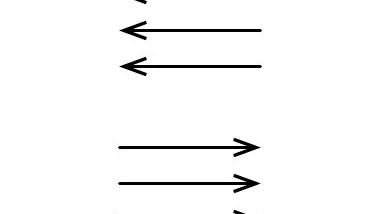
Tip: when designing a menu, giving the menu items the same trajectory as they unfold lets the user see them as belonging to the same set, thanks to the law of common fate.
Wrap-up on Gestalt theory
To wrap up, we’ll stop here for this first part on the psychology of form. On the whole, we can conclude that the laws of Gestalt give us good advice on how to group related elements, how to draw attention to the elements that matter, or how to create a sense of balance and stability. The importance of this theory in every design and visual production process is clear. There are many other principles and laws of cognitive psychology that guide us in understanding users. We’ll present them soon.
See you soon for more tips that will build your understanding of users!