Chapter 3: figure skating!
Enjoyed our previous article on curling? You’re going to like this one too. Kick off your slippers and slip into your finest James Bond outfit to nail the routine. The Winter Games are on! You’re probably wondering how skaters stay upright after spinning round and round on the ice, while you’re comfy on your couch? You’re in luck, AKIANI is here to answer all your figure-skating questions!
 Vs
Vs 
A bit of general knowledge about figure skating
“But why put on skates and glide on ice?”
At first, skates were made from ox bones and used to get around. Bit by bit, fun took over from function. Then, in 1976, at the Olympic Games in Austria, “ice dancing” became an official Olympic event.
Figure skating is a discipline where the athlete has to control the position of their head, but also their torso, arms and legs, all according to codified rules, and all while moving! In other words, you’re constantly managing your posture while holding a dynamic balance.
“Spin around three times and steady yourself as fast as possible. Not so easy, and you’re not even wearing ice skates or a sparkly costume!”
Posture and balance
To pull off this feat, the body leans heavily on every kind of sensory information for balance, visual and proprioceptive information * in particular. But above all, the vestibular system plays a starring role.
Vestibu-what?! Vestibular (opens in new window)! No, it isn’t some new kind of Olympic locker room. It’s the physiological system, tucked away in the inner ear, whose sensors keep your balance in check.
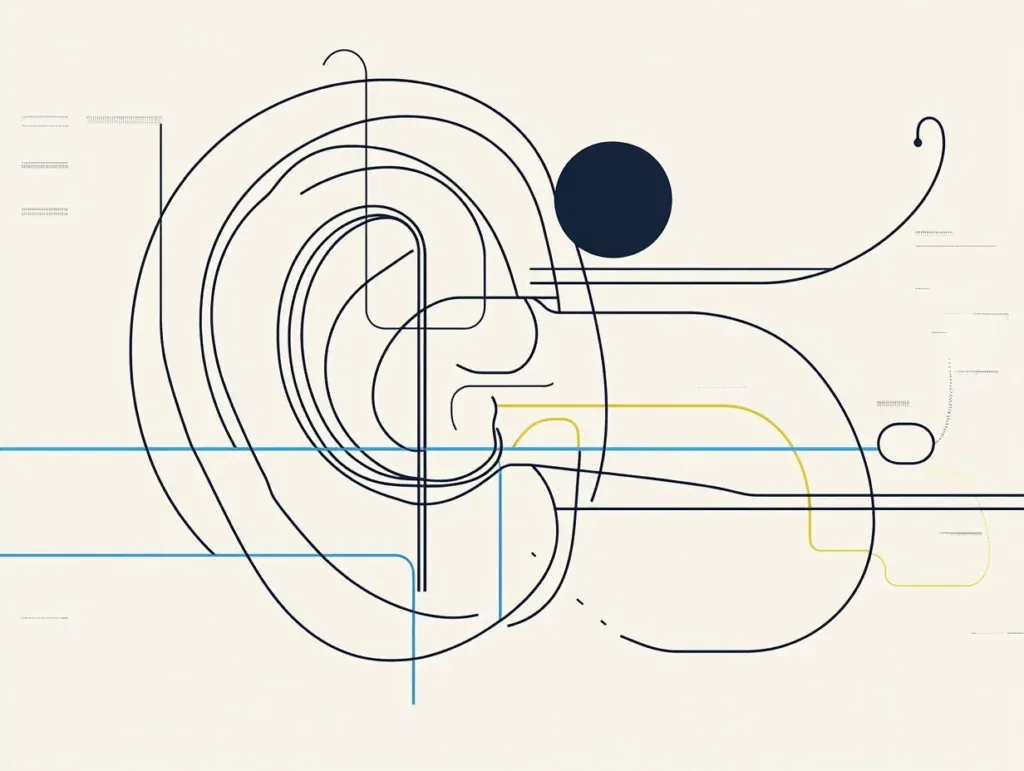
“What? My ear lets me stand up?”
That’s right, the inner ear holds both the organ of hearing and a sensor that picks up the angular position of your head and how fast it’s accelerating. Using virtual reality, some studies have managed to reproduce various disturbances of the vestibular system and test their intensity in real time. That’s one way to get at what sets top-level skaters apart from the rest of us!
Visual and motor abilities in figure skating
Research has shown that top-level figure skaters have a distinctive vestibular system, and that this shapes how their visual system works too. As a result, these expert skaters move their eyes more actively, blinking more often and fixing their gaze more frequently. Each fixation is shorter, and the eyes travel less far between two saccades. With a one-of-a-kind vestibular system and the visual system working hand in hand, expert skaters can pull off remarkable feats! To get a better handle on these behaviors, our team uses an approach close to the empathy map, which lets us tease apart the cognitive and emotional sides of what athletes go through.
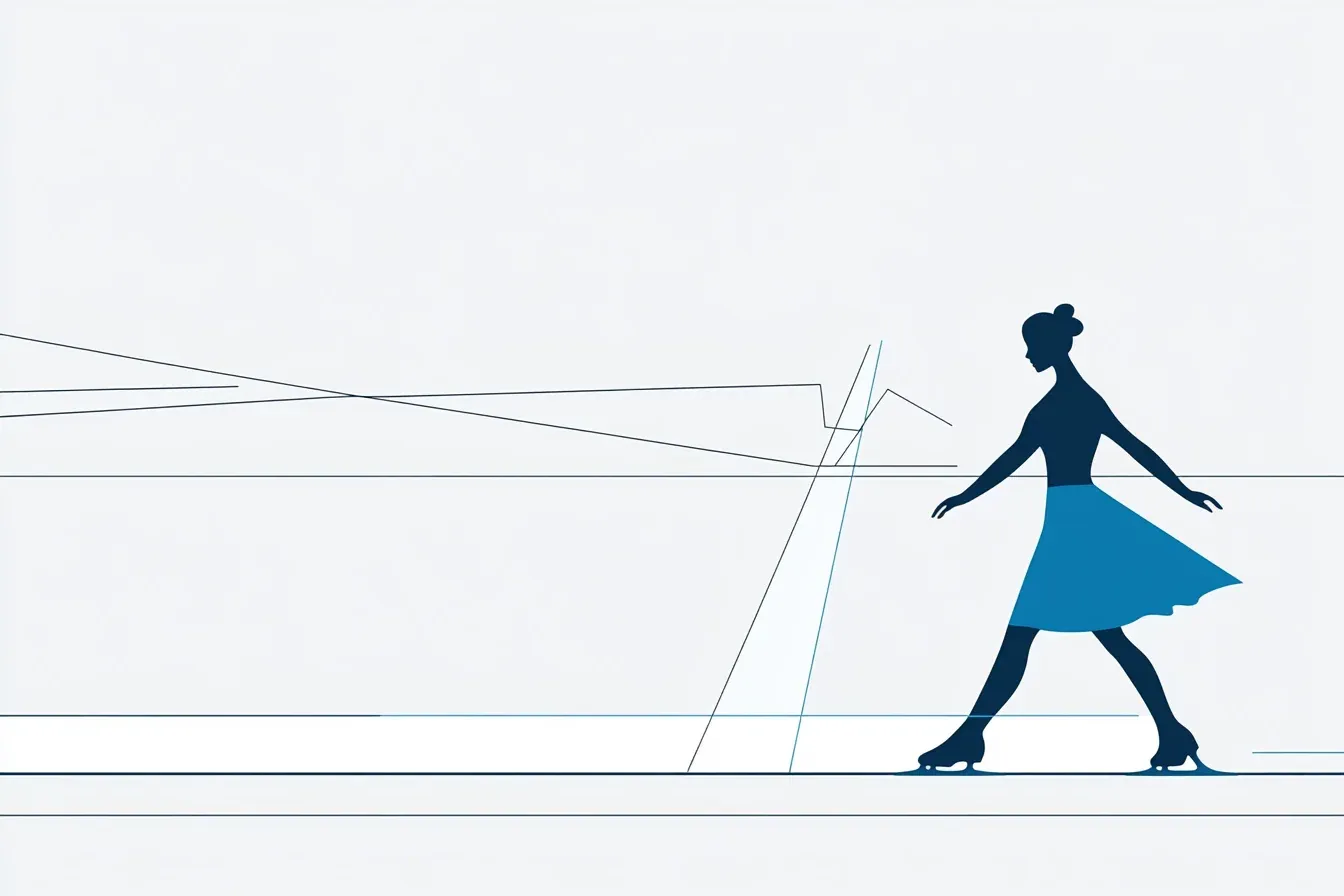
Now that you’re an expert in landing perfect spins, all that’s left is to buy some ox bones. Or some ice skates. And glide off to the nearest rink to try and break a few records…
Maybe one day you’ll land a triple axel in a free program, matching American skater Mirai Nagasu at these Winter Games. Or you could train to match Nathan Chen, who strung together six quadruple jumps, a world first in such a competition! Good luck! And by the way, just as ice skates have come a long way from ox bones to today’s high-tech materials, we care about eco-friendly design across all our projects too.
* Proprioception: Perception of the position of one’s body in space
The illustrations in this article were generated by AI (see our AI use statement).