I am the law!
In 2009, the designer Candy Chang decided, in collaboration with “The Street Vendor Project” and “The Center for Urban Pedagogy”, to improve the understanding of regulations for street vendors in New York City. She designed a guide for these vendors: Street Vendor Guide 1
This citizen-led, activist initiative aimed to defend the rights of these workers, who aren’t necessarily able to decode this mass of legal information. The document that came out of this work made it possible to convey legal information to people without specialist knowledge in an optimised way.
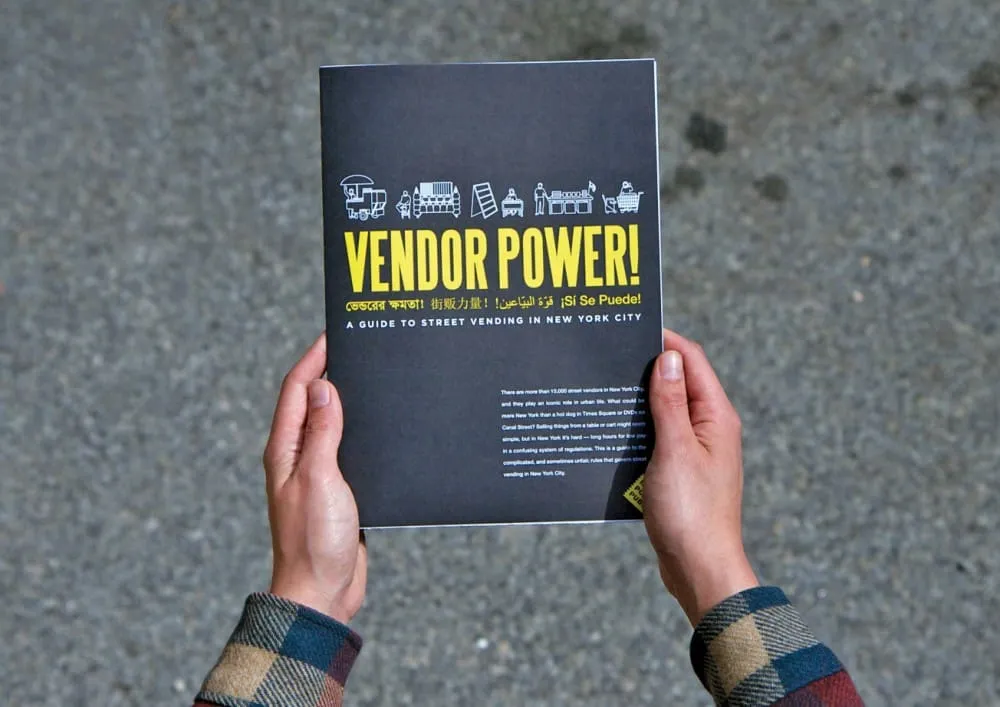
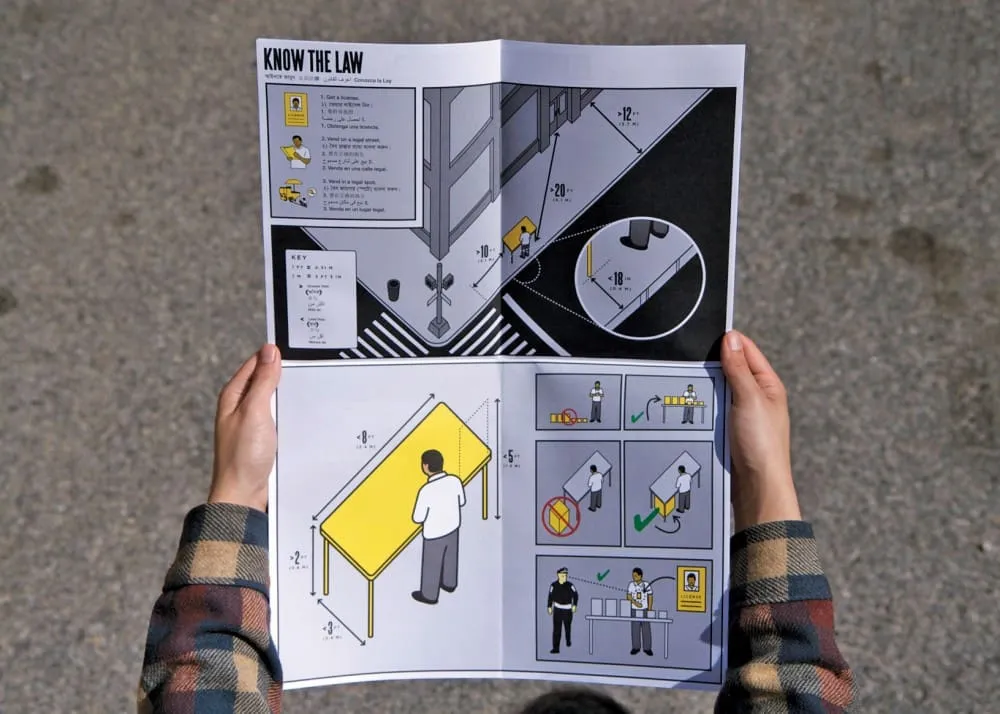
This example of an early initiative to improve the understanding of legal information was later properly theorised in 2014 by Margaret Hagan from Stanford University in her book Law by Design 2.
In her book, what we mostly take away are 3 design points around which Legal Design is structured:
- Experimentation, prototyping and iterative work, in order to continuously improve legal objects
- Working collaboratively by bringing in lawyers, designers, researchers, legal professionals and so on
- And above all, having a user-centred vision to understand their needs and constraints in order to improve their experience.
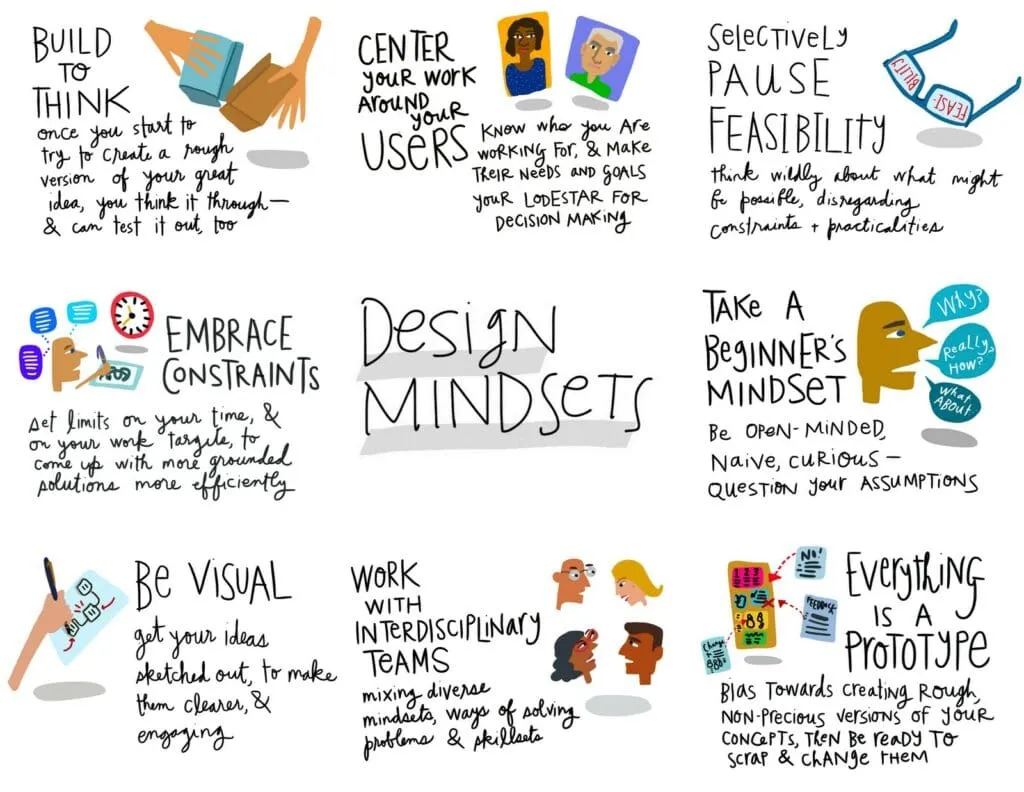
Based on user-centred design, Legal Design can be defined as a methodology aimed at improving the transparency, clarity and delivery of legal information regardless of the medium (written documents, speeches, and so on) without distorting its legal dimension.
It all starts with the user
Margaret Hagan makes clear that to improve how this information is taken in, you first have to know users’ needs:
“If the law is born from human experience, it isn’t always thought of in terms of user-centred experience. People want to be reassured, keep a certain control over their choices and understand their rights. But more often than not, the legal system produces the opposite effect, undermining people’s confidence and giving them the feeling that they have no power.” 3
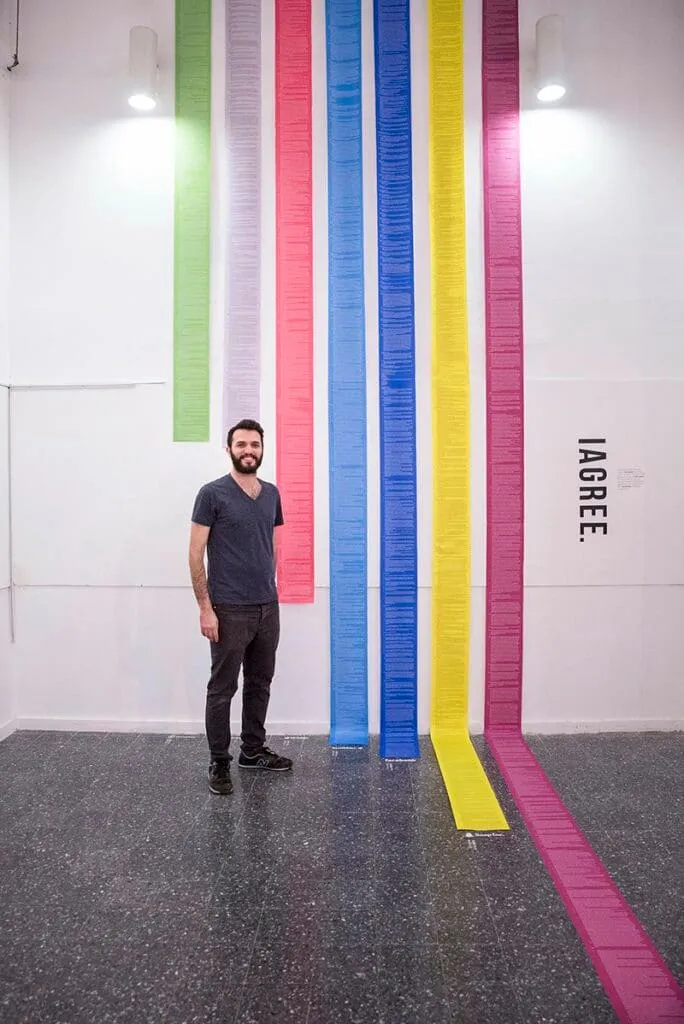
But be careful, taking on a Legal Design approach is not just about making legal documents visually attractive.
You first have to understand what is going on in users’ heads by selecting relevant User Research methods that let us bring to light the pain points and the needs tied to them (and as it happens, we’re experts in this field at Akiani).
Our expertise as designers will essentially focus on how this information is presented, both orally and in writing. An expert audit of the various materials carrying legal content can then be considered, both on substance and on form.
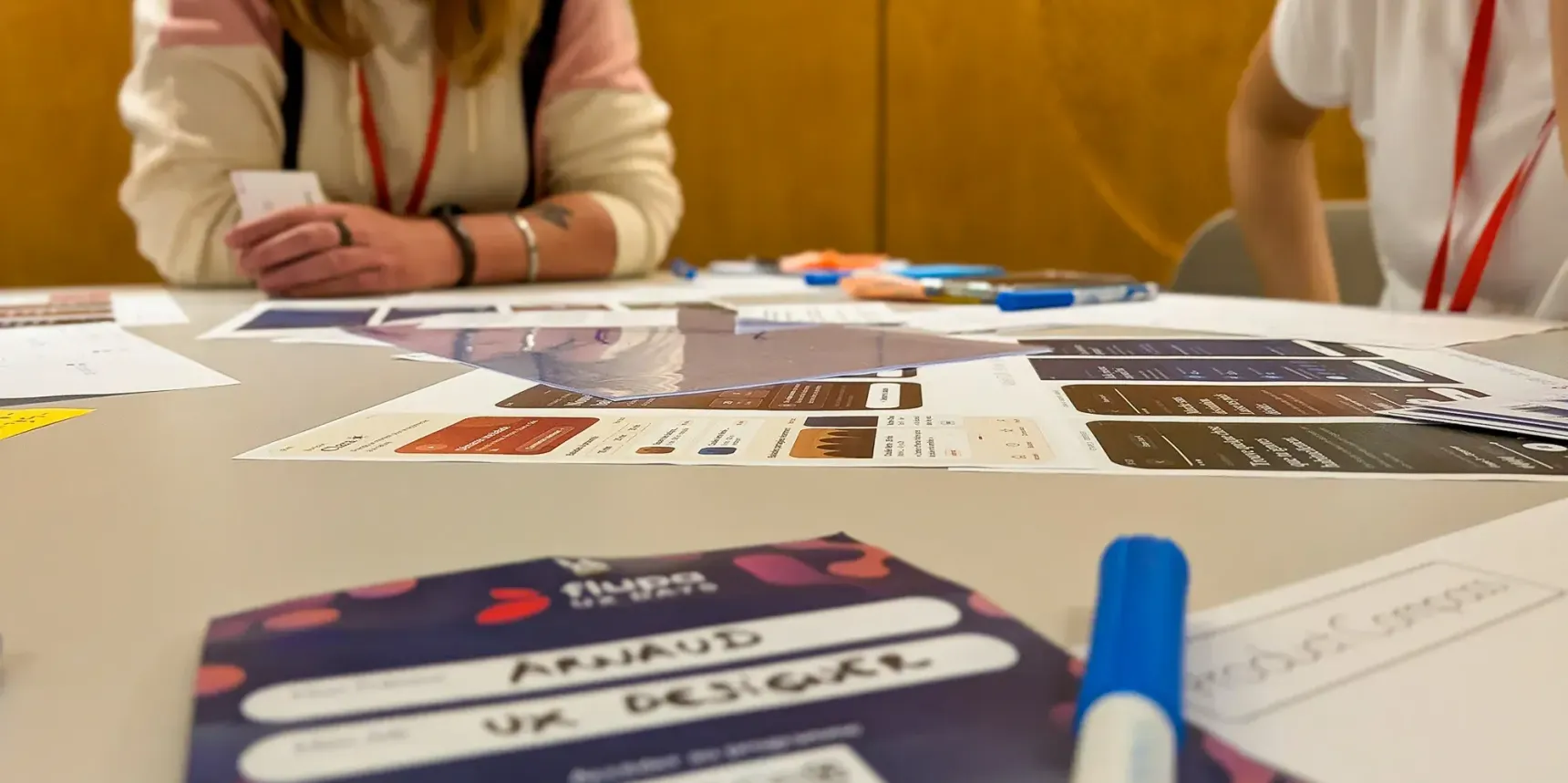
Finally, still within an iterative way of working in collaboration with stakeholders, co-design workshops are set up to surface various opportunities for improvement.
And in concrete terms, what gets improved?
By demystifying a field often seen as cold and austere, Legal Design lets the user take ownership of this legal information.
This brings significant added value to companies and public bodies on several levels:
- A stronger relationship of trust between the various parties
- An improved user experience thanks to better readability and greater transparency of the information
- A greater ability to project oneself when you have concrete examples
- Better support and a greater willingness to listen to the user
- A sense of belonging through the personalisation of legal documents
- A reassuring expert tone that doesn’t distort the legal content, but improves the understanding of technical terms
Concretely, these areas of improvement can take several forms:
- Infographics that lay out a large amount of information visually
- Illustrations, videos or motion design to bring a more didactic dimension
- A direct tone, shorter sentences that get to the point
- Bring in concrete examples and scenarios so that the user can picture themselves more easily
- Define technical terms when needed
- And many more.
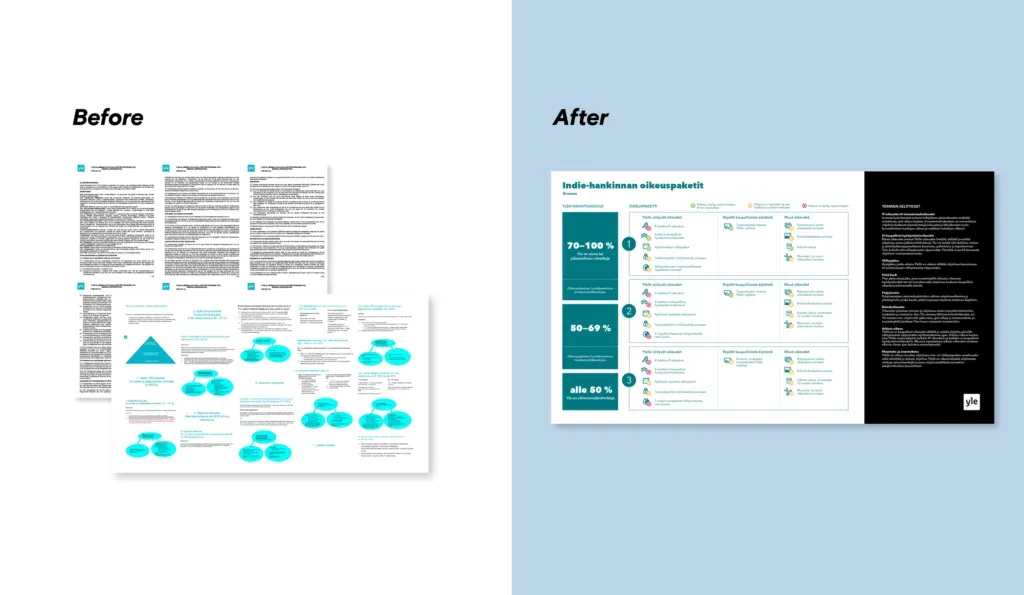
The opportunities are rich and varied, and depend above all on the user feedback gathered during the research phase.
Conclusion
Setting out the contours of Legal Design has brought a certain credibility to this fast-growing field. More and more projects are being put in place to bring new lines of thinking aimed at improving the understanding of the legal sphere. Drawing on design thinking methods, Legal Design places the user at the centre of its approach in order to improve their experience and make the legal field more accessible and less constraining.
A new way of designing legal information that, beyond the trend effect, has a real role to play in letting users take back ownership of their rights and letting institutions better convey this information.
References
1 - candychang.com (opens in new window): Street Vendor Guide project 2 - lawbydesign.co (opens in new window): Margaret Hagan’s official website 3 - ttclabs.net/insight/why-law-needs-design (opens in new window): Margaret Hagan’s article on Legal Design 4 - uxdesign.cc/a-dramatic-visualisation-of-terms-and-conditions (opens in new window): Simon Robison’s article on Terms and Conditions 5 - legal.dot (opens in new window): a Legal Design agency based in Helsinki