Architecture and information architecture: the early questions
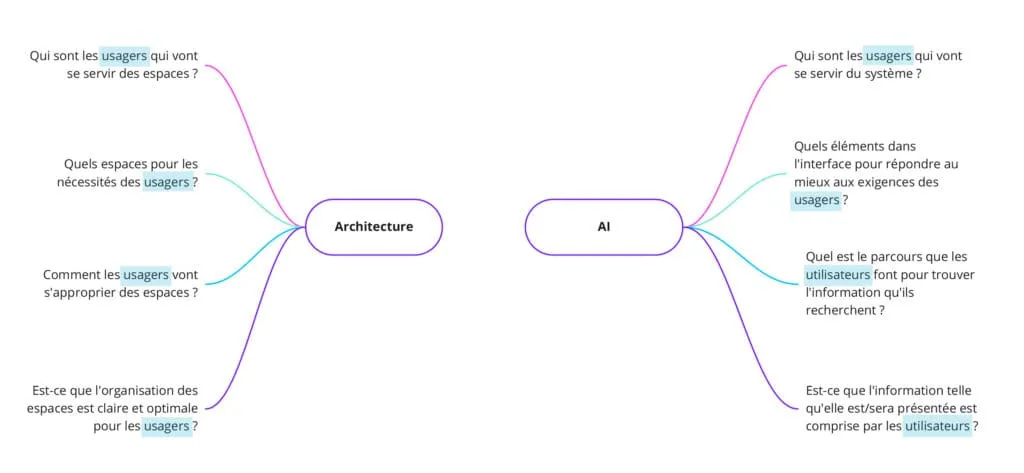
The parallel opens on an observation. The questions you can ask yourself in architecture (“Who are the users? Which spaces are we going to design for the users’ needs? Is the organisation of the space clear and optimal for the users?”) are essentially the same as those you can ask yourself in information architecture (“Who are the users who will use the system? Which elements in the interface best meet the users’ requirements? Is the information, as it is presented, clear and understandable?”). Through this kinship, you reach the real common ground between the two practices: the interest in the user, the human being, presented as the starting point of these disciplines.
Project phases: analogies and differences
Continuing the comparison, let’s look in detail at the phases of an architecture project, which are standardised and recurrent:
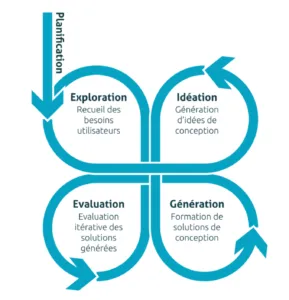
- taking into account the context and gathering the needs of the future users;
- looking for inspiration and references and the ideation of the various sketches that lead to the creation of the concept adopted to move into the solution-generation phase;
- generating the solution: during this phase, the concept is translated into signs, materialising through plans, façades, sections, and so on, in a way that addresses the question raised at the start of the project;
- and finally producing mock-ups, virtual or physical, key tools for evaluating the solution and planning iterations accordingly.
Fundamental similarities
The logical counterpart of this architectural methodology is the project methodology for information architecture in an interactive system. Many fundamental similarities remain across its different phases, in particular:
- exploration: gathering needs, which happens through observations, user interviews, and so on;
- ideation, represented by the first interface sketches;
- the solution-generation phase, in which the mock-ups take shape;
- the evaluation phase, with interactive prototypes.
That said, there are notable differences between the two fields:
- Co-sketching practices with end users or clients, recurrent in information architecture projects, tend to be adopted within the project team in the architecture field.
- Prototyping and iteration in architecture hit their limits, since you cannot fully let the user experience the space and then step back.
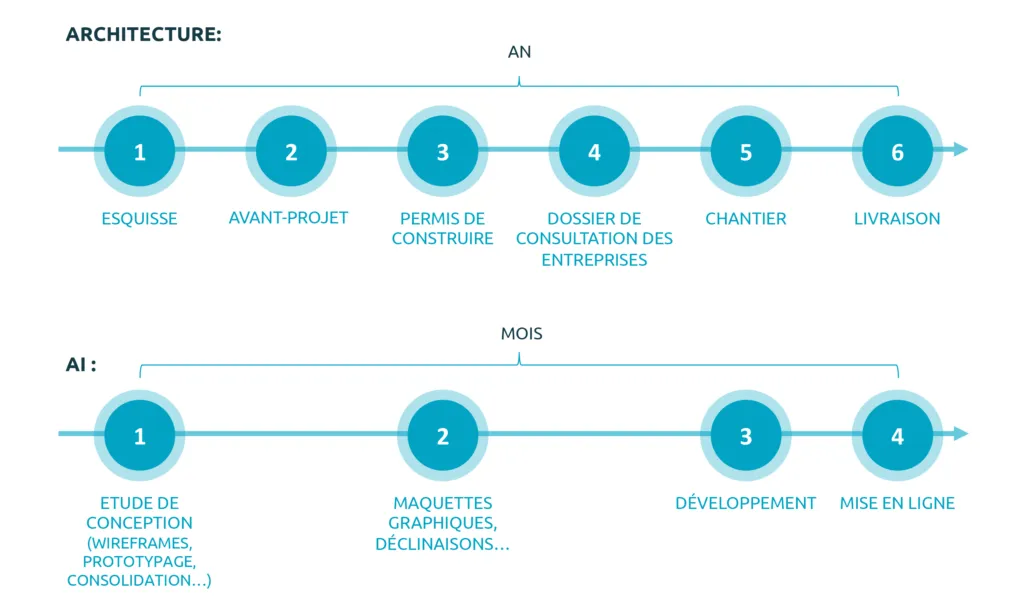
- Another major difference is the time dimension, which differs drastically: on the order of a year for an architecture project, more on the order of months for an information architecture project. This of course varies from one project to another, depending on the context, the stakeholders and other factors.
Project teams
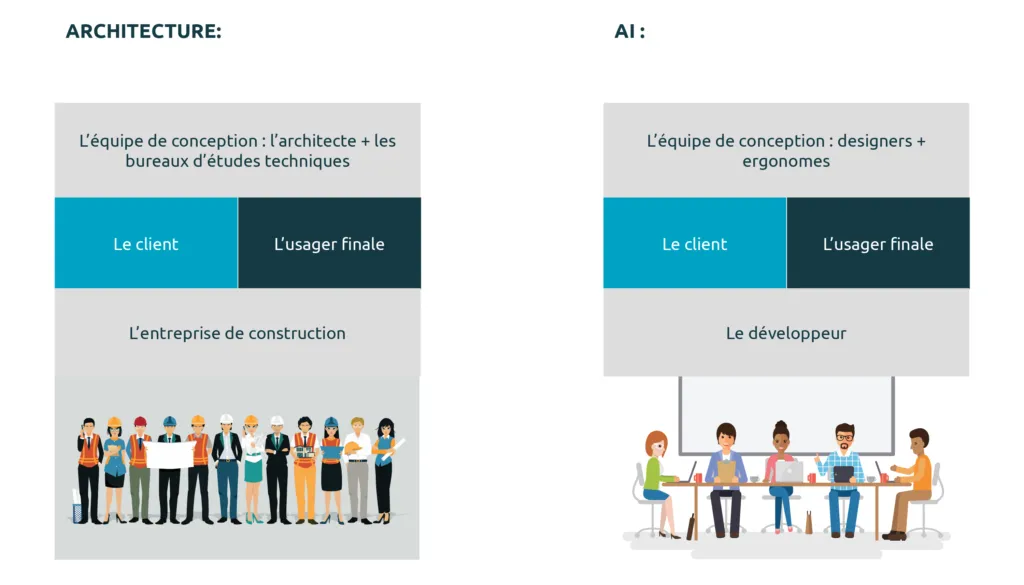
The way project teams are made up in each discipline is itself comparable. The deliverable, whether tied to architecture or to information architecture, is in any case the result of the work of a multidisciplinary team, not of a single individual.
Elements of architecture and information architecture
The parallel continues with the objects of the two disciplines:
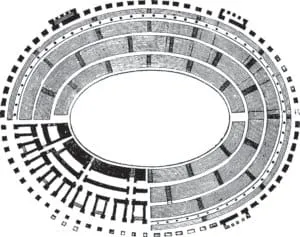
The elements at the origin of the system For architecture, this will be the plan: thanks to it, you understand how a building, a district or a city is organised. For information architecture, it will be the sitemap. It represents the hierarchy of elements and lets you appreciate the organisation, the balance between parts and the complexity of the system.
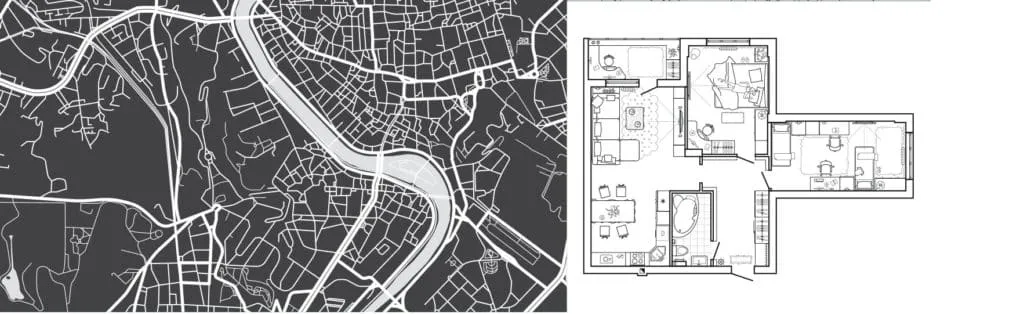
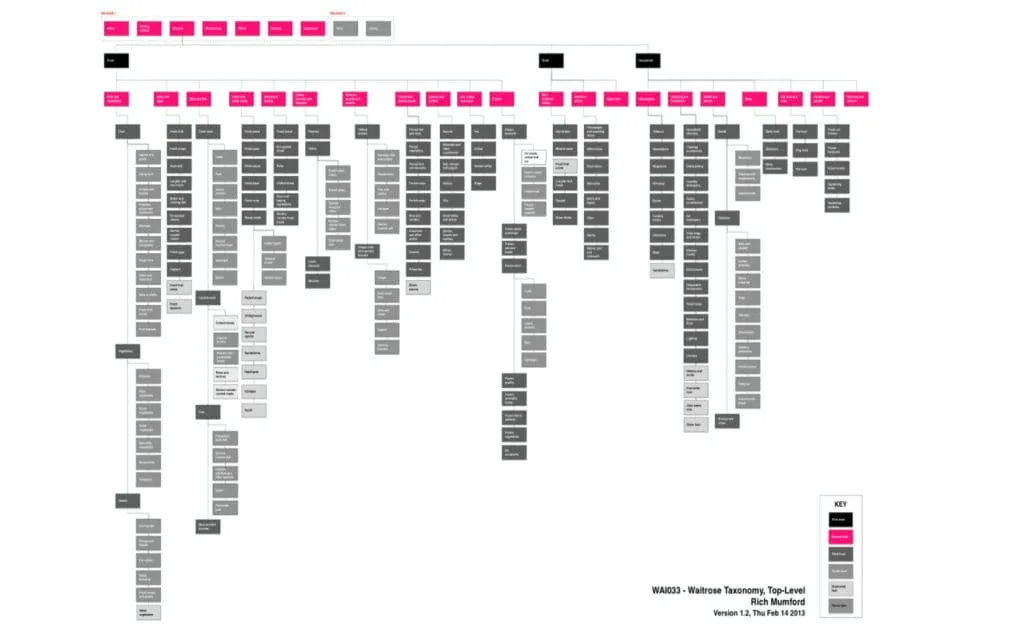
The main space The plan often features a main space. At the centre of the composition (not necessarily the geometric centre), it connects the secondary spaces together. The home page is the contact point of the secondary pages, the “common space” of an interactive system.
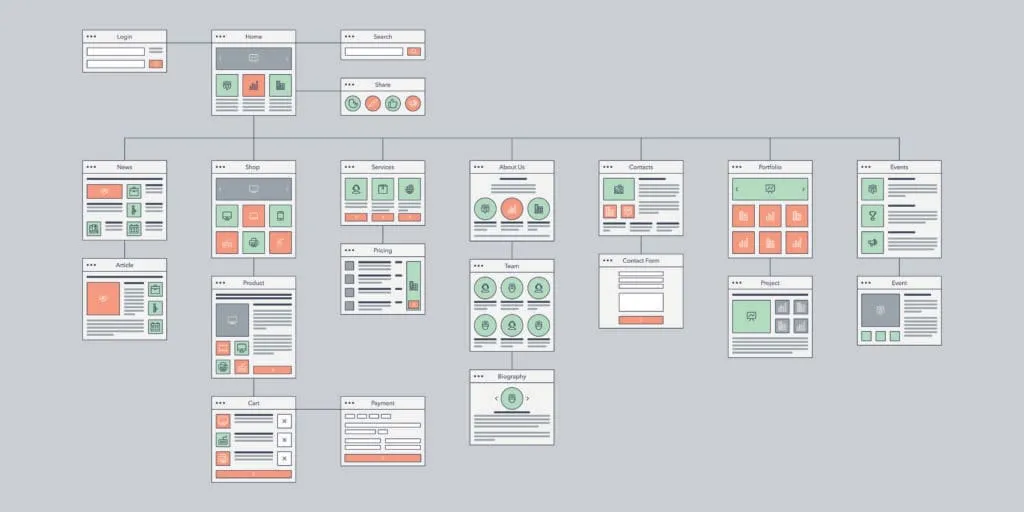
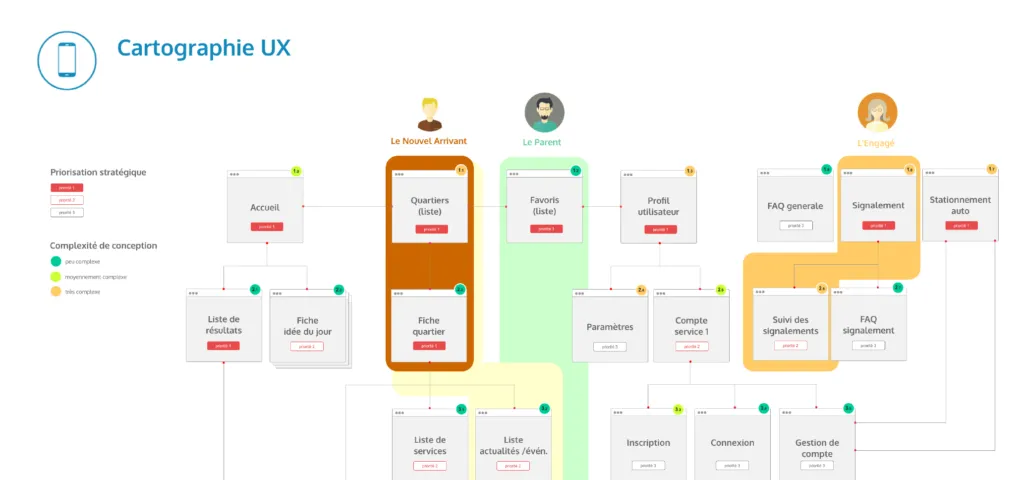
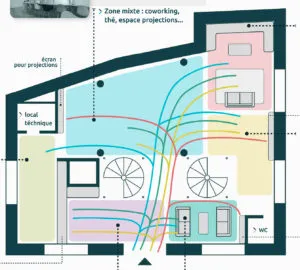
The user journey The journeys of the different types of users can be shown on the sitemap. In the same way, we can show them on a plan.
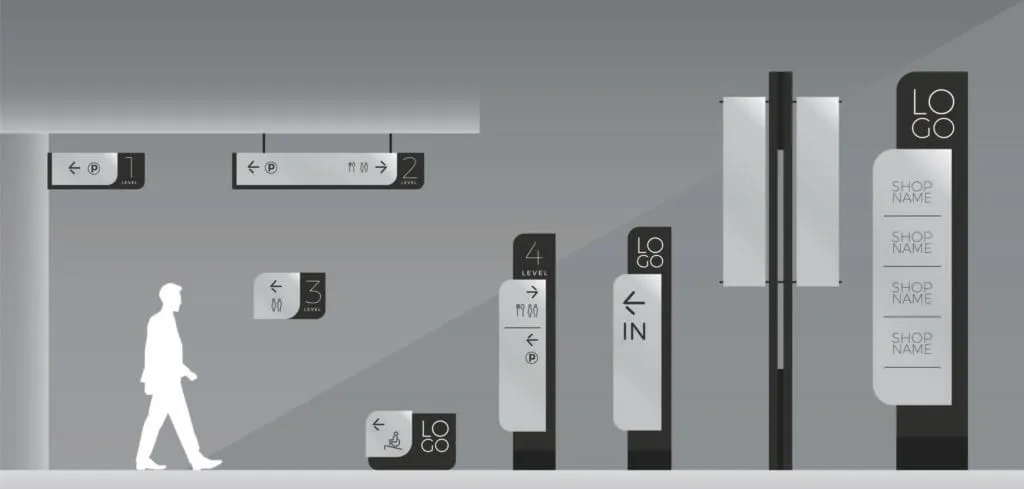
Wayfinding The wayfinding function is handled by the navigation and labelling system in an interactive system. In architecture, signage and the logical organisation of spaces take on this role (think of the whole field of environmental graphic design).
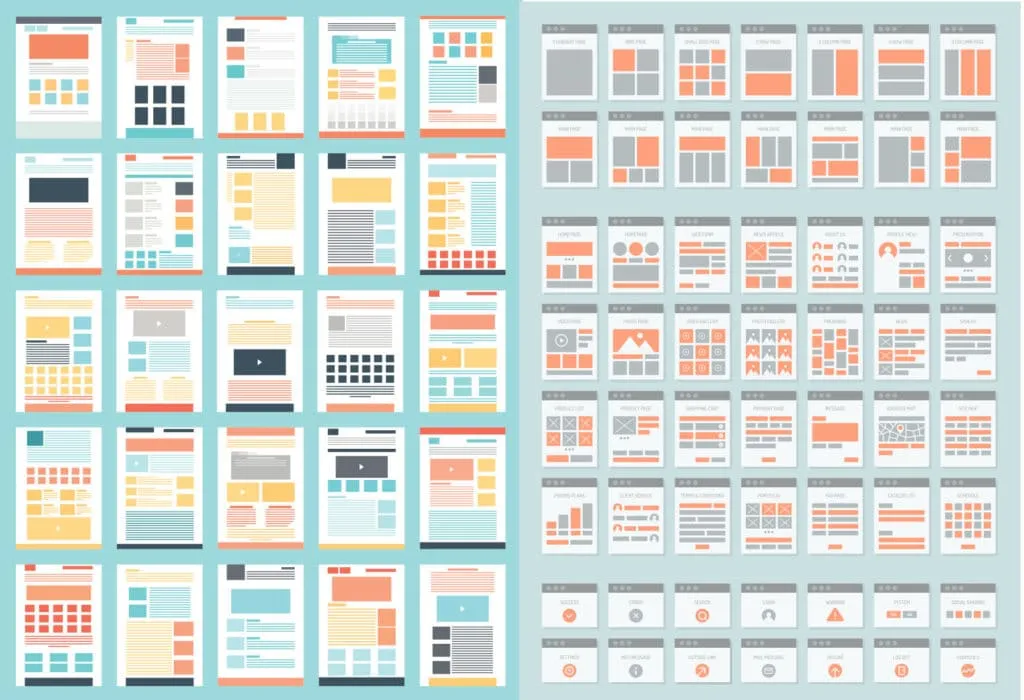
Typology In architecture, you will easily recognise a type of space from its plan (take the example of churches or Roman basilicas: the plans will show similar spatial structures). That is the principle laid out in the excellent “The variations of identity” by the Spanish architect Carlos Marti Aris. In the same way, in information architecture, you will often find the same types of layout (“template”) depending on the purpose of the interface.
Between users and art
The talk closes on a final parallel that leaves room for one last question. Just like information architecture, architecture is functional and user-centred. That is the principle raised at the start of our reflection. On top of that, architecture, in its most refined form, includes the realm of pure art. To take the words of one of the greatest architects of the past century:
In its simplest form, architecture is rooted in entirely functional considerations, but it can reach, through every degree of value, the highest sphere of spiritual existence in the realm of pure art.
Ludwig Mies Van Der Rohe
We leave you with a question…
So, can you apply the same logic to the crafts of information architecture? Is there room for an artistic culture within User Centered Design methods, or are they, as some have recently put it, only “suited to organisations without imagination”? We leave the door open for debate.
To finish, if you’d like to know a bit more about information architecture, we’d recommend our report on Reticulum 2.